
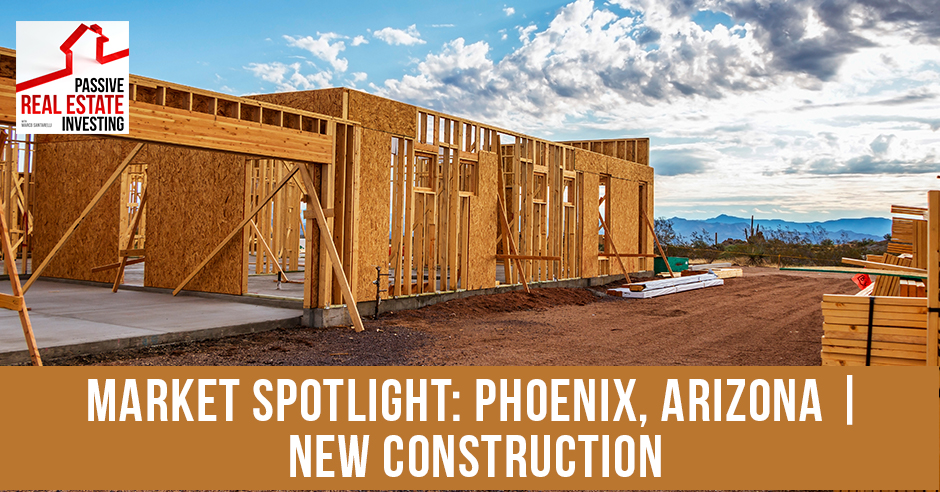
The Phoenix metropolitan area is becoming one of the most lucrative markets for real estate this year as it outgrows its dependence on tourism and construction and sees the growth of a broader employment base. In this episode, Marco Santarelli and senior investment counselor Steve Olson talk about the prospects of the Phoenix real estate market, specifically in rental properties and new construction of triplex properties. Phoenix is a growth market that will ensure prospective investors massive returns in the short term. If you’re looking to make money quickly in real estate this year, Phoenix might just be the right market for you. Listen in and take a sneak peek into this vibrant market.
—
It’s time for another market spotlight. I do these episodes to educate you and to also share the opportunities that are available around the United States that you may or may not be aware of. A lot of people are focused on their local market or what is going on in their own state, that they don’t realize that there are over 400 metropolitan areas around the country that you can look at and find great investment opportunities. Before I get into things, remember to subscribe to the show so you don’t miss another opportunity, another market spotlight or any other type of education that we are passing along here lovingly and freely.
I have this bad habit of keeping Christmas cards. I had a small pile stacked up on my desk here. I picked one up here from a very nice lady, Teresa, a client of ours. I reread it and she said, “Marco and team, I wish you all a wonderful holiday celebration and a prosperous 2020 year.” I am thankful for stuff like this. This is the great part, she goes, “Thank you, Marco, for all you do to help us in believing that anybody can invest in real estate. It is possible. It is not rocket science. I have done it, thanks for your show and great help from your team. Sincerely, Teresa.” You’re very welcome, Teresa. Thanks for your trust and your business. We hope that we can help build a large real estate portfolio for you so you have your financial goals achieved.
We have a market spotlight on Phoenix, Arizona. The Phoenix housing market was headline news when the housing crisis of 2007 and 2008 caused home values there to fall by as much as 50%. Nowadays, we see the Arizona real estate market thriving. The Phoenix Metro is expected to be among the top five housing markets in 2020. The favorable living conditions there have comforted real estate investors to invest in the Phoenix real estate market. Phoenix is a very large city. It’s located in the state of Arizona. It has a population of over 1.6 million people and about 360 constituent neighborhoods. Phoenix is the largest community in Arizona.
Unlike some cities, Phoenix isn’t mainly white or blue-collar. Instead, most prevailing occupations for people in Phoenix are a mix of both white and blue-collar jobs. Overall, Phoenix is a city of sales and office workers, service providers and professionals. There are a lot of people living in Phoenix who work in office and administrative support. That makes roughly about 14% of the jobs there. Another 11% or so are sales jobs and another 9% are management-based occupations. Also of interest is that Phoenix has more people living there who work in computers and math compared to 95% of the other markets across the United States. It is a well-educated metropolitan area because people are into computers and math in terms of their jobs and careers.
What about the Phoenix home market in terms of appreciation rates and whatnot? In the last several years, Phoenix has experienced some of the highest home appreciation rates of any community in the nation. Phoenix real estate appreciated about 105% over the years, which is an average home appreciation rate of about 7.5%, which puts Phoenix in the top 10% nationally for real estate appreciation. If you are a home buyer or a real estate investor, Phoenix has a track record of being one of the best long-term real estate investments in the US. The appreciation rates are strong in Phoenix that despite a national downturn in the housing market, Phoenix real estate has continued to appreciate in value faster than most communities.
Over the last twelve months ending the last quarter of 2019, Phoenix appreciation rates continued to be some of the highest in the US right around the 5.4% up rate of appreciation, which is higher than the appreciation rates in 77% of cities and towns across the country. Short-term real estate investors have found great fortune in the Phoenix market because Phoenix appreciation rates from January to March 2020 were about 1% which if you annualize it, is over 4%. If you go back 24 months to the end of 2019, it worked out to be 15.5%. It is a very healthy appreciation. One important thing to keep in mind is that these are average appreciation rates for the city. Individual neighborhoods within a market differ in their investment potential and sometimes by a lot.
The last comment I want to make about the Phoenix Metropolitan Area, looking at it from a national perspective, the rent growth there has been strong. It ranks at the 82% range on a scale of 1 to 100. Compared to all other markets across the United States, the rent growth in Phoenix has been robust and healthy, which is not normal or sustainable for a long period of time. It means that things are growing strong and healthy. Let’s get on with the interview. I’m going to bring on one of my investment counselors here.
Download your FREE copy of: The Ultimate Guide to Passive Real Estate Investing.
If you missed our last episode, be sure to listen to Market Spotlight: Richmond, Virginia
Enjoy the show!
– – – – – – – – – – – – – –
Download your FREE copy of: The Ultimate Guide to Passive Real Estate Investing.
Get your FREE coffee mug by leaving us a Rating and Review on iTunes. Here’s how.
See our available Turnkey Cash-Flow Rental Properties.
Please give us a RATING & REVIEW (Thank you!)
SUBSCRIBE on iTunes | Stitcher | Podcast Feed
Market Spotlight: Phoenix, Arizona
With me is Steve. He is one of our senior investment counselors here and our point person with our builder in the Phoenix, Arizona market. Steve, welcome to the show.
I am a veteran of the show. It’s been a little while, but it’s good to be back.
It’s an exciting day because we’re going to talk about the new investment opportunities in the Phoenix Metropolitan Area. These happen to be new construction triplexes, which look fantastic. They’re in a great area and it’s a part of the Phoenix market that has been growing tremendously. I always like to start at the top and work my way down. I always like to ask the question, is Phoenix a good place to invest in real estate? When I talk about Phoenix, we’re talking about a large metropolitan area geographically and population-wise but from a high level, Steve, why invest in the Phoenix market? Is it a good place to invest?
That’s a question I get a lot. I’ve run point with our builder team in a couple of markets. When many people think about good markets, they don’t think of Phoenix because they’ve got trauma from 2008. Phoenix was one of the areas that took it on the chin harder than anybody else due to a lot of speculation. The economy wasn’t diverse back then. As I’ve helped launch into that market, you see that the Phoenix Metro is a metro that has grown up a lot. I would encourage everybody to research that. It’s no longer just a tourism and construction-based economy. It’s extremely diverse. We’ve got government, healthcare, tech, logistics and a whole bunch of different job fields.
The increases they’ve seen in values and rents in Phoenix are justified by a broad employment-based that exists there. It’s business-friendly. State Arizona is that way. It’s sucking jobs out of California left and right because it’s near the West Coast. It can be a good logistical hub for the West Coast, but it also can benefit from some of those landlord-friendly policies that investors want to see and still be in the Western United States. That is hard to do with the turnkey business model. Traditionally, land values are so much higher in the West. We’re excited about it for those reasons.
The economy has gotten broad. You even have healthcare, retail, accommodation, construction and finance. A lot of banks are headquartered there. Maybe not their main headquarters, but certainly a regional headquarter. There are lots in terms of education. It is a very broad economy locally. That’s good to see because you don’t have one of the one-trick pony markets that I talk about often like being dependent on oil and gas, especially when oil and gas drop to $20 a barrel. It affects people economically and otherwise. A broad economy is important and you’ve got that in the Phoenix Metro area. You make another good point because there have been companies and people moving out of California for many years.
I remember first talking to someone back in 2003 who used to live here in Southern California and said, “I’m moving out of state. I’m going to move to Dallas or Birmingham, Alabama, somewhere out there.” I asked him, “Why?” He said, “It’s getting expensive here. The taxes are high and regulations are terrible,” and on the list went. Recipients of the California out-migration have been Las Vegas, Phoenix and everywhere in Texas. Those are the main ones. Even Idaho because there’s some new construction going on up there as well. Phoenix was ground zero back in 2008 when we had the Great Recession. That was a fallout from the housing market implosion. Las Vegas, Phoenix and Southwest Florida were three areas that were ground zero for that housing market implosion. Phoenix is on the rebound. In fact, it’s been growing a lot. It’s been appreciating very strongly over the years. Who are some of the major employers out there?
Phoenix is the capital of Arizona. You have a ton of government jobs right there. On the Northside, you’ll see the Mayo Clinic. There’s a lot of medical hospital and research. There’s a lot of logistical because the 10 Freeway comes in from Southern California and joins up there in Phoenix. It’s a natural hub for trucking and transportation jobs. We’ve got Luke Air Force Base there on the Westside, not too far from where some of the projects that we’re building are located. Phoenix does benefit from and gets a significant amount of tourism and hospitality. They’re not loving that with the virus situation but eventually, we expect that to return because it’s such a destination city. With that medical, you get tons of people coming in. They have winter homes and come and live in the Phoenix Metro. Plus, the education, big universities and multiple universities in the Phoenix Metro. We could look up a whole list and rattle off names, but those are the sectors that you’re going to find predominantly when you look into that.
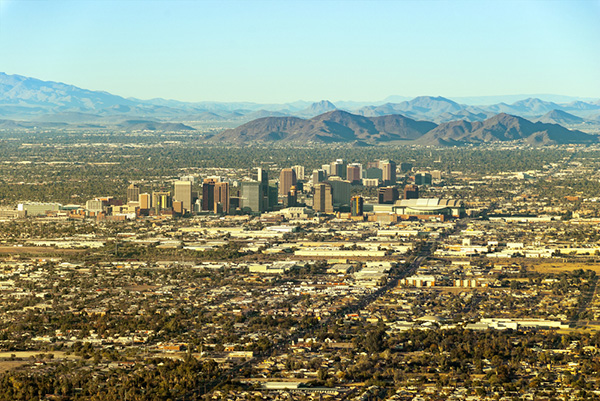
The State of Arizona is probably the biggest one. Surprisingly, Walmart is a huge employer out there.
As I said, the logistical too. The 10 and the 8. The 10 goes all the way from LA and dead-ends in Jacksonville. Phoenix is a good natural first stop for that California exit.
Do you want to comment on price and rent growth in the market? I know that it’s been on a tear for a little while here. What can you tell us about the price and rent growth in the Phoenix market?
It’s been strong because you’ve had this catapulting out of the Great Recession. You could argue that the Great Recession did create almost a permanent renter class. We had one before, but you’ve got a whole generation of Millennials that saw their parents get hammered in 2008. They’ve been averse to buying homes. Phoenix itself has seen one of the highest growths in the Millennial population out of anywhere due to the opportunity they see there. They haven’t wanted to buy homes as much, yet there have been plenty of people that have due to the availability of land and labor. That’s been extremely difficult across the board, especially in those markets like Phoenix. It is because you look at the market crashing in 2008. A lot of those people were tile setters, worked in the foundation, plumbing and electrical, they went away and they never came back. That’s largely what contributed nationwide to our housing shortage. It’s especially exacerbated in Phoenix.
The great thing about it is that the incomes have been there to justify it. We haven’t seen this runaway and see a huge disparity in the average mortgage payment and average rents versus what people make. It’s been justified. You could say in 2008, a lot of the people that got mortgages probably didn’t deserve to get them. They call them ninja loans, no income, no job and no assets. That’s not been happening in this particular case. We’ve seen that growth in a big metropolitan area, which is Phoenix. Much of the rent growth that we’ve seen have been on the Westside of the Valley, which happens in Scottsdale and Mesa. We work on that Westside of the Valley because it’s been underserved. A lot of the housing there is either old or it’s a new single-family. Somebody needs to serve those tenants that want a nice clean place to live that’s not old. There has been excellent rent growth there on the Westside, typically hitting 4% or 5% a year for a number of years. That looks good on your rents when you hold that property over time.
That lands to the stability and the fundamentals of a market because if you become unaffordable, it changes much of the dynamics in the market. You see more people pushed into the rental pool and appreciation rates start to slow down. Not that it’s the be-all-end-all, but you’ve got to have a healthy housing market. When incomes are in lockstep with price growth, that means that there’s going to be sustained growth and stability in that market. This is an article that we published on our blog, our website here, which has a ton of information and data. The latest Phoenix real estate market forecast is that home prices will continue to increase for the next twelve months by an estimated 5.2%. Five percent per year is a healthy rate of appreciation. That will get to a point where it becomes unsustainable and becomes unaffordable. As it stands, that is what I would call a growth market. That is a very healthy rate of growth.
I pulled up the CoStar report. I have a subscription to CoStar. They’re reporting in the West Valley Metro, where we focused, the average rent growth has been 5.9%, which is great. You make a good point. It can’t go like that forever. It is a good way to analyze this market, invest in it and go, “If I get that, that’s great,” but the job growth and the job rate has been good. If you didn’t get much of that at all, you would still have a home run on your hands due to the stability, the ability to keep tenants and lease properties and be in a good diverse market whose population is growing.
For people reading, one important takeaway from this is that when you’re looking for a market, if you are in the cashflow camp, you’re going to get cashflow in this market. If you’re in the growth camp and that is your main focus and overall strategy, this is a market to have on your shortlist because the Phoenix Metropolitan Area and more specifically, suburbs within the area are strong growth markets. If your focus is to build equity as quickly and as fast as you can, this is a market to be looking at. You can’t make predictions. It’s hard to make predictions years from now, but it’s not that difficult to make predictions for the next 12 to 24 months. If you’re looking for a growth market, this is something to take a serious look at.
We would never recommend something that doesn’t cashflow or that’s not likely to cashflow. You would get more in a smaller Midwestern market if you’re a strict rent-to-value ratio type investor, but you’re going to get some good multidimensional benefits in something like this with the cashflow growth. There are some excellent tax benefits that come from building new. If you’re about minimizing your tax liability, new construction, multifamily like this is going to be effective for you to do.
What I’m going to suggest is that anybody interested in that conversation, contact their investment counselor here. If you don’t have one, then fill out the form on our website. We’ll immediately assign you to one and you can have that conversation. This is a good segue to talk about the areas and neighborhoods that we’re focusing on there. Neighborhoods are important. They certainly can range from the low-income C-Class neighborhoods up to the higher-income A-Class more premium type neighborhoods. As far as what we’re building out there as triplexes, what kinds of neighborhoods are we focused on? Maybe tell us what you can about the neighborhood, Steve.
It’s a big metro. There are lots of different cities in the metro. It’s a pretty well-known one too. Everybody knows what Scottsdale is. Most people know what Mesa and Gilbert are. Those are nice areas that are extremely difficult to buy, develop the land and sell a triplex product to an investor that’s going to give you a good return because of the price of land. You got to walk that line between buying where there’s demand, but also buying where you can produce a rate of return. We’ve found that to be predominantly for what we do on the Westside. You’re looking at cities over there like Peoria, Glendale, Surprise, El Mirage, Goodyear, to name a few that are still weld within the core of the metro. There are enough out to where tenants can, if they want to live there, they’re going to have a commute of anywhere from 10 to 30 minutes, in most cases.
What you’re targeting primarily are working-class tenants. What’s interesting about the Phoenix market compared to most other markets we operate in Norada is there’s a heavy build to rent presence in Phoenix. We know about these build-to-rent institutions that are going in and you’re going to build 100 single-family homes in one community and hold it. That’s been happening in Phoenix, but the apartment building that’s going on tends to target A-Class apartment dwellers because that’s a profitable margin for builders. When we talk about A-Class, you’re talking quartz countertops and a beautiful clubhouse with somebody on staff all the time that will receive packages, a dog washing station, and a pool that makes you think you’re at The Ritz. That’s predominantly what has been built in Phoenix. That’s all well and good. We would probably choose to live there. Flip it around, other than that, what’s available is maybe some older single-family homes or older C-Class apartments that are rundown. We’re trying to target that B product.
Somebody who says, “I need a two-bedroom unit. Maybe I can, but I don’t necessarily want to afford an A-Class unit. It’s too much of a strain on the budget, but I don’t want to go live in an old house. I don’t want to go live in a rundown apartment complex. I need something clean, new-ish and with some good amenities.” The project we’re going to do on the Westside is right where El Mirage and Surprise meet. It’s in the very top North-Western corner of El Mirage, right across the street is Surprise. In fact, behind it, while still in El Mirage is Surprise Elementary School. It shares a border with the elementary school. We’re targeting that tenant that wants that. They’re going to get a gated community with a clubhouse, a workout facility, a playground for the kids with the sunshade, and a pool. They have those kinds of amenities, but not for an over the top price.
For real estate investors, what’s the rental market like in those areas you described?
It’s much of what I told you. There’s demand because on that side of the city, you have a lot of those logistical jobs and blue-collar jobs. If you’re an anesthesiologist, you’re going to live in Scottsdale. Some of his staff may live on the Westside. It depends. The rent growth, the evidence is there. When you’re looking on the Westside of the Valley, almost 6% annual rent growth. It tells you that these people do need a clean place to live. It reminds me a lot of a project that we did in Utah that was similar. You’re targeting those logistical people and the B-Class apartment market is underserved. That’s what we’re after. Anytime you’re getting rent growth, that points to the fact that the demand is outstripping supply and that rental activity is healthy.

Steve, I keep a running dynamic list of the markets around the US, the top 405 metropolitan statistical areas. I track different things on there such as cashflow potential, the median house price and rent growth. The Phoenix Metro Area, the MSA as a whole, not necessarily El Mirage, it ranks number 82 or the 82nd percentage on that chart of 405 properties. The rent growth has been strong in the Phoenix Metropolitan Area, which is great if you’re a landlord or a property owner. It is not so good if you’re a tenant because you’re seeing strong year over year rental increases. It’s been a hot market both in terms of price appreciation and rent appreciation.
It has recovered well from the Great Recession.
Do you want to touch upon the demographics of the tenant base that are in there? You mentioned nurses or doctors. Is that pretty typical in these areas?
I said that the doctor is going to live in Scottsdale. We all know what Scottsdale is, but his office assistant or staff may live somewhere more affordable like this. I’ve pulled the neighborhood scout data in this neighborhood. Most people have anywhere from a 10 to a 30-minute commute. Without traffic, you’re a 30-minute shot the Downtown Phoenix. Remember, this is a large metro. This isn’t a situation where everybody works Downtown. There are multiple employment centers scattered throughout here. If you’re going to be in this particular neighborhood, you’re going to be renting to smaller young families, singles, maybe a couple with no kids. We’re doing a two-bedroom unit because you don’t see as many larger families looking to rent in that neighborhood. It’s more of a small family couple or even some singles and Millennials that want the two. They need a little more space than the one. There is a market for one-bedroom units. I’m looking at it on my CoStar report, but that market for the twos is healthy because of the type of demographic that lives there. You’re looking at these blue-collar jobs and logistics, hospitals or even some education to a degree depends on the position.
That is a great opportunity to talk about investment opportunities and the properties themselves. Let’s talk about the deals that people can invest in. Properties vary from market to market and neighborhood to neighborhood, but we’re talking about something well-defined and specific here. It’s new construction and these are triplexes or three-unit properties. Describe this property class or property type and what is being built. Let’s dive into this and paint the picture of what is available.
It’s a master plan project of triplexes. There are about 40 of them available in the subdivision. What will happen is it’s a gated community and the triplexes are vertical stacked. The bottom floor is one unit. The middle floor is another and the top is another. That is a triplex. They’re typically connected by a common area stairwell that are operated and insured by the HOA. Sometimes HOA is a dirty word in this world. The HOA, in this case, whenever you’re doing a project that is segmented and has multiple investors in it, you need somebody that holds everybody to the same set of rules. They make sure that there are common insurance and maintenance in place. That’s why they’ve got that vertical stack. Also, there’s a clubhouse and a pool that they’ll have access to.
You’re looking at a purchase price of over $500,000 for a triplex in this project. When we play the compared to what game that’s vastly superior to anything available on the open market in the Phoenix Metro. If you’re looking for triplexes, quads or something there, you’re going to get a low cap rate. You’re going to be at something old, probably in a rundown part of town. If it’s not, then it’s expensive. This is a good balance between new construction, but also at a price of around $500,000. In this market, that’s very good. If you’re talking Dayton, Ohio, $500,000 is like 30 houses. In Phoenix, that goes a long way. Each unit is a little over 1,000 square feet. It’s a two-bed, two baths and has a balcony. They also got some garage storage on-site that the tenants have the ability to rent to have a little bit of extra space for cars or extra belongings and things like that. The two-bed is a nice predictable model to build in a community like this.
What are those pulling-in in terms of gross rent monthly rent per door?
We’re projecting based on some of the comps in the area and what we know about the units, anywhere from $1,250 to $1,300 a month per door in a project like that.
It’s a new construction. There’s no deferred maintenance. Everything’s brand new under warranty. It’s all the great things that people love and maybe are biased towards when it comes to new construction properties. In terms of availability, what’s being built in the future? I’m talking about total inventory, what is the lifespan of what is being built? How long will it be available? How much of it’s going to be available?
The first phase begins construction in September 2020, just about to close on the ground and begin all the horizontal development. You got to bring in your roads, your utilities and go through the entitlement process with the city. They’re glad to have us. That’s been easy to do so far. Some cities aren’t always glad to have you. They’re tough to deal with. This hasn’t been the case here. They want the product. They view it as an asset to the city. The first phase starts in September and then we have one phase starting every month through the end of 2020. Investors can reserve. Let’s say, “I like unit Y in the October phase,” for example. They could reserve on that and we help them get set up with construction financing and get to the close or the finish line. That’s how you’re able to sell in a market like Phoenix and the Western US.
That’s how you can get a cap rate north of 6% as you go preconstruction if an investor is willing to take a little bit of risk. If you want to buy something brand new that’s already done, you’re not getting anywhere near that. You’re going to be at a cap rate of probably sub 5% in a market like Phoenix because of the desirability and the rent increases that have happened over time. People benefited from that compressed the cap rates. You’re looking at this fall sometime. They’ll probably deliver later, next spring, maybe into the summer, depending on which phase you are in. That’s about what to expect and you can reach out to your investment counselor to get your details on that.
Can you explain to people why the cap rate would be lower if you’re buying it already built or down the road as opposed to where it’s preconstruction, you’re reserving it, having the builder build it? You don’t take ownership and control of that property until six months down the road, maybe longer. Why is there a benefit? What are investors gaining by getting involved in the preconstruction phase?
Anybody reading that has a real estate license knows this. When you study to get your license, a lot of times, you spend some time on the concept of highest and best use. When we look at real estate, when we want to value it, we say, “What is the absolute highest and best use for that land?” A farm in Downtown Los Angeles is not the highest and best use. That’s going to be a multistory skyscraper for office and residential apartments. When we look at a raw piece of dirt within an approved triplex development, a raw piece of dirt is not operating at its highest and best use. The highest and best use is built and rented triplex. When we take a project to our builder teams and it’s presold with investors who have construction financing in place, which will help you to do, it takes a tremendous amount of risk-off of a builder’s shoulders. You know that because you’ve built it before.
When you’re going to build and you have to spec properties, meaning you build them all the way and then you cross your fingers that somebody will buy them. You’re going to price that risk-in because you’ve got a bunch of financing, time, and risk associated with it. When you can tell a builder, “Look at this. This is already sold to 30 investors.” They all have financing and the builder can say, “Great, that’s a lot less expense and hassle I have to incur.” He has to offer a price to an investor that makes them want to do that. If he was selling at the market price, nobody’s going to do that. Why would you buy at the market and then wait months before you have a completed property that would be done? He has to put a cherry on top. He has to give a spread there. If you were to build that product, fill it with tenants.

You’re going to be able to sell it for more than what you bought it for traditionally because you’ve taken the risk out of the equation. There are a lot of investors out there that don’t like the risk. If something is brand new and cashflowing with tenants, they’re willing to pay. If they’re willing to pay a lower cap rate for that because they didn’t want to do all the waiting. It’s pretty similar to the apartment world, people talk about value-adds. A value-add is buying an old junky apartment building, take out the bad tenants, renovate the units, gradually move people back in and raise the rent. Since you’ve raised the operating income, the property is worth more. You gained value by doing, so you brought it up to its highest and best use. I joke that this is an armchair value-add. You’re going through construction. You’ve hired a builder and property management team to do all that for you, but you brought the income up. You brought it into its highest and best use and that is traditionally worth something to the market.
What you’re walking into and away with after you close escrow on this property after it’s built whenever it may be, is you’ve built yourself an equity position from the get-go. You’re contracting at a very specific price, which is below the fair market value. You’re already walking into a position of equity. On top of that, if you want to call the cherry on top, you have the potential of gaining additional equity or price growth in that property while it’s being built whatever it is. Is that still true? I know that was true with a lot of the other new construction fourplex projects in Houston, Idaho and other places.
We’re never going to sit here and guarantee it. The principle holds that when you’re bringing it up to its highest and best use, generally a metropolitan area or at least a neighborhood has a cap rate that will absorb on the open market. That’s a fancy way of saying, “If you’re selling your triplex, you can look at your rents, expenses and you can determine a cap rate that the market is willing to accept.” You can list your property for sale and it will sell because you’re selling at the cap rate that the market wants. In this case, you’re buying at a better cap rate than the market wants because you took on that risk of going through the build and that hassle that comes from going through that process. That’s all you’re doing here.
For that not to be the case between when you started construction when you’re done, you’d have to see rents, plumber or supply of other properties increased dramatically, which has historically not been the case. I don’t think it’s probably going to happen with this COVID situation either because of all these moratoriums, delays and forbearance programs. We went into this situation with a low supply and you would have to see a dramatic reversal in the supply and demand equation in these markets. It’s going to be extremely politically taboo for banks to do a rash of foreclosures on people affected by COVID. I don’t think we would see enough supply to dramatically offset things. There’s still going to be a market for residential real estate.
That is the one thing you have to get comfortable with as an investor is saying, “I think that a new construction property in this neighborhood with this data and numbers is a good investment for me.” I think that this will still be the case in a year or eighteen months. Do what you’ve got to do to get familiar with the neighborhood demographics, the employment trends and understand that that’s a reasonable amount of risk to take. If you think it’s going to be dramatically different, then you wouldn’t be the kind of investor to go to the preconstruction role. If you get that and you want to do it, there’s value to be gained because you brought clean new inventory onto the market that’s rented.
As of where we sit nowadays, fundamentally, there is still a lot of pent up demand for housing and a shortage of housing. In fact, this whole COVID virus thing probably is going to have a reduction in the available amount of housing for sale by approximately 40%. That means that you’re still going to have a large group of people who want to buy houses or condos, but you’re not going to have the same amount of listing inventory available on the market to fill that demand. Not only do we have a demand outstripping housing supply, which is a problem, good if you own property and if you’re a real estate investor, but you’re going to have less inventory in 2020 going forward to fill the existing need for the people who have the capacity, willingness or need to be buying. It’s an interesting dynamic and a problem, but that problem creates an opportunity for others. I say this often, it’s a great time to be a real estate investor.
This COVID situation will exacerbate this supply-demand problem. I can’t envision a situation where it throws that out of balance and we have a massive amount of supply versus demand like in 2008. This is a personal experience, but I remember back in 2008, my mom was having a tough time. She called the City Mortgage who had the servicing on her property. They said, “You can get a loan modification. You have to miss a couple of payments and then you’ll be eligible and your new payment will be X.” It’s no surprise that the right hand wasn’t talking to the left hand at the bank. She was missing mortgage payments thinking that she was going to qualify for this loan modification. Instead, what happened was she got a foreclosure notice. That is going to be extremely politically taboo to do those things, especially the people that have suffered because of COVID. You’ve already seen it. Albeit it’s clunky, I get that.
When you roll something out quickly on a mass scale or you’re going to have fits and starts, but I don’t think they’re going to aggressively move to foreclose on tons of people all at once. Even if they did, they used to be an old saying out there that, “If you want to get a great deal on a property, buy a bank-owned property because banks aren’t in the real estate business. They’ve got to let go of them.” That’s not true anymore. The banks are flush with cash that they can afford to sit on these. If you remember it at the end of the Great Recession, getting a deal on a bank-owned property, that wasn’t even a thing. The deals were mediocre at best because the banks could afford to sit on them and get the market price for them. You combine that with high demand, low supply. I don’t see a situation where a massive amount of shadow inventory back in the day. That’s going to collapse prices. I can’t find that situation in my brain anywhere.
We’re talking about fundamentals in the housing market. It’s a long departure from talking about the triplexes and the properties that are investment opportunities of the day. To bring the conversation back to the properties and wrap that up and then close up with the management piece of it, tell us quickly about the warranties that are on these properties. What does it include? How long is it?
What’s great is it’s a new built. It’s newly built within a master plan community. The HOA is responsible for most of your insurance. Sometimes, if you’re looking at a performer that can be a little deceiving where you might be counting insurance in your HOA and then adding a whole bunch under an insurance line item, you’re double counting it. They’re ensuring that building and all of the exterior, much of the CapEx and on exterior maintenance, you would need to account for. You don’t have to do in this case because of those things. You’ve got a one-year builder warranty. Leaky sinks or flooring is coming up in the corner of the bathroom or something like that, that’s a builder warranty. The property management team correlates directly with the builder on that to satisfy those warranties.
People think of new construction as very low maintenance. That’s mostly true but remember, if you build something new, it’s going to get broken in. People are going to move in and they’re going to start using it. You’ll find out where the arrows were in the construction. It’s nice to be able to work that out on a builder warranty dime where the tenants are in there. It’s a bill for getting those charges. You’ve got that one-year warranty and you’ve got all the exterior maintenance handled by the HOA. It ends up being a very low drama property from a maintenance standpoint.
Property management is important, especially for a long-distance or out of state real estate investor. Describe the property management that we have onsite there in El Mirage.
Property management only does our properties. They charge a low management fee of 7% of the gross rents collected. What’s cool about many of these communities, they’ll coordinate all the handoff from the builder, do final walk-through when it’s done, do all that lease-up and ongoing rent collection. They’re there to answer questions. They’re there to talk about marketing. Sometimes if your units come online in the dead of winter, that’s a slower marketing time as many people know. They’ll work with you on incentives in things you rented. This time of year, May 2020, you don’t have to do that. Most properties went well this time of year or so. They do it for 7%, which is a pretty good rate compared to what the average is in most metros. Most metros are anywhere from 8% to 10%. Seven percent is a great rate that allows you to capture a little bit more cashflow that’s not going to management.
A comment about the season. I don’t think the wintertime in a market like Phoenix has a major impact. Outside of the holiday season, which is Christmas and New Year, the weather’s nice. It’s not difficult to move. You’re not having to plow through a bunch of snow and ice-cold weather. There’s good weather and there’s great weather, unless you call 112 degrees heat good weather. Some people might say that’s terrible, but it is what it is. You can move virtually any time of the year.
Phoenix is beautiful in December. I would say the only caveat here would be schools. Sometimes people revolve their leases around when school starts. I’m not so sure that our target demographic in this particular project would be heavily influenced by that. We’re not talking about big families here. We’re probably talking about younger kids. I would expect to see that be less of an impact.

These new construction triplexes are a great opportunity with a solid neighborhood. Fundamentally speaking, a phenomenal market. Phoenix seems to be a great place to live and work. Come around. There’s a lot of strength and opportunity there. Steve, I appreciate you coming back on. Thanks for your time. We’ll get this out as quickly as we can.
It’s always a pleasure. Thanks for having me.
—
If you want a free strategy session with one of my investment counselors, go ahead and fill out the form on our website. We will set that up within 24 hours. You can find out more about the different markets that we are working in and have investment opportunities available for you through our network and team of people. If you have a question about real estate investing, go to the website, and submit that. Go to PassiveRealEstateInvesting.com and click the Ask Marco! button. Let me know what’s on your mind because that can become a whole topic of conversation for a future episode. If you haven’t already, remember to subscribe, share the show with other likeminded people. Thank you for reading. We will see you in our next episode.
– – – – – – – – – – – – – –
Download your FREE copy of: The Ultimate Guide to Passive Real Estate Investing.
Get your FREE coffee mug by leaving us a Rating and Review on iTunes. Here’s how.
See our available Turnkey Cash-Flow Rental Properties.
Please give us a RATING & REVIEW (Thank you!)