
Hello, and welcome to another episode of Passive Real Estate Investing. I’m your host Marco Santarelli. Well, it’s been a while since we did a market spotlight. And so today we’re gonna have a market spotlight on North Carolina, specifically Charlotte large market and Metro area that we have been in for many, many years on and off. It just depends on our team and inventory, but it’s a great market that whole region in North Carolina has been growing very rapidly. There’s a lot of people moving there and there’s a lot of reasons to move there and invest there.
FREE copy of The Ultimate Guide to Passive Real Estate Investing.
If you missed our last episode, be sure to listen to Using IRAs and 401ks to Buy Rentals, Flips, and Notes
SUBSCRIBE on iTunes | Stitcher | Podcast Feed
And I’m excited to have Tyler, one of our fantastic property providers in the area on the show with me today. So Tyler, welcome to the show.
Thank you for having me.
No, it’s great to have you on, we haven’t done a market spotlight in a while and I don’t actually remember the last time we did a market spotlight on the Charlotte Metro area. So it’ll be good to share with our audience and listeners a little bit about the market, why we should be investing there, what’s going on there. And then we will kind of conclude by talking about the neighborhoods and the properties that are available and what that looks like. So why don’t we start off with, you know, the most general question, which is where I always like to start, and that is why Charlotte?
Why Charlotte? It’s a great question. Charlotte is a growing city in North Carolina, just above South Carolina. There’s a lot of great things going on there. It’s the second largest banking capital in the country, right behind New York city. It is quickly becoming a tech city as well. There’s about a hundred people moving to Charlotte every single day from places like Ohio, New York, California, and everywhere around there. I think people really like it here because of the affordable cost of living and the, the nice climate. You’re very close to the mountains. You’re only a few hours away from the beach as well. Taxes are relatively low here compared to other states. And so when people come here from other states, they, they feel it’s very affordable compared to where they’re from in a lot, a lot of ways.
Yeah. Nice. So, you know, I like to hear that the population is growing because when you have positive net migration into a market that increasing population provides support for the housing market. And if it’s big enough and it keeps growing, then it provides upward pressure. And so what you get is price growth because demand starts to exceed supply. And then you also start to see that trickle into the rental market where rental prices start to go up as well. And if you’re invested there, it’s good. If you’re a property owner or homeowner, it’s good for you because you know, rent go up, cash flows, go up, equity goes up. And so, but if you’re not in that market, then it’s something you should look at because if that’s a trend that’s gonna continue for years to come, then it’s something you want to take advantage of. You wanna ride that wave or be part of that trend and take advantage of that opportunity. So what kind of employers make up that market? I always like to look at markets that have broad economies. You mentioned one of them already, you know, the finance sector.
Very big finance. So there’s a BB&T now Truist the SunTrust and BB&T of merge. And they’re a bank called Truist now. We got a Wells Fargo here. There is Bank of America is headquartered here as well. Just to name a few, there’s a lot of manufacturing as well in the outsskirts of the city got places like Jeld-Wen where they global manufacturer of windows and doors got Bobcat Doosan of North America, which creates obviously large construction equipment and things of that nature. Just to name a few again, out in the outskirts, you’ve got a company called chewy.com. They’re headquartered in Salsbury, which is just a little bit of weight from Charlotte, but you’ve got a lot of businesses that are coming here and creating a home base in the Charlotte area.
What have you seen over the last, I mean, it’s almost unfair to ask the last couple years, you know, during the COVID years in terms of price growth or price appreciation, because we’ve seen crazy appreciation rates pretty much everywhere around the country. So, it’s almost better to look back three, four years to get a better perspective in terms of a normal market. But what have you seen over the last, however long you want to go back three, four years in terms of price growth.

I’d say to start three to four years ago, we were probably seeing anywhere from 6 to maybe 10% appreciation on a given year, but then once COVID hit, you know, nobody really knew what was gonna happen right away. But then we saw appreciation just skyrocket, like up in the 20% range for a couple of years there. So I don’t think that’s gonna continue. I hope it doesn’t cuz it’ll just price a lot of people out. But I think in the future we are gonna see more of that 6 to 8% range of appreciation.
Yeah. I was gonna actually ask you that it’s really hard to make predictions. It’s also a little dangerous and nobody has a crystal ball that, you know, gives ’em accurate information, but I have my prediction of what I think we’ll see. But what do you think we’ll see in the next 12? And if you want to go as far as 24 months in terms of price growth in the market on average.
I would say in the next 12 months, it’ll probably be towards the lower end of the range I gave maybe closer to six just because the prices are so high with the interest rates, being what they are right now. I don’t think the prices are gonna come down. I think the rate of appreciation is just gonna slow. So maybe after that first year of 6%, we might see it about the same, but again, no crystal ball here, it could be a little higher, it could be a little lower. So I’m thinking probably right about 6% over the next 24 months.
Right. Okay. Well, the reason I asked you that other than, you know, letting our audience know what is going on, but with new construction, which is what we’re gonna be talking about a little later because of the cost of new construction and often the rent income that comes in on new construction, the rent to value ratios, aren’t as higher as sexy as a lot of the newly refurbished properties. That’s just the nature of the beast. It’s, it’s true everywhere, not just in Charlotte, but because the rates of return are lower than what a lot of investors would like, what they make up for in quote unquote lost rates of return they make up for in terms of price appreciation, which almost always exceeds far exceeds what they would’ve quote unquote lost in cash flow. Just because the appreciation in unrealized dollar terms is pretty high.
I mean it’s three times or more what you would get in terms of cash flow. So that’s the nice thing about buying new construction homes. But before we go down that road, I will say that I feel just on the monthly data that I look at that the Charlotte Metro area will probably see a price appreciation in the 6 to 9% by the end of the year. So as far as 2022 is concerned, it’ll probably have an appreciation rate of 6 to 9%. It could be more, but we already saw that happen pretty strong over the last six months. And now there’s a softening, you know, with the Fed increasing rates and mortgage rates, having gone up, we’re seeing a slowdown pretty much around the country. Today actually is Wednesday. The day that the Fed is gonna be announcing another rate increase. We don’t know what it is. It hasn’t happened yet.
But will be a point. Let’s see.
Yeah, it could be as high as a point I’m predicting 0.75, but it could be as low as 0.5 that doesn’t have a direct impact on mortgage rates indirectly. It can, but if they pump it up high enough, we might see mortgage rates go up a little bit as well. And that’s just gonna continue to cool down and slow down the housing market, which is needed on one hand. But at the same time, demand is so strong. We don’t wanna see that also the Fed and the government doesn’t want to impact the housing market all that much because it is a huge employer. It’s a significant part of our economy. And the last thing they want to do is create a situation where it pushes us into a recession or a deep recession. Anyway, with all that said, one more related question in terms of the market, what have you seen in terms of rents and rent growth over the last, how far back you want to go could be 12, 24 months.
Well, they have gone out for sure. I think they are not keeping pace with the property values, of course, but they’re going up about 5%, 3 to 5% per year, especially with these new construction properties that we’re providing. And like you mentioned before, they tend to get a little bit more on the rent. They appreciate very well not to mention. They also have little to no maintenance costs for the first 5 to 10 years typically. So I think the rents are going up and I’ll touch on this later, I believe, but the places that we’re building, we feel that there’s a little bit more control of the rent, just because we’re a little bit further out in the city, still very much accessible to the city. But a lot of times, because there is so much available in the city, it sometimes tends to drive the rent rates down because there’s so many other properties competing with one another trying to get tenants.
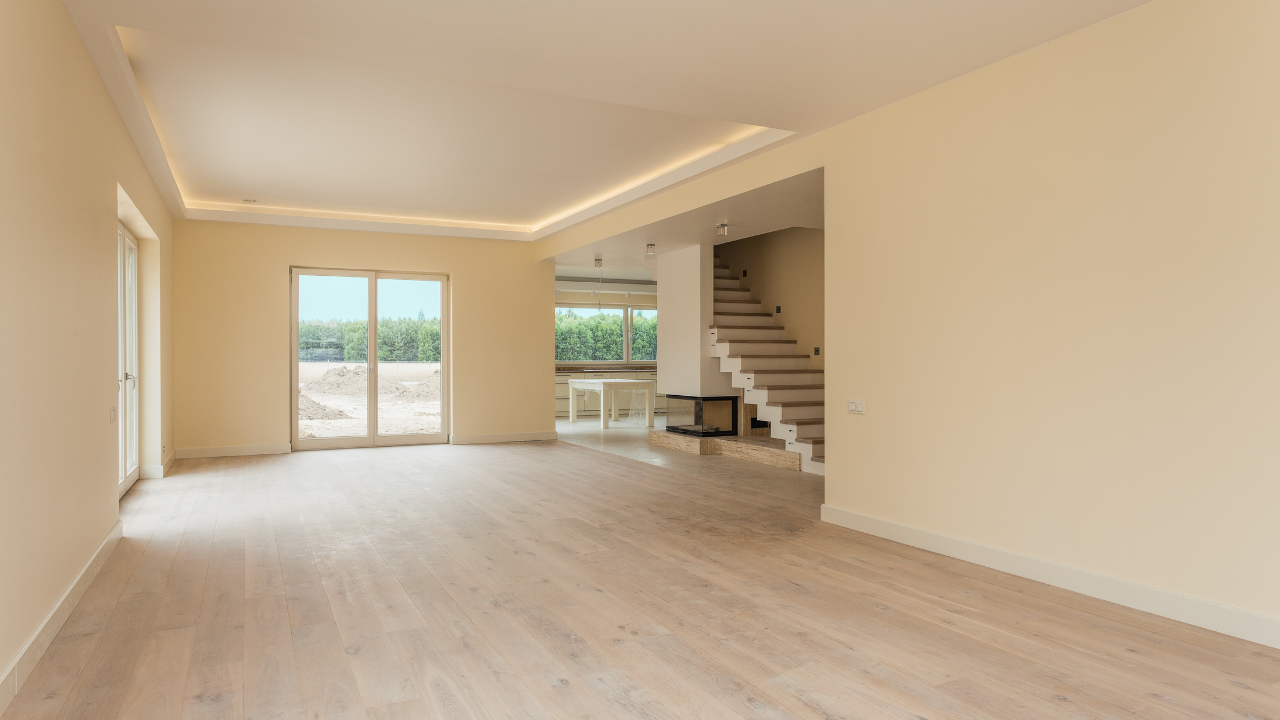
Got it. Well, that’s a good segue to the areas and neighborhoods. The Metro is very large, has a lot of suburbs where you guys focused on in terms of new construction and your build-outs. What types of neighborhoods are these? Let’s describe them.
Well, we really we’d stay away from the C neighborhoods. We really try to A from the B neighborhoods. We really stick to the a plus a minus neighborhoods as much as we possibly can. So these are typically infill, lots for neighborhoods that are already built out. Some of the neighborhoods are gonna be a little older, like maybe home is built in the eighties and nineties and some even older than that. And then some homes that were built in the two thousands, they are usually there’s maybe one or two lots left over in this neighborhood that is typically filled with owner occupants. So we’ll be probably one of the only one of the only one or two properties in the neighborhood that’ll have renters in them. So we like that model and the investors like that model too, because you’ve got a lot of pride ownership in the neighborhood.
It looks typically like a neighborhood that you yourself would be happy to live in. So we find that, you know, when people can see themselves living in the property, they, they really like that. So we’re all around the Statesville area, which is north of Charlotte and Salisbury with is Northeast of Charlotte Monroe, east of Charlotte. So basically almost 360 degrees around Charlotte. That’s pretty much where we’re at. We really like to focus on the schools that are good. That are very good again. Cuz a lot of times it comes back to the person seeing themself, living there in some cases, not everybody look thinks that way, but some people do. So if you’ve got good schools in a nice neighborhood, that’s usually a big bus for folks who are not local. And they’re trying to figure out where to invest the money here.
So for the sake of clarity, these are not developments or tracked housing, they’re new construction homes in established mature neighborhoods and you’re just building them what you would typically call an infill lot. That’s
Thatt is exactly right.
Okay. That’s nice. And that’s actually advantageous because you have neighborhoods that are well established to have desirability and good schools. And so there’s obviously people who want to live there, move there. There’s typically a large buying pool and tenant pool. There’s nothing that you need to recreate. Most new construction developments are in the path of progress. They’re, you know, on the outskirts of a market or a city because there’s nowhere else to build inside and you have to go out. So you just keep adding to the, you know, geographic footprint of that city by building further and further out. So this is kind of a nice thing. Yeah. Let’s talk about the properties. Describe what you guys are building in terms of, you know, bed, bath, square footage, you know, amenities and anything that kind of stands out about what you’re doing.
Sure. We’ve got two, we’ve got more than two, but we’ve stick to two properties typically. So the first one I’ll describe is called the Bedford. It is a four bed, two and a half bath. It’s got the granite countertop. It’s gonna come with all the stainless steel Frigidaire kitchen appliances. It will come with the 10 year structural warranty. It’s gonna have a 25 year architectural shingle warranty on the roof. Now all the bedrooms are gonna be upstairs. It’s got a, you walk in the front door and you’ve got the, the living room right there in the right and a little breakfast nook or dining area right there. And then the kitchen with that I described with the granite countertops and everything. And you go up stairs for all the bedrooms. There is a half bath downstairs. Well, and it will have a two car garage.
It’s a great looking home. It’s very comfortable. It’s the downstairs isn’t the biggest, but it’s got a lot of room upstairs, especially with all the four bedrooms. We also have one called the St. Charles, which is, it’s a larger footprint. It’s about 2,174 square feet. Also. I don’t know if I mentioned the Bedford was 1738 square feet. I think I failed to mention that the St Charles though, 2174 square feet, you’re gonna have most of the living area on the first floor. It’s also a four bed, two and a half bath, but you’ve got three bedrooms and two full baths and a half bath downstairs. And then you have another bedroom up above the two car garage for the St. Charles. So very open floor plan. You walk in, it’s very spacious and then you go either off to the right or off to the left. And then you’re right there in the kitchen and off of the Bedford, as well as the St. Charles, there’s typically a deck in the back, just a standard wooden deck there for tenants to enjoy. So very economical plans, but they’re usually very liked by tenants and even some retail buyers. Not, not often we do that, but they’re just great homes. They’re just very simple, great homes. I, I would describe a lot in a lot of ways as very similar to starter homes.
So what would a price range be on these new construction homes? I know it varies by area because of the lots, but just generally speaking, what would kind of the low end and high end be?
I would say the low end is probably in the mid three hundreds and then the high end is in the mid fours. Yeah. That’s pretty much it that’s, we’ve got some, a little bit above 4, 450 and then some right about 350. There is one that we have right now that’s even lower than that, but I won’t, I won’t go into too much detail about those yet.
And so what about rents for these properties? What, what is the typical monthly rent for that range of property you just described?

So we’re usually right about 2000, like 1900 to 2100 per month. Okay. And based on what we’re seeing with the property managers that we recommend, they usually get qualified tenants within two to three weeks of, of getting the certificate of occupancy.
Okay. Let’s talk about management for a minute here. What kind of property management do you guys align with these properties? I know that they’re third party, full service professional management companies, but just to give people, listening an idea of what that management would look like.
Yeah. One of them is local. They’re local to the area. The other is, is in Florida, but they’re, they’re national. They charge the local one charges 6% per month. It very easy to get a hold of typically where if you have any sort of issues, what I like to do is once I get talking with somebody, I will separately introduce them to both. And basically just see who gives them the most woman fuzzies, who do they like the most. And at the end of the day, if they don’t wanna work with either of them, that certainly is their choice. But there’s, there’s not a lot to it. Typically we have the relationship with both of them where once we get the certificate of occupancy, depending on if that buyer is already chosen a property manager, once we get the CEO, we’ll let that PM know, and then they can start marketing that property right away. And then typically by the time you’re closing, you’ve got a tenant ready to go, ready, ready to move in right away. So is there any other, any other details I can give you about them in particular or…
No, that, no, that’s pretty good. And I like the fact that they’re proactive, that they start marketing the property in advance, so that way they can start showing it and have tenants lined up. So when someone buys it and the investor is closing escrow on that property, they have a tenant moving in or at least lined up to move in quickly. Yeah. So that way you’ve got the revenue, the rental income coming in right away.
Yeah. Can I share a quick anecdote with you? Yeah. So somebody purchased a property in Cherryville, which if, when you look at the map, you see Charlotte and you see Cherryville, you might think, whoa, that’s out there. So somebody bought an investor purchase one in Cherryville it appraised for over what we were asking for. And they had a tenant within two weeks of it, closing at the price that we recommended. So I just wanted to share that because when, when somebody looks at the map and they say they see where we might have our properties they might think that’s just too far. You know, I don’t know who lives out there, but I, I assure you that there are people out there that are seeking property, they’re seeking shelter, they’re seeking a place to stay in these areas. And then they know that if they want something of quality, they’re gonna have to pay for it. And that’s what happened in this case with with this investor in trade for.
In every market. Whenever you look at a place that appears to be far, or seems far at that point in time within that market, you know, 3, 5, 7 years down the road, it’s not far anymore. It’s, it’s now just, you know, one more established suburb or neighborhood of that Metro area where that city, and now there’s new areas and new suburbs that are built beyond that. And so now those are the far areas. It’s not so much where you just bought, you know, and that’s just how cities continue to grow. And when you’re in the path of progress, you know, it’s, you might be on the, on the outside edge of that growth, but five, 10 years down the road, you’re one more part of that whole city.
That’s exactly right. So our office here in Fort mill, just south of Charlotte, that is exactly what happened here. It used to be this little, you know, tiny town, just a bunch of farms and fields and junkyards. And then now it’s bursting at the seams bursting at the seams. And this is just one, one town around this area where it’s happening in a lot of areas. So you’ve seen it happen time and time again in your career. So you’re absolutely right. That it’s just, it’s just, especially for Charlotte, in my opinion, that it’s just gonna keep expanding in this way, typically 360 degrees. And yeah, we’re gonna see more and more suburbs as we go forward.
So just to kind of go full circle back to the beginning of our conversation and kind of, you know, start to wrap this up here, you know, with new construction and the price points of new construction, we don’t see the same types of cap rates and cash on cash returns and cash flows that we have seen years ago, like call it four, five, six, seven years ago. And also it’s hard to compare new construction homes and the returns on new construction with refurbished inventory properties that are existing inventory that may or may not be distressed, but have been bought refurbished and then resold basically the resale market. You know, those numbers tend to be more attractive on the front end in terms of cash flow and cash on cash return. But because they’re, you know, well established properties in areas that are mature, they don’t tend to appreciate as much or as well as the new construction investments.
I’m just wondering if you have any thoughts or comments about that comparison in that scenario, because I know investors some know many know about that, but when some of them look at the numbers, you know, they’re not overly excited or impressed about the returns on the front end, like those cap rates or cash on cash returns. In other words, the cash flow doesn’t excite them. But what we do know and what we see with new construction time and time again often, but not always is that they appreciate well usually quickly. And those gains tend to far surpass what they could have or would’ve made in terms of that annual cash flow. So do you have any thoughts or any comment about that?
Sure. I think you’re absolutely right. And I would say to that person, a person comparing a, a refurbished property compared to a new construction property, I would just suggest that they look at our proformas and they look at the, the long term of what the cash flow could be. So in the beginning, it isn’t. It’s not that great and you’re buying it on what, what would be appreciation or hopefully great appreciation the line. But if you see year 5, year 6 year 7, 8, 9, 10, you’re you’re seeing some terrific cash flow in those years. You’ve already paid down a bunch of principle, the property’s appreciated. So I think when you look down the line, you’re gonna see a lot more value, but you do have to be patient to get that value. That’s what I would say to an individual who might be comparing a resale property versus something brand new. That’s gonna require a little to no maintenance. It has warranties tenant. It’s gonna take better care of it in most cases because it’s brand new and they might feel more proud of ownership in some ways being there. And then again, you’re in neighborhoods that are already fully established. So that’s kind of my piece on what somebody might say, comparing a resale property to ours.

Okay, great. So Tyler, before we wrap up here, is there anything else you want to comment on or mention about the market or the investment opportunities in the Charlotte Metro area?
I would just say that I think Charlotte is gonna be even bigger than it is today in 10 years. I think a lot of folks might look back and say really wish I had gotten in on that when it, when I thought it was big before. So I would just say, you know, really look at your options. It’s a great place to, to have rental properties. It’s a great place to live. I’ve lived here for a long time and I’ve, I’ve loved it. Like I mentioned before, we have a lot of great things in our area, beaches, mountains, very nice climate, very hot sometimes, but also four true seasons. And I think, although the market seems to be softening now, I think Charlotte is one of those few cities that is, it doesn’t get hit quite as hard by these shifts in our economy. So I really do think in the future, it’s gonna be even more of a wonderful place to live. And I would highly encourage people to take a good, hard look at it now and then take action before it’s too late.
Yeah. And what I would add is it’s a solid market now and all the data and all the information on that market shows that it’ll be a solid market for years to come. It’s gonna have continued strong growth. So as a long term investment play, it’s a good choice. And you know, that’s kind of my summary of the Charlotte Metro.
Yes. And that’s your point long term investment. I think that’s what makes the most sense.
Yeah. Great. Well, Tyler, thanks for coming on. I appreciate your time.
Thanks for having me. This was fun.
Absolutely. And for those listening, if they want more information from our provider out there on the opportunities, the inventory and what is actually available, because it’s pretty tight all over the country, just contact our team here, speak to your investment counselor. And if you don’t have an investment counselor assigned to you, not a problem, we’ve got six. We will assign one to you and you can ask all your questions. We’ll put all that information in front of you that you need about the market and the properties and the opportunities there. So just reach out to us. And along with that, you know, on the front end is basically that free strategy session to get to better understand what your needs and goals are. And then we can help align an investment plan for you to get to your investment goals. That is it for today. Remember to subscribe if you haven’t done so already and we will see you on our next episode. Thanks for listening.
Download your FREE copy of: The Ultimate Guide to Passive Real Estate Investing.
Get your FREE coffee mug by leaving us a Rating and Review on iTunes. Here’s how.
See our available Turnkey Cash-Flow Rental Properties.
Please give us a RATING & REVIEW (Thank you!)