
Thousands of people, despite all their best efforts to succeed, grow, and thrive, end up failing financially. Our subconscious beliefs often work against us, setting up hidden obstacles in the way of achieving what we consciously think we want and blocking the path to our highest potential. It’s those money and wealth limiting beliefs that hurt us the most. These negative beliefs are the money phrases that we have all heard before and that many of us say consciously or even subconsciously all the time. You need to be careful because of these seemingly harmless phrases about money can interfere with the wealth building process, exactly what you’re trying to work towards. Buck Joffrey, an accomplished surgeon, entrepreneur, asset manager, and bestselling author of 7 Secrets of Eternal Wealth, shares the most common limiting beliefs and created a roadmap in his course to help people towards their journey of investing on their own and ultimately financial independence.
Learn more about Your Roadmap to Real Wealth.
Download your FREE copy of: The Ultimate Guide to Passive Real Estate Investing.
—
After working with thousands of investors over the past fourteen years when I’m creating more income, wealth, and freedom, I’ve seen firsthand that it is our subconscious beliefs that often work against us, setting up hidden obstacles in the way of achieving what we consciously think we want and blocking the path to our highest potential. Thousands of people, despite all their best efforts to succeed and grow and thrive, end up failing financially, feeling hopeless and clueless about what they do differently to bring about a better income.
It’s the negative beliefs that are the subconscious beliefs that hurt us the most. These negative beliefs are the money phrases that we have all heard before and that many of us say consciously or even subconsciously all the time. You need to be careful. Some of these seemingly harmless phrases about money can interfere with the wealth building process, exactly what you’re trying to work towards. Here’re some of the most popular phrases about money that you hear other people say, maybe you say these yourself. The first one is “It takes money to make money.” This phrase is limiting at best and destructive at worst. How about this one? “Money doesn’t grow on trees.” This belief sets people up to believe that money is scarce and difficult to earn instead of seeing money as being abundant, which it is. Here’s another one, “Another day, another dollar.” How often have you heard that one? “The masses trade time for money.” This creates the belief that making money is a linear process directly connected to time.
How about, “Money is the root of all evil?” The real thing is the love of money is the root of all evil, but it has been misquoted so often for centuries that most people believe money itself is the root of all evil. It is not. “A penny saved is a penny earned.” There’s a classic. This is a very dangerous belief as it puts a major emphasis on saving, and saving in itself is not bad, but the masses are so focused on clipping coupons and living frugally that they missed the major opportunities around them. “Money can’t buy you happiness.” I’ve heard family members say this in the past. You don’t get rich to get happier. You get rich for the financial freedom and time freedom that it brings you. If you’re unhappy without money, guess what? You’re not going to be happy when you have lots of it. Selfishness is a virtue. The masses are programmed from an early age to put the needs of others before their own.
That sounds like a spiritual thing, a spirit-driven philosophy, it’s the worst advice you can get when it comes to money because once you acquire wealth, then you can volunteer your time and give back to charity. It’s all about being, doing, having, and then giving. What about more money and more problems? Another myth. Another myth among the masses is the idea that millionaires are workaholics, overloaded with so many problems that they don’t have time to enjoy life. This is another excuse the middle class uses to justify being broke.
When it comes to money, the best advice is to always look at it from a consciousness of freedom, possibility, opportunity, and abundance perspective. Never look at money from a fear or scarcity point of view. That’s going to drive you in the wrong direction. If you’re rich, keep thinking the way you’re thinking and if not, maybe it’s time to change the way you think about money. We’re talking about beliefs and how they affect your money and wealth.
It’s my pleasure to welcome Buck Joffrey. Buck is an accomplished surgeon, entrepreneur, and asset manager. He’s also the number one bestselling author of 7 Secrets of Eternal Wealth. He had a negative net worth when he finished surgical training back in 2008, but he quickly became a serial entrepreneur and a real estate investor, and he amassed an eight-figure net worth.
If you missed our last episode, be sure to listen to Evolution of the Real Estate Investor.
Enjoy the show!
– – – – – – – – – – – – – –
Learn more about Your Roadmap to Real Wealth.
Learn more about Credit Suite.
Download your FREE copy of: The Ultimate Guide to Passive Real Estate Investing.
Get your FREE coffee mug by leaving us a Rating and Review on iTunes. Here’s how.
See our available Turnkey Cash-Flow Rental Properties.
Please give us a RATING & REVIEW (Thank you!)
SUBSCRIBE on iTunes | Stitcher | Podcast Feed
Limiting Beliefs About Money And Wealth with Buck Joffrey
Buck, welcome back to the show.
Thanks for having me back, Marco.
It’s great to have you back on. We had you on the show on episode 77. It was a great episode. For those people who are new to my podcast, let’s start off talking about you a little bit. You have an interesting story. Give us the CliffsNotes version of you and how you got involved in real estate investing.
I started out as an A student. You hear Robert Kiyosaki talk about A students and B students and all that. I was the typical A student and went to medical school, started out residency as a neurosurgeon, a brain surgeon, and ultimately made some changes during residency and changed and ended up in cosmetic surgery. It’s a long way. What ended up happening was that along this journey, after I finished training, I knew nothing about money nor did I have any desire because it sounded boring.
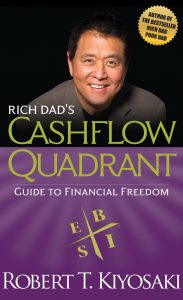
Like a lot of professionals, all I cared about is what I did for a living and thought that the idea of investing was boring. I never wanted to learn about it, and the idea would be to hand over money to a financial advisor. I read a Robert Kiyosaki book called the CASHFLOW Quadrant literally a day or two after graduating from residency training. It was also during my honeymoon because I’m here and there. It changed everything and it destroyed everything in terms of my medical career because I could never work for somebody at that point.
What I ended up doing was starting my first business, which was a cosmetic surgery business. I phased myself out because you never want to have your name on the door if you want to create a business. I did that a couple more times. That’s where the serial entrepreneur comes in, because I had Kiyosaki in my mind and also remembered that my dad happened to be a real estate investor or a landlord, I should say. At that point I was making money for the first time in my life and rather than give it over to wealth advisors. I started investing in real estate.
It’s a great start and you learned that from your father. You observed him moving from India and starting out new in the US, buying a duplex, as I recall. He was cash flow positive from the beginning.
This happened when I was two or three years old. To be clear, I could have learned a lot from my father in real estate, but the way he did it as I grew up was he was a landlord. He was a guy who bought properties, two or three-unit properties, and managed them himself. He did everything himself. When I grew up, he had a pretty significant portfolio by the time I was in high school. This phone at my house would ring off the hook and it was people, it was renters, people looking for properties. He outsourced nothing. When I was in high school, I thought the last thing on earth I would do is to be a real estate investor because that’s what it meant to me. It meant toilets, tenants and termites. Who wants that?
That ties into what you believe, your belief system. You see the good but you also see the perceived bad. That’s what I want to talk about on this episode, your belief systems and how that affects you in terms of creating wealth and income and achieving the financial goals that you want to achieve. The way I look at it, there are two different types of belief systems, and you might disagree with this or you might have a different answer to this based on what you have in your course or your program, but I believe there are limiting beliefs and then there are supportive beliefs.
The limiting beliefs which are often fear-based are the things that hold people back, and we all have them. Some people have so many of those limiting beliefs that they don’t break out of that proverbial box. I like what Brian Tracy had to say. He says, “You begin to fly when you let go of self-limiting beliefs and allow your mind and aspirations to rise to greater heights.” Where do your beliefs come from?
What it comes down to is the question of where does anybody’s beliefs come from? They come from our experience. I talk about this in the context of if you look at what our beliefs are as a society, where do they come from? Obviously we all have some different backgrounds. I am a child of immigrants. I grew up in Minnesota. All these different things make me unique. One thing that we all have in common for the most part is that up in the US or in the Western world somewhere, we all have this standard education system created back in the time of the industrial revolution.
If you look at the way it’s designed, it almost looks like a good conveyor belt. You’ve got twelve different stations, grades one through twelve, maybe kindergarten, so thirteen. At each station, they plop a little bit of information on you and you go to the next station and get a little information, you plop in. As these little widgets that are along this conveyor belt, our job during that period is taking what we’re told, absorbing it, and regurgitating it to the best of our ability.
My point in bringing all this up is that we’re not trained to think. We’re trained to listen to what other people tell us. What other people tell us may not always be the truth or it may not be the only way to look at the world. What happens to people when they finish this whole system of school? They come out usually trying to figure out something to replace a curriculum because we’re so used to people telling us, “This is what you need to learn. This is how it is. These are the rules. This is how you live.”
Then one day, we’re out on our own and no one’s telling us anything. That’s when we turn to conventional wisdom because conventional wisdom is a societal version of curriculum. We learn things that are supposed to be accepted truths. The problem is that conventional wisdom is also frequently wrong. There was a time when everybody believed the world was flat. Why? Conventional wisdom, the world is flat. How’d that go for you?
I also talk a little bit about in the course this whole thing back in the ’50s and ‘60s where we believe that there was this thing called the food pyramid. The pyramid showed us that we should be eating more starchy foods and carbohydrates the most, and at the very top of it is meat and things like that. We’ve all seen that. We remember that from grade school. If you look at that, you would think that the most nutritious food out there was pizza. What we realized in the last ten years in particular is that whole thing, that pyramid, is upside down. When you look at why that is, there’s a reason for it. It was because some Harvard scientists were paid off back in the 1950s by the sugar industry. Conventional wisdom is not only not right, but it is often influenced by special interests.
If you take that into the world of finance and investing, think about how it is that we’re taught to invest. What is the mantra? The mantra is get a good job, invest for the long term in a portfolio of stocks, bonds, and mutual funds. That’s conventional financial wisdom. If you look at it from the perspective I’m looking at it from, you might start asking the question, “Why do I believe that? Who does that benefit? Where does it come from?” If you follow the money, so to speak, it goes back to Wall Street and it goes back to the banks. It’s so deeply ingrained in us that when we invest in things outside of that paradigm, we can almost feel guilty like we’re doing something wrong. You deal with a lot of investors on your end. How many times have you heard someone say, “It makes so much sense, but I’m worried because it’s different. I’m worried about investing in real estate because it sounds like an alternative asset.”
The people that I try to help where I go out of my way and approach them as opposed to them approaching me, that’s the mindset they have. They’ve grown up believing that they need to go to school, get good grades, graduate, get a job, Save money, stock it away in a retirement account, and then when they reach 50, 60, 65 years of age, they can “retire” and then they live the so-called “proverbial good life,” and that’s so backwards.

Here’s a real example, Buck. I went to one of my neighbors and I literally handed him one of the copies of Rich Dad Poor Dad that I own. It’s my lender’s copy and I gave it to him and I said, “Read this. At least start reading it.” He had subscribed to my podcast and he listened to a total of one episode, but he gave me the book back about two months later and he said, “I haven’t had the time to read this.”
He literally didn’t even open it up and start reading it. He is very old school. He’s a young guy. He’s in his 30s. He has a young child and he is so into his jobs, 401(k), investing into that 401(k), that he doesn’t consider or look at anything else. I’ve had a long talk with him and he doesn’t want to open his mind. You and I both know that it’s impossible to create financial wealth if you follow conventional financial wisdom.
I always ask people the same question, “How many people that do that became wealthy because they invested in stocks, bonds, mutual funds?” It’s almost no one. If you were wealthy to begin with, you made a bunch of money and you invest it and maybe they didn’t lose all your money, but it’s very rare that somebody becomes wealthy. Beyond that too what my thesis is about is that when you look at what people do out there, and your audience are probably very smart people out there, they might be professionals who have very strong skill sets that take a lot of brain power to master, but Wall Street has effectively brainwashed us all into believing that we’re too dumb to manage our own finances or learn anything about financial education. We don’t even try because if we tried, we wouldn’t like what we saw. We wouldn’t like what conventional financial wisdom was telling us.
What Wall Street doesn’t want you to know anything other than what they want you to believe because they want your money, they want to put their hand in your pocket and make sure that as much of that as possible flows over to Wall Street because they’ll pay you a nominal amount of 4%, 6%, or 8%, whatever it might be. If you look at 2017 at the S&P index, it was about 19%, but at the end of the day, they’re making tons of money on your money. You’re essentially taking on all the risk. That’s what they want you to believe.
Here’s the other thing too that is important. This is a lot of what my message is in general on my podcast, which is if this conventional way of investing was the way that was probably the most profitable or made the most sense, then why is it that the wealthiest people in the world don’t invest in mutual funds? I’m sure Mitt Romney is not heavily invested in mutual funds. The Rothschild family is not invested in mutual funds. I live over in Montecito in Santa Barbara and some of the wealthiest people in the world.
These people don’t play by the same set of rules. There’s a lot of things that if people would open their eyes, they could do differently. It’s about opening your eyes because the rich and the affluent invest in different ways. They do invest in real estate and other alternative assets. They do have different types of investing paradigms and different strategies that they can use. The thing that’s interesting is the more and more I’ve looked at this, the more and more I realize that there’s a lot of people who could be using these strategies, who could be implementing the same type of game plan as the ultra wealthy, but they won’t ever do it because they won’t take a little bit of time to teach themselves or learn.
That’s the thing about beliefs. They’re neither right nor wrong. The good news is that limiting beliefs can be changed. Some people believe that their income, savings, and debt are a result of external factors, but the reality is they’re based on internal factors. Often these come from your childhood and your family. Do you have any tips on how we can change or improve our limiting beliefs?
These limiting beliefs that we talk about, these belief systems are all based in again this conventional wisdom. Going against what people have been telling you, people you trust, like your parents, it’s like you’re following a faith as you’re growing up and somebody all of a sudden says, “I want you to convert into a different religion.” It doesn’t happen very often. It’s that deeply ingrained. What I would say is look at this. I think this is very important. Understand rationally that everything that you’re doing, there’s not necessarily a right or wrong. This is just one way of doing things. Understand that there are other ways and open your mind to looking at them because we could have someone tell us that the world is flat and believe it or we could do a little research and do a little education and figure out that the world isn’t flat in fact.
Essentially people have two options in life. They could work hard, pay taxes, save anything they have leftover and then it gets taxed on the savings, or you take a different approach and you take the time to develop your financial intelligence and then harness the power of your brain to create those assets, particularly assets that produce passive income. Do you agree or disagree with me on that? Any thoughts?
No. This is the part that is important. Again there’re a lot of smart people out there that when it comes to investing are not using their brains. I used to be a brain surgeon. Brain surgeons are just the worst investors our there but they are not dumb people. They just won’t open their minds to all these things that are available.
There’s a difference between book smarts and practical knowledge. I don’t know how else to describe it.
I talked to Robert Kiyosaki about this on my show a few weeks ago. I got to know Robert on the previous summit. He’s always talking about how A students work for C students, and B students work for the government. I said, “You’re right about that, Robert. In fact, A students are probably the most difficult when it comes to turning the corner,” and again, it’s because of this Pavlovian feedback. You’ve been succeeding your whole life.
When you succeed your whole life, do you think you would want to try something different? It’s easy to try something different when you fail, when you’re not good student, or you’re used to failing. If you’re not used to failing, you’re never going to try something new. You’re never going to do anything that’s different from anyone else. I said to him, “I’ll take it a step further, I think that not only do A students work for C students, but A students don’t even realize they’re working for C students. It doesn’t even dawn on them that they are and they don’t even have a clue. They don’t care because they’re so in their own world.”
It’s not until they reach a level of dissatisfaction or frustration that they start to look outside of their comfort zone and then they start to realize. A couple of weeks ago, I was at the summit. I was on that investor cruise. I was with Kiyosaki and a bunch of other people, and there were several doctors on that ship. They came to the realization that, “I make a high income. I either like or dislike my profession, but I know that I’m paying a lot in tax and I could be doing a lot more.”
They’re getting to the point where they’re tired and they realized that, “I need to create passive income for myself if I want to start to scale back or retire from what I’m doing today.” It’s not until you come to the realization that there are other things you can do or you can do better than you’re doing that you start to look for the answers to those questions. That’s an a-ha moment a lot of people have. Robert Kiyosaki talks about a lot of these things, these limiting beliefs, like money is a limited resource and it’s not. Money is abundant. In fact, look at the Federal Reserve. They’re printing money out of thin air. They keep adding zeros to their balance sheet.
Like debt is bad, but that’s probably one of the most limiting beliefs there is because in fact, it’s almost impossible to become wealthy without taking on debt.

It’s very hard and it takes a long time because you don’t have that leverage or the magnification to allow you to accelerate that wealth creation through good debt. That’s the thing, debt is not debt. There’s good debt and there’s bad debt. When you start to understand that and how you could use it as a financial tool, then you start to realize, “I can fast track my results here.” The people who listen to Suze Orman and Dave Ramsey, that’s the Kool-Aid they’re drinking. Unfortunately, if you believe that and you follow that advice, you’re almost doomed for failure.
I read this article some time ago about how Dave Ramsey and Suze Orman do not invest the way that they say. It’s not surprising because both of them make a ton of money. They don’t invest the way they tell everybody else to invest.
I know that to be true. I do know someone who is related to Dave Ramsey and he owns a lot of real estate. I can tell you it’s not all free and clear, so, yes, there’s a little bit of hypocrisy there.
At the end of the day it’s entertainment. That is what it is, and what we’re trying to do hopefully with shows like yours and what I’m trying to do with my audience is trying to be rational about things and explaining, trying to expose people to different ways of thinking. Whether or not they are convinced by it or not, that’s up to them, but at least they have exposure.
All we can do is pass on that information and provide some other perspective and some other financial wisdom. What they do with it is entirely up to them. They could take it and open up their mind. I love Robert Kiyosaki’s analogy of intelligence and standing at the edge of the coin. There are three sides to a coin: the heads, the tails and the side. If you can stand on the edge of that coin with feet on both sides and look at both sides of every argument, every suggestion, that’s where true intelligence lies.
It’s critical that people do that. One of the driving forces for me wanting to do this in the first place is realizing that in my background, people who come from the medical field and high-paid professionals in general, highly-trained professionals, lawyers, CPAS, engineers, lots of those, they are perfectly capable of absorbing this stuff but they’re not getting the information.
Why is that? Is that because they don’t care?
Where does anybody learn anything about money? Usually at the end of the day what happens is you finished training, you’d been broke for a long time and all of a sudden somebody comes to you and drops a card in your lap, and they’re like, “I’m a wealth advisor,” or worse yet, it’s like the blind following the blind. You get a referral from your buddy who finished residency a year before and they drop a card in your lap and it says wealth advisor on there. Since you’re a wealth advisor, you must be a professional and you must know more than me.
That comes down to beliefs. If you believe that you’re on the right path and you’ll retire in comfort working with your financial advisor or doing what you’re doing until you have pain or you have discomfort in your current situation, at least most people probably don’t take the next step or a step towards looking at what else is available, what else is out there, and better ways of doing what they’re doing today. Pain is a big driver and until you put paint in front of people’s path, they don’t take that action. It’s my hope that we can reach people and point out the pain so they can realize that, “I’m not on the right path. I might be heading for a train wreck.”
We’re in a time where it’s important for that to happen. As you know very well, we live in an unparalleled financial time. The Fed rates are going up a little bit, but they’ve been near zero for a decade now. That has not happened in the history of the world, $20 trillion of national debt. The old saying that even the wealth advisors will tell you is that past performance does not indicate future returns. We’re in a situation where making 4% or 5% at best over time. If that’s what your portfolio is doing for you, even if you have a decent income, there’s a decent chance that you may outlive your money because at the same time, there are these medical advancements that are being made.
People in their 30s, 40s, or even 50s may end up living ten or twenty years longer than they thought. That’s a scary thing and that’s where people need to open their eyes. Even without the advancements that we’ve had, if you look at when social security started, that was at a time when the life expectancy was around the age of 65. We’re expecting people to live an extra twenty years. Guess what had happened? The same thing’s going to happen again. All of a sudden, these people who have got their money growing at 4% or 5%, there’s going to be a lot of people dying broke.
Unfortunately, the government is also broke. That whole social security minimal paycheck every month is not sustainable. Who knows if it’s still going to be here by the time you and I retire? Not that we’re relying on it and even need it, but it’s not going to be here. It may not be here.
My opinion about social security is that we at different times have had different scenarios in terms of how long we had to live after we hit a certain age after we “retire.” Back when social security was created, the life expectancy of a man was about 67 years old. The idea was simply that you’d retire and the government would support you for a couple years. That’s it. Times have changed. They are unparalleled. We’re living longer. We have so much debt.
Our country standing in the world may not continue to be the way it was. We know that China is on the path to becoming the world’s biggest economy in the next ten to fifteen years. Where does that leave us? We have to be more proactive. We have to get more involved. Most people are plenty smart to open their eyes because, in fact, it’s not that hard. Frankly, it’s not just real estate. I am heavily into real estate, but there are all sorts of things out there and it’s just waiting for people to think outside of the Wall Street box.
You launched the online training program called Your Roadmap to Real Wealth, and I am thrilled to have been a part of that. It was a great experience. To be surrounded by other like-minded, very intelligent, very successful people as part of the curriculum for that has been an honor. Tell us about Your Roadmap to Real Wealth, and then I’ll fill in the gaps on how people can access that if they’re interested.
Marco, the whole idea behind the course was that it reflects the types of things I talk about in the podcast, but it takes it to the next level. When I finished my training back in 2008 to 2009 and I started making money, there wasn’t a roadmap to tell me what to do with this new found money that I had. I realized after reading Kiyosaki’s books that I didn’t want to go the wealth advisor. Robert’s books are great obviously and he’s a genius, but one thing that they don’t give you is nuts and bolts now-what information. You’ve decided, “I want a different path in life, I want to invest a different way, and I want to do things the way that the affluent and wealthy people of the world do, so rather than just do what everybody else does, I’m going to go out on my own.”

I didn’t have that roadmap. I wanted one, but there was nothing available. What I’ve done is I’ve gone back and I’ve created that roadmap in this course, the course that I wish I had when I wanted to go on this journey of investing on my own and ultimately toward financial independence. It’s not just about investing and it’s not just about real estate. It goes from anywhere from mindset, so some of these things that we talked about in terms of deconstructing things, reconstructing things. I talk about how the wealthy view money and how the wealthy’s perspective is different.
Then I’ve got guests talking about specific things, people like the real estate guys talking about real estate. You’re talking about real estate. We’ve got Kenny McElroy from Robert Kiyosaki’s Rich Dad series, Rich Dad advisor. He’s talking about that. We talk about strategies, like various insurance-type strategies that can make you a ton of money and have guardrails. We talk about tax strategies. Tom Wheelwright, another Rich Dad advisor and a friend who’s brilliant. ProVision is my CPA team, and he’s Robert Kiyosaki’s CPA as well. He spends an awful long time going into the nuts and bolts of how we think about taxes. Tom thinks of taxes very differently than most CPAs. He thinks taxes are mostly ways that the government is primarily giving you ways not to pay taxes legally.
That has literally saved me millions of dollars the last decade. We’ve got guys like Kevin Day, who is one of the world’s foremost asset protection and estate planning attorney. He does something like six or seven hours. This is an expensive attorney. He goes into massive amount of detail. Guys like you explaining a lot of the things that you know, and which I’m sure your audience is used to. Think about what Marco does for you on this show, and then apply that to different areas. That whole world that you need to be surrounded by, the tribe that you need to be surrounded by in order to take this thing to the next level, that’s what the course is all about.
The bottom line is if you want to be wealthy, you got to do what the wealthy do. You don’t have to recreate the wheel. It’s been proven. It’s been done time and time and time again. If you want to be wealthy and financially independent, financially free, do as the wealthy do. That’s what we try and lay out. That’s what you’ve got in the program. That’s what we try and talk about from week to week. Is there anything else you’d like to share with our audience before we wrap up?
The one thing that you and I both agree on is that the biggest takeaway that I’ve had on this financial journey. I’m talking about, 0 to about $25 million in net worth over the course of seven or eight years. I say that not to brag but because I’m on a mission to help people understand it. There are lot of people who pretend to have gone on this journey. I’ve been on that journey. Looking back at this, what I can tell you is the biggest thing that I’ve learned is financial education and building your network. Those are the two biggest things that are going to help you get there.
I might throw a third one in there. This is just for me, but have the right mentors, the right team of people that you can learn from and rely on, and have them help you.
That’s part of my network.
Buck, it’s awesome having you on the show. Thank you for your time. I’ll be talking to you again soon, but thanks for coming back on.
Thanks for having me, Marco.
– – – – – – – – – – – – – –
Download your FREE copy of: The Ultimate Guide to Passive Real Estate Investing.
Get your FREE coffee mug by leaving us a Rating and Review on iTunes. Here’s how.
See our available Turnkey Cash-Flow Rental Properties.
Please give us a RATING & REVIEW (Thank you!)