

We are constantly reaching for something, whether it’s more money, more experiences, more knowledge, more status, more stuff. What would be possible if you followed through on your best intentions? What could you accomplish if you could just stay focused and overcome distractions? If you care about your work, your family, and your physical and mental wellbeing, you must learn how to become indistractable and control your attention as Marco Santarelli’s guest, Nir Eyal, puts it. Nir Eyal writes, consults, and teaches about the intersection of psychology, technology and business. His latest book Indistractable: How to Control Your Attention and Choose Your Life, received critical acclaim, winning the 2019 Outstanding Works of Literature Award as well as being named one of the best business and leadership books of the year by Amazon.
Download your FREE copy of: The Ultimate Guide to Passive Real Estate Investing.
Identify great tenants using SmartMove. Visit www.TenantScreening.com and Save 25% using podcast code NORADA25.
Try LandGlide FREE for a week by visiting www.LandGlide.com/PassiveInvesting
—
If you missed our last episode, be sure to listen to Investing in Condos and Neighborhood Grades
The ancient Greeks immortalized the story of a man who was perpetually distracted. We call something that is desirable but out of reach, tantalizing after his name. The story goes that Tantalus was banished to the underworld by his father, Zeus, as punishment. There he found himself waiting in a pool of water well above his head, dangled the tree ripe with fruit, ready for the picking. The curse seems benign, but when Tantalus tried to pluck the fruit from the tree, the branch moved away from him, always out of reach. When he bent down to drink the cool water, it receded so that he could never quench his thirst. Tantalus’ punishment was to yearn for things he desired but can never grasp.
We are constantly reaching for something, whether it’s more money, more experiences, more knowledge, more status, more stuff. The ancient Greeks thought that this was part of the curse of being a fallible mortal and use this story to portray the power of our incessant desires. What would be possible if you followed through on your best intentions? What could you accomplish if you could just stay focused and overcome distractions? If you care about your work, your family and your physical and mental wellbeing, you must learn how to become indistractable, as my guest, Nir Eyal, puts it and that’s what this is all about.
Enjoy the show!
– – – – – – – – – – – – – –
Download your FREE copy of: The Ultimate Guide to Passive Real Estate Investing.
Get your FREE coffee mug by leaving us a Rating and Review on iTunes. Here’s how.
See our available Turnkey Cash-Flow Rental Properties.
Please give us a RATING & REVIEW (Thank you!)
SUBSCRIBE on iTunes | Stitcher | Podcast Feed
How To Control Your Attention And Choose Your Life – Nir Eyal
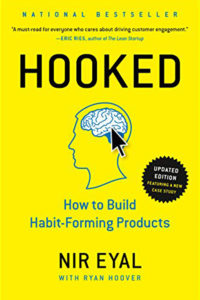
It’s my pleasure to welcome, Nir Eyal. Nir writes, consults and teaches about the intersection of psychology, technology and business. He is the author of two bestselling books, Hooked: How to Build Habit Forming Products and Indistractable: How to Control Your Attention and Choose Your Life. Indistractable received critical acclaim winning the 2019 Outstanding Works of Literature Award, as well as being named one of the best business and leadership books of the year by Amazon. In addition to that, it’s one of the best personal development books of the year by Audible. In addition to blogging at NirAndFar.com, Nir’s writing has been featured in Time Magazine, Psychology Today and the Harvard Business Review. Nir, welcome.
Thanks, Marco. It’s great to be here.
It’s great to have you on. I first got exposed to you and met you at the Inc. 5000 conference. We got talking about your book and I basically loved it so much. After listening to your talk, I wanted to get you here and you graciously said yes. I’m glad you’re coming on because your message resonates with a lot of people. I’m excited to share it. Can you tell us a little bit about yourself, so the readers have a better understanding of who you are and where you came from?
I am what you call a behavioral designer. I use consumer psychology and behavioral design principles to help companies build habit-forming products. That was what my first book was about. It was called Hooked and it came out of a class that I taught at the Stanford Graduate School of Business, as well as the design school there. It was all about how we can use the psychology of habit design to help people build healthier, more productive, more connected lives through the products we use. I’ve worked with all kinds of companies from the New York Times to fitness apps to education companies, all sorts of products, to make those products more habit-forming, to make the products and services that can build healthy habits in people’s lives.
After I wrote that book, I also realized that there was a flip side to all of this, that sometimes the products and services we use are well-designed that we want to use them all the time. The unfortunate byproduct of that is that it can lead to distraction. I think this is a problem that I’m guessing every single person reading can empathize with. This feeling of constantly feeling distracted, that we had these big long to-do lists and somehow, we don’t do what we say we’re going to do day after day. That was certainly my situation. I would say I was going to spend quality time with my daughter and yet I’d be on my phone. I would say I was going to work out, but I didn’t. I would say I was going to work on that big project and somehow find myself doing something else.
I wanted to get to the bottom of this question of why don’t we do what we say we’re going to do? Why do we get distracted? The fact of the matter is these days, we all know what to do. Who doesn’t know how to get in shape? It’s common sense. Who doesn’t know how to have a better relationship with your family and loved ones? You have to be fully present with them. Who doesn’t know how to excel at their job? You got to do the work. You’ve got to make the sales calls. You’ve got to do this stuff that other people aren’t willing to do. It’s not rocket science. Frankly, if you don’t know what to do, google it. Who doesn’t have access to Google? We know what to do.
The question is why don’t we do the things we know we should do? I argue that the big problem in the 21st century is not the knowledge gap. We have access to the information. The big problem that we face is the action gap. Why don’t we do what we say we’re going to do? The reason is that we keep getting distracted. Unless we tackle this problem and become indistractable, we are going to have our time, our attention and our lives controlled by other people. What I want to do is to start this movement of people who say, “I am indistractable. This is who I am. I have this skill and this lifestyle to make sure that I do what I say I’m going to do and live the life I want to live.”
That’s a great introduction and a great overview. The thing I like about your book is you talk about science and the psychology of it, but it’s not a theoretical book. It’s by far a tactical book and there are a lot of takeaways and how-tos, which is practical and I put into use. When I was going through the book and Indistractable, I recognized that you took the time to explain the psychology behind distraction and you broke the book down into four sections. You came up with four key strategies for becoming what you call indistractable. Is that a trademarked name?
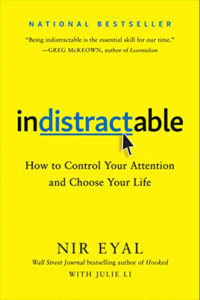
You can’t trademark book titles, but I did make up the word. I own the URL. You can’t trademark it, but it is a word I invented. The reason I called it indistractable is that it sounds like indestructible, meaning that it’s a superpower. It’s what I call the skill of the century. That’s where that came from.
These four key strategies that you came up with are essentially mastering your internal triggers, hacking back on the external triggers, then making time for traction and then preventing distraction with the use of packs. It will be an interesting conversation later on because I feel like I’m tricking or fooling myself, but we’ll get to that. A lot of people now understandably think that distraction has a lot to do with technology. Understandably so because the iPhone came out in 2007. Now, we have these smartphones everywhere. Virtually, everybody has them. The reality is we get distracted by many other things and for many different reasons. What is behind our distractions?
One of the first things I was surprised to learn is that distraction is not a new problem. In fact, 2,500 years before the iPhone, Plato talked about this same problem. He’s talked about how distracted the world was back then. He called it akrasia in Greek, the tendency for us to do things against our better interest. Clearly, if Plato was talking about it 2,500 years ago, it can’t be something that Facebook and Apple invented. It is nothing new. What is new is that because access to distraction is easier than ever, because we have these devices in our pockets, it is a distraction that you are looking for, then I believe it is easier than ever to find. Which means it’s even more important to be the person who understands how to manage distraction. I do think that this will be the skill of the century that will define the people who succeed and those who fail. The difference between those who allow their time attention in their lives to be controlled by somebody else or those who decide for themselves in advance how they want to spend their time and attention.
The best place to start to understand distraction is to understand what distraction is. The best way to do that is to understand what it is not. If you ask most people what the opposite of distraction is, they will tell you it’s focus. I don’t think that’s true. The opposite of distraction is not focused. The opposite of distraction is traction. If you look at the entomology of both words, they both come from the same Latin root, trahare, which means to pull. You’ll also notice in the book that both words, traction and distraction, end in the same six letters, action. Traction is any action that pulls you towards what you want to do, things that you do with intent. The opposite of traction is distraction, anything that pulls you away from what you plan to do with intent.
This is important for two reasons. Number one, anything can be a distraction. Let me give you a case in point. Before I wrote this book, I used to sit at my desk and first thing in the morning I would say, “Now I’m going to work on that big project. I’m finally going to do what I said I’m going to do. Here I go, I’m not going to get distracted. I’m going to work on that thing that I’ve been procrastinating on. Here I go right after I check the email. Right after I check this message on my phone. Right after I do this one quick thing on my to-do list.” I would get distracted doing something that felt productive. Checking your email, doing that thing on your to-do list. Even though I wanted to do something else, I wanted to do that hard task that I’d been procrastinating on. I didn’t do it because I got distracted by something that felt productive. Checking email and doing something work-y, that’s productive, isn’t it? No, it’s not. It’s pseudo-work because if you are not doing what you plan to do, that is by definition a distraction.
I think it’s a more pernicious form of distraction because if you sit down at your desk when you’re supposed to be working and start playing Candy Crush or start checking Facebook, that’s a distraction. You’re slacking off because it’s so obvious. We know how to recognize it, we can see it. When it’s emailing or checking a Slack channel or returning a text really quick, it fools us. Distraction tricks you into thinking that that task is urgent. What we do is we prioritize the urgent at the expense of the important. That’s what gets people on this constant hamster wheel of never finishing the important stuff because they keep doing all the stuff that they think is urgent and that is cancer for your productivity, well-being and happiness.
Those types of distractions are a real problem. It’s the ones that are less obvious. It’s not the Facebooks and the WhatsApps. That’s not as big of a problem as the distractions that we think are work but aren’t, our pseudo work. As anything can be a distraction, I argue anything can be traction. As long as you plan to do that activity, as long as that’s something that you’re doing on your schedule and according to your value, not on the app maker schedule, but on your schedule, there’s nothing wrong with it. I call BS to this media-fed inferno that we experience these days calling technology is melting your brain. It’s hijacking your brain. It’s addictive. It’s rubbish. It’s not true. It’s all media hype to get you to click more links.
When the New York Times publishes these stories, they make money the same way Facebook does. They want to waste your time and get you scared because they know that’s how they’re going to make more money showing you ads. If you look at the data, it’s not the technology that’s doing it to us. Frankly, there’s nothing wrong with saying, “I want to go on Facebook for a couple of hours. I want to watch a movie on Netflix. I want to see something on YouTube.” There’s nothing wrong with that stuff as long as you do it on your schedule, not the app makers. Anything can be a distraction and anything can be traction as long as it’s done with intent. That’s exactly what I show you how to do.
It comes down to the individual, not what people say is or should or can be distracting. Distraction is whatever you make it as a distraction.
It’s about intent. It’s about the difference between traction and distraction. It’s about actions that pull you towards what you want. The secret here, if there’s one mantra in the book, it’s that the antidote to impulsiveness is forethought. Distraction is a problem of impulse control. If we want to get to the icky, sticky truth, it’s not the pings and dings. We love to blame the technology. Every generation has its mind-melting technology. They used to say that novels were terrible for you. They were hijacking your brain and comic books and rock and roll music and the television. All these things were supposed to melt our brains. It never comes to fruition. We are much more powerful than any of these technologies.

The real problem is not technology. The real problem is what’s going on inside of us. That icky, sticky truth that people don’t want to admit, I certainly didn’t, was that the reason we get distracted, it’s not the external triggers. It’s not about the stuff outside of us. It’s about what’s going on inside of us. That the root cause of distraction is feelings that we want to escape. It’s the discomfort of stress, uncertainty, loneliness, fatigue, anxiety. This is why we turn to distractions, whether that distraction is too much TV, too much news, too much Facebook, too much booze.
Whatever the case might be, it’s always about escaping an uncomfortable sensation. If we don’t face that fact and learn tools and techniques to deal with that discomfort, we will always get distracted by something. That’s why step number one is about mastering the internal triggers. Having tools in our toolkit so that when we feel that discomfort, we’re not constantly reaching for something. We’re not reaching for our phone. We’re not reaching for Facebook. We’re not reaching for that bottle. We’re doing something that’s helpful and helpful as opposed to hurtful.
I know you talk about this in the book. I don’t remember how extensively, but it made me think back years ago to what Tony Robbins said, we as people do things more to avoid pain, to seek pleasure. We’re driven by the fact that we want to avoid pain, not so much that we’re seeking that pleasure.
Tony Robbins does talk about that, but I think he’s a little wrong and it’s not his fault. He cites Freud. Freud called it the Pleasure Principle that all human behavior is in pursuit of pleasure and the avoidance of pain, but we now know that’s not exactly true. Modern neuroscience reveals that it’s not about pleasure. In fact, everything we do, everything you do, you do for one reason only and that is the desire to escape discomfort. Even the pursuit of pleasurable sensations, wanting to feel that pleasure of closing that big deal, asking someone out on that date, whatever it might be, the pleasure that we seek is spurred by the discomfort of wanting, craving, lusting, desire. There’s a reason we say love hurts because neurologically, that is exactly what is going on in the brain.
This is important because we come to an understanding, and this is what neuroscience supports, that all human behavior is driven by a desire to escape discomfort. What that means, the big revelation here therefore, is that time management is pain management. If we don’t learn techniques to control our discomfort, we will always get distracted by something. I don’t care what guru’s techniques you listened to, what life hacks you’re using, none of that stuff is going to work if we don’t first start with this truism that time management is pain management. We have to learn those techniques first.
Nir, our drive to relieve discomfort is the root cause of all our behavior essentially, but do we need to understand our pain in order to control it or to find better ways to deal with the negative urges that we have?
Absolutely. The first step is acknowledging that feeling bad isn’t bad, that the self-help industry now profits from telling people, “If you’re not happy all the time, if you’re ever anxious or sad, something’s wrong with you, go get a pill for that. Go read this book to get that problem taken care of.” It’s ridiculous. Nothing could be further from the truth. There are some people who do suffer from the pathology of depression, anxiety disorder, but the vast majority of people have in their heads that if they feel bad, something must be wrong with them. Think about this from an evolutionary basis. Do you think that if our species has evolved to be happy and content all the time, would that be a good evolutionary trait? Of course not. Evolution designed us to have this adaptation of constantly being pissed off, constantly wanting more. Why? Because the tribe of Homo sapiens was never satisfied, was the one that kept hunting and inventing and searching.
This is called the negativity bias. This is why we always register bad news and fear. That’s the stuff that keeps us going because we are designed to never be happy for long. Happiness is by design a fleeting emotion. We are not designed to be contented. We are always designed to want more. That can get the best of us. Many times, I work with people who have some form of overwork. I wouldn’t call it workaholism, that’s more of pathology in the addictive form, but we all know that person who is spending way too much time in the office and that can have some harmful consequences. It comes at the expense of their personal health or family relationships with friends. That can have some cost as well and they can’t seem to stop.
That’s where it can go overboard. If we harvest that sensation, if we harness that discomfort, that disquietude, it can lead us towards traction rather than a distraction. It’s about harnessing it towards doing what we want to do. If you crave to make that sale, if you crave to close that deal, there’s nothing wrong with that. Being dissatisfied until you reach that goal is the fuel to drive you towards that goal. What’s not good, what leads towards distraction is when you let that stress, that anxiety, those sensation leads you to smoke more, to drink more, to check email more, to look for escape in the form of distraction as opposed to actions that help you move towards traction.
Let’s take a look at one example in each of those four categories. You have a lot of great content in the book and it’s a great read and I highly recommend it. Anybody reading this, I think this would benefit anybody regardless of what you do. Let’s look at internal triggers. We live in a safe, healthy society. We live in the safest, healthiest, well-educated and most democratic time in human history, yet you say that we won’t ever be completely happy. Why?

Because we are designed for dissatisfaction, that we have these confluences of what we call heuristics, these cognitive shortcuts that our brain takes to make sure that we’re never satisfied for long. In fact, one of the most powerful is called hedonic adaptation. We know that even when lottery winners win millions of dollars, they are happy for a little while and then they go back down to baseline. The opposite is also true. We know that in studies of people who are paraplegics, they are confined to a wheelchair. At first, they’re sad, very depressed. Shortly thereafter, they recover and go back to baseline. Our brains are designed to keep us at this base level of mild dissatisfaction all the time. That’s an evolutionary benefit. That’s what kept our species hunting and striving and inventing and creating. It’s what led us to get to the moon. It’s what leads us to create life-changing medicine.
That’s what helps us progress. That means that we have to accept that discomfort and learn to utilize it to help us get better as opposed to letting it get the best of us. Between hedonic adaptation, negativity, bias, boredom, all of these things lead us towards this dissatisfaction. What most people do out there when they feel bad is that they turn to something to relieve that discomfort like a baby sucking on a pacifier. We look for our pacifiers. Whether that pacifier is your phone, the television, work, booze, whatever it might be, we constantly reach for those pacifiers to take our mind off of that discomfort. That’s the easiest way. That’s the path of least resistance not to feel what you don’t want to feel. Instead, if we want to be indistractable, we have to ask ourselves, how do we utilize that to lead us towards traction so that it drives us to be better by doing what we want as opposed to just helping us escape emotional discomfort?
The bottom line here is dissatisfaction is normal, not abnormal. I remember in the book you say that it’s the dissatisfaction that’s responsible for our species advancements and our faults.
That’s right, so we want to harness it. It’s like fire. A fire can help us cook meat and they can also burn our house down. We want to make sure that we use it to reach our goals.
Let’s look at the external trigger. That was an internal trigger example. Let’s look at an external trigger. It seems to me that email, this comes up time and time again, it’s been the bane of my existence. Email and text messages are the biggest external distractions now for many people. I’m sure probably everybody reading this suffers from this from time to time. Is there a way to hack back our email? I’ve created my own systems within Gmail, through filters and folders and all that stuff. It’s helped a lot, but I still get inundated.
The first step is to master the internal triggers and we talked about the strategy. We didn’t talk about the tactics. Tactics are what you do. Strategy is why you do it. In the book, there are lots and lots of tactics for how to master those internal triggers and that’s the most important step. The second step is about making time for traction. Hacking back the external triggers, the pains, the dings, the things like email can take us off track. Before we get to step three, let’s take a second to talk about step two, making time for traction. After we have the techniques to master the internal triggers, the next step is to make time for traction. What does that mean? This means that if we are going to become indistractable, if we are going to do what we say we’re going to do, it is imperative that we decide what we are going to do in advance.
Here’s the rule, you cannot call something a distraction unless you know what it distracted you from. I’ve worked with so many people over the years who tells me how they can’t seem to focus. They’re not getting enough done. The world is so distracted these days between what’s happening in the news and Twitter and their boss wants this and the kids want that. They can’t seem to do enough. They can’t get their productivity under control. I say, “That’s unfortunate. Can I see what it was you planned to do?” They say, “Sure. Can I show you my to-do list?” I said, “No. Your to-do list is a list of output. I’m not a fan of the to-do list.” To-do list for most people backfires. Most people do not use a to-do list correctly. In fact, when it comes to to-do lists, here’s the thing. I call it the tyranny of the to-do list.
What most people do with to-do lists is that they use it as a tool to prove to themselves why they’re incompetent. What do I mean by that? When you don’t finish the things on your to-do list, you get to the end of another day. Half of my to-do list I wouldn’t get done and I would recycle from one day to the next day to the next. When you do that, if you’ve ever experienced that effect of not finishing everything on your to-do list, what you are doing to yourself subliminally is you are reinforcing that you, yet again, have not done what you said you were going to do, loser. That negative self-identity is internalized and then it becomes normal. “It’s okay another day. I didn’t get done everything I’m going to do.” That is toxic. We need to stop that.
Instead of keeping to-do lists, which turned out to be not an effective technique, what we want to do is to plan the input, not the output. The to-do list is a list of output, but you can’t make output without input. What is the input? The input is time. If you have a big white space in your day, you’re distracted. Everything is a distraction. Because if you don’t plan out what you are going to do with your day, everything is a potential distraction. You cannot call something a distraction unless you know what it distracted you from, which is where this technique called time boxing comes from. It’s been validated in thousands of studies to be one of the most effective things you can possibly do. It’s simply planning out what you are going to do and when you are going to do it, a critical technique. It will change your home life. It will revolutionize your work life.
This technique of making a time box calendar, I built a simple tool. You don’t have to sign up for anything. It’s totally free to help you time box your day. What I want you to do is to share that time box schedule with the various stakeholders in your life. Sit down with your boss for fifteen minutes a week and say, “Boss, here’s what I’m going to do for my week ahead. Here’s what I don’t have time for. You see this other schedule here? Here’s the stuff I couldn’t fit into the schedule. Please help me reprioritize.” Why is this important? I am sick and tired of hearing the stupid platitude that every self-help, personal productivity guru says that those, “If you want more time to focus, tell people no.” Come on, give me a break. You’re going to look at the person who pays your bills. You’re going to look at your boss and say, “No, I’m not going to do that, boss.” That’s ridiculous. You’ll get fired. Don’t be the one who says no to your boss. Tell your boss here’s what you have time for, “Look at my schedule. I put in everything that needs to get done. Here’s the stuff that doesn’t fit you, boss. Help me reprioritize.” Let them be the one that says no. Not you. That can only be done through time boxing. That’s the critical step. Number two is making time for the traction in your life.

I’m glad you expanded all that. That is critically important. The time-boxing thing is phenomenal. I remember I was starting to time-box around the time when I first met you. When I heard you talk about it, I thought, “This is great. I’m on the right track. I’m doing the right thing.” For people who still are reading this and don’t completely understand it, I guess the best way to think about time boxing is as a framework for how you’re going to manage your time. Is that a good way to describe it?
That’s exactly right. For many people, they look at my schedule, and I show people my own schedule in the book, and they say, “That looks so rigid. Down to the minute, you need to plan every minute of your day?” They don’t realize that, number one, it’s a template. It’s a way for you to know for every minute of your day what is traction, what is a distraction. Whatever you plan to do is traction. Anything else, even the stuff that tricks you into thinking it’s important, like your emails, when you want to be working on that big project, everything else is a distraction. That doesn’t mean you never get distracted. It means I still get distracted. If something unexpected happens, it happens. The point is that now I can do something about it.
There’s a great quote by Paulo Coelho who said, “A mistake repeated more than once is a decision.” Most people out there have decided to be distracted because they get distracted by the same stuff day after day. That has to end. If we want to live with personal integrity, if we want to be honest with ourselves, the only way to do that is to understand what distracted us and now do something about it. Because every distraction only has three potential causes, either it’s an internal trigger, an external trigger or a planning problem. That’s it. We can systematically look at what distracted us and make sure it doesn’t happen again in the future.
I want people to understand this because the takeaway here is that it doesn’t matter what you do with your time. What’s more important is the success of it is measured by what you did with what you planned to do.
If what you want to do is watch that big game, do it. That’s one of the best things about becoming indistractable. It’s not about being super productive all day long. No. I want you to plan time for play. I want you to plan time to enjoy yourself. Here’s the beauty of it. Many people when they say, “I want to watch a movie tonight on Netflix or I want to watch that big game,” in the back of their mind, they still feel guilty. They still got that to-do list of stuff that didn’t get done. They can’t truly enjoy the big game. They can’t get into the movie because they’re constantly going, “I should be doing more.” When you become indistractable, it’s amazing. You have this weight lifted off your shoulders because you say to yourself, “Watching Netflix right now, watching that big game is exactly what I plan to do. Anything else would be a distraction.” If you check work email while you’re watching the big game, you’re distracted because what you wanted to do with your time is to enjoy that game in peace. That feeling of not having that obligation, of always thinking I should be somewhere I’m not is amazing. I want everyone to experience that feeling.
Let’s go back one step here and wrap up the thing that I opened up regarding email, texting and chat. We jumped ahead to something that probably is one of the most important things I think we could have talked about and given away. That’s the whole thing about time boxing because that comes down to being effective through what you call traction. I know a lot of people are probably sitting there thinking email. How do you control or hack back on email and messaging? If you look at my iPhone right now, I’ve got 6 or 7 messaging apps from WhatsApp to you name it. I have to ignore it in order to control it.
The reason I want to talk about step two is that step two is necessary before we can get to step three. Step three is about hacking back the external triggers. Why do I call it hacking back? To hack means to gain unauthorized access to something. When you think of a computer hacker, that’s what they’re doing, they’re gaining unauthorized access. We all know that Facebook, Twitter, CNN and the New York Times are all hacking your attention. They make money when you spend time with those products and services. That’s a surprise to no one. Here’s the thing, we can hack back. We are much more powerful than these tech companies are. Why? Because we ultimately have the devices in our hands and there’s nothing that these companies can do if we alter the technology to serve us as opposed to the technology serving these tech companies.
How do we do that? We ask ourselves a critical question, “Is this technology serving me or am I serving it?” That’s where we start. In all these contexts and all these environments where we have these external triggers, whether it’s email, your laptop, your cell phone meetings. How much time do we spend on stupid meetings that don’t need to be called? Group chats like Slack, all of these various environments, I go through one by one on how we can hack back the external triggers in each and every one of these environments to make sure that whatever that external trigger is, is serving us as opposed to us serving it. Let’s dive deep into this one realm of email because you’re right, this tends to be one of the most distracting technologies around. Good, old email.
Here’s what I want you to think about. It’s a simple math problem. When we think about the total time that we spend on email, the total time is a function of the number of messages we receive in a given period of time multiplied by how long it takes us to respond to each message. It’s a simple math problem. We can break down this math problem and figure out ways to reduce the amount of time we spend on email in any given period of time, say every single day. One of the most effective techniques is to understand where we waste the most time per message. Now there are lots and lots of techniques I described. This is one of the most effective techniques. Because when we look at time studies, what we find is that where time is wasted on email is not the checking, it’s not the replying. It’s the re-checking. That’s where we waste time.
What does that look like? You open an email and you check it, you put it away. You open it again, you check it, you put it away. You open it a third time, but you keep doing this and that is a complete, utter waste of time. That’s where we waste the most time on emails. What do we do? A simple technique that we can use is every time we open an email, we have to ask ourselves the most important question from a time management perspective. When does this need a reply? Not what’s in the email. What I want you to do is to label that email by one of two categories. If the email needs a reply now, I want you to label it as now. If you don’t know how to label emails, google it. It’ll tell you how to do it in Outlook or Gmail or whatever else. It’s easy to do. Label it as either “Now” or if the email is not urgent, if it can wait until sometime this week, label it as, “This week.”

If the email doesn’t need a reply, then delete it or archive it. What do you do with those two categories? Here’s what I want you to do, and this is why we had to talk about step two first. For the urgent emails, I want you to put the time in your calendar to reply to just the urgent messages. Whether it’s 1 hour, 0.5 hours or 2 hours a day, however much time you need in your day, time box that time to reply only to the urgent messages. This will be about 20% on average of your emails. What about the other 80%? What do you do about all those? Here’s where the magic happens. Once a week for those non-urgent emails, I want you to time box a big chunk of time. For me, it’s 3.5 hours every Monday. I call it Message Mondays. That time is held in my calendar and on Message Monday, my priority is to flush through all those emails that didn’t need an urgent response. You say, “You’re not saving any time. You deferred it to later on, didn’t you?” No. Here’s the beauty of it. Remember that the way we reduced the time spent on email is reducing the number of how much time we spend on each message in a given period of time.
When we delay that time, here’s what happens. We stop this stupid ping pong game that a lot of people play by responding to every email as it gets in. Instead, by categorizing them by when they need to reply, either now or this week, we cut down on the ping pong game. That creates way more emails than are necessary. Here’s the other bit of magic that happens. When you delay how often you reply to an email based on how much of a priority it is, there’s this unbelievable thing that happens. The importance of these emails decay. Here’s how it works. You realize that when you give these messages a little time to breathe, the thing that somebody thought was important is not important anymore. Somebody answered their own stupid question. The thing that was important back then is now crushed under the weight of some other priority.
All that time you would’ve wasted on that email didn’t need to be wasted. Those emails that can wait sometime this week, you’ll find that about half of them don’t even need a reply anymore. You’ve saved yourself tons and tons of time. That technique of labeling each message by when it needs a reply and then using this time box technique to only reply to emails during those times when you’ve portioned that time in your day is effective. This will reduce the time you spend on email by up to 90%. Because when you don’t want to do, what most people do is check email when they feel stressed, “I’m not sure what to work on right now, so let me check email because I need to be responsive all the time. My clients demand it.” That’s BS. Your clients demand you respond, but you can put that time throughout your day so that it’s on your schedule. Even if it’s, “I need to check email four times a day.” Fine, 30 minutes, 4 times a day, I’m going to make sure there’s nothing urgent. What you don’t want to do is to reply to the non-urgent emails as if they’re all urgent because they’re not all urgent. Some are urgent, about 20%, 80% on average can wait until sometime this week. That’s what we want to do.
That’s the one question I have that I’m not completely clear on. I don’t think this is a stupid question, but I’m sure there are people who are asking the same question. How do you determine what emails are urgent and need to be replied to now versus this week? Do you judge that based on who it’s coming from and the subject line? If you can’t tell from those two pieces of information, then you have to open it.
You need to open it. You open each email, but you’re only opening each email two times. You open the email, you read the email and you’re determining whether to answer now or this week. Before you close it, you’re labeling it as now or this week. The first time, you’re labeling it. You’re not replying. The second time you open it, you’re only opening it during your time box schedule based on how urgent it is. You still have to read it. What most people do is they touch each email 5, 6 times because they forgot what was in it and don’t know how urgent it is because they forgot. Now you know how urgent it is and you’re only replying to those emails you’ve labeled.
Let’s start landing the plane here with this last and fourth section about what I call fooling yourself, but you call it pacts. Focus, not only does it require keeping distraction out, but it necessitates keeping ourselves in. You talk about three different pacts, three different ways to essentially hack this or your health hack yourself. You have an effort pact, a price pact than an identity pact. Give us the quick and skinny on these three.
The idea here behind a pre-commitment or a pact is to make some promise with yourself. It’s an incredibly effective technique. I will say you have to do it last. You have to do it after the other three. Some people jump into one of these techniques where they use a pact, but they haven’t properly prepared the soil, so they get some bad results. You have to first start by mastering the internal triggers. You have to have a plan in place in terms of making time for traction. You have to have hacked back external triggers. The last step, the fail-safe, is to make one of these pacts. When you make one of these pacts, basically what you’re doing is you’re making a pre-commitment in advance so that you won’t go off track. There are three types of pacts. You have what’s called an effort pact where there’s some friction to do something you don’t want to do, some effort that makes it difficult to get distracted.
Another type of practice is called a price pact where there’s some cost, some payment that needs to be paid if you get distracted, if you don’t do what you say you’re going to do. This comes from a study around smoking cessation. The most effective smoking cessation study in history found that all it took was $150 bet that you would get back $150 if you did not smoke. It’s the most effective smoking cessation study in history, more effective than nicotine patches and gums and all that stuff, it’s making a bet. That’s one type of pact. The third type of pact is called an identity pact. Identity pact comes from the psychology of religion. We know that when someone has a moniker, an identity that they call themselves, they become much more likely to do what they say they’re going to do.
When someone calls themselves a devout Muslim or an observant Christian, or even for that matter a vegetarian, it makes doing what they say they’re going to do much more likely. A vegetarian doesn’t wake up in the morning and say, “I wonder if I should have some bacon for breakfast.” They don’t eat meat. That’s who they are. That’s why the book is titled Indistractable. This is the new moniker. Even if you don’t read the book, having read this, you can call yourself indistractable. You are the person who strives to do what they say they’re going to do. Having that identity, having that moniker reinforces your identity and makes you more likely to stay on track.
We can wrap this up with a great takeaway and it’s something you call the 10-Minute Rule. How does that work?
The 10-Minute Rule helps us go full circle here. The 10-Minute Rule is a technique that we use in that first strategy around mastering the internal triggers. It’s one technique of many that I described that comes from acceptance and commitment therapy. The idea behind the 10-Minute Rule is to tell ourselves we can give in to any temptation, whether it’s eating that piece of chocolate cake we know we shouldn’t have or checking email when we know we should be working on a big project instead or making those sales calls. The 10-Minute Rule says we can give in to that temptation in ten minutes. This has been shown to be much more effective than strict abstinence. That when we have a technique in place, say when I feel that internal trigger, when I feel stress, anxiety, uncertainty, if a task is not fun to do, it’s okay. It’s totally normal. I can give in to that temptation in ten minutes. That technique has been shown to be effective. There are some particulars you have to understand to do it correctly. That technique is effective.
In other words, you’re saying to yourself, “I’m going to avoid that temptation for ten minutes before I even take action on it.” Odds are you’re going to be doing something else that’s probably more important within that ten minutes and you won’t end up going and pursuing that distraction in the first place.
Because these internal triggers, these uncomfortable emotions, they crest and then they subside. At the moment, they feel like they’re going, “I want it bad.” If you can learn to do what psychologists call to surf the urge, if you can ride out that sensation, like a surfer riding a wave, this is how we can learn to master these internal triggers.
I feel that way with chocolates, so maybe I’ll have to wait ten minutes.
Give it a shot. You’ll find 9 times out of 10, if you say, “I can give in to that temptation. No problem. I can have that piece of chocolate. I’m going to wait for ten minutes.” What you’ll find is that in those ten minutes, especially if you learn some of these techniques that I talk about in the book around addressing these urges with curiosity rather than contempt. A lot of people beat themselves up. They think, “I’m lazy. I have a short attention span. There’s something wrong with me.” That’s not the way to properly respond to that stuff that can make it worse. Also, it makes it worse when you say, “Strict absence. No. Don’t eat that.” That can make it worse as well. That tends to make you ruminate on what you want and doesn’t relieve the tension. It makes the tension worse. These techniques that I described in the book where you can surf the urge through curiosity around the sensation is a much healthier approach and much more effective.
Nir, this has been incredible. The information is so practical and useful. The book is outstanding. I’m going to go back and go through it one more time. There’s that much information in the book. With that, please tell our readers how they can find you and get more information about you and your books and products.
If you go to NirAndFar.com, that’s my personal blog. If you go to NirAndFar.com, there’s an 80-page workbook that’s completely complimentary that will help you on your journey to becoming indistractable. If you do end up getting the book, make sure you go to Indistractable.com after you buy the book. Keep the order number. Whether you buy it from Amazon or your local bookseller, make sure you keep the order number. If you enter the order number at Indistractable.com, you can get access to a free video course that’s part of this bonus package. It has all kinds of information that go along with the book.
Nir, thank you for taking the time and thank you for coming on.
It’s my pleasure. Thank you for having me.
—
If you enjoyed this, please remember to subscribe. For more information on real estate investing, download our free report, The Ultimate Guide to Passive Real Estate Investing, available on both of our websites at PassiveRealEstateInvesting.com as well as NoradaRealEstate.com. If you’re ready to take the next step, whatever the next step might be for you, get your free strategy session with one of our investment counselors. Complete the contact form on our website and we will assign an investment counselor to you. You usually will hear back within 24 hours, if not the same day. Help us spread the word, visit us on iTunes, leave us a rating and review. I read those all, I greatly appreciate it, so thank you in advance for that.
– – – – – – – – – – – – – –
Download your FREE copy of: The Ultimate Guide to Passive Real Estate Investing.
Identify great tenants using SmartMove. Visit www.TenantScreening.com and Save 25% using podcast code NORADA25.
Try LandGlide FREE for a week by visiting www.LandGlide.com/PassiveInvesting
Get your FREE coffee mug by leaving us a Rating and Review on iTunes. Here’s how.
See our available Turnkey Cash-Flow Rental Properties.
Please give us a RATING & REVIEW (Thank you!)