

Hello, my friends. And welcome to another episode of Ask Marco on the Passive Real Estate Investing show while we’ve got some great question is for you today on our rapid-fire listener question episode. And if you’re hearing a little bit of an echo it’s because I am actually in the sunshine state, I’m here at my place in Florida, not in California right now. And so I do not have sound dampening foam on the walls around me, which is what I usually have when I’m recording back in California. So I apologize if there is a bit of an echo here, hopefully we’ll be able to edit that out. Anyway, it’s been a crazy year. This year, 2021 it’s December, it’s almost over 2022 is around the corner. We have seen in incredible appreciation in every market around the country. In fact, as I sit here today, about 85% of the markets that we track are still being ranked as strong or very strong in terms of price, growth and appreciation.
So will that continue? I expect that to continue well into 2022, but not at the same pace that we we’ve been seeing over the last 12 to 18 months. So expect continued price growth and appreciation and rental price increases rents continue to be strong and will continue to grow. However, the pace that we’ve seen in the last 12 months is certainly not what we expect to see in the coming 12 months, which is a good segue into the first question here from NG.
Download your FREE copy of The Ultimate Guide to Passive Real Estate Investing.
If you missed our last episode, be sure to listen to How to be Your Own Bank, Multiply Your Money, and Invest in Real Estate
Please give us a RATING & REVIEW (Thank you!)
SUBSCRIBE on iTunes | Stitcher | Podcast Feed
And NG writes in and says, hi Marco, in one of your episodes, you mentioned the US market is a collection of submarkets and we cannot generalize the entire US market being in a bubble. Are there any resources to indicate these submarkets being in a bubble? How do know if a specific market or Metro area is in bubble territory? Well, NG, that’s a great question.
I think people think that, or ask that question often, and I’m gonna give you kind of a way to determine how to know if you are approaching bubble territory. But the important thing to understand is there are different, very labels and dynamics at play here. So it’s really difficult to spot a market top or bottom. However, real estate is generally speaking, slow moving. And so you can see trends and trend changes as well as recognizing from looking in your rearview mirror when you have turned a corner. So with that, just understand that as of last year, 384 metropolitan statistical areas in the US or what we call MSAs. And, you know, that does change from time to time as new MSAs are defined or carved out, but suffice it to say we have 384 metropolitan statistical areas around the country. And each of those MSAs are made up of often dozens, if not a hundred or more cities of different sizes at the county level, we have 3,119 counties.
And again, this does change a little more frequently than the number of MSAs, but 3,119 counties and county-equivalents across the United States. So what we find is that each market is local and every city and town changes on its own fundamentals and economics and dynamics. They have their own supply and demand dynamics that change those markets. One good resource for you is the housing affordability index. And it is based on the ranking of 174 metropolitan areas. Now this might be a little bit more general or large or wide in scope than what you’re looking for, but the housing affordability index or what they abbreviate as HAI, the index in a metropolitan area measures whether or not a typical family earns enough income to qualify for a 30 year fixed rate mortgage on a typical single-family home without spending more than 25% of their income on the payment for principal and interest.
Now this 25% number is a little different than what they use for qualifying purposes on a conventional mortgage, which can be 31%, 34% of your income. There’s a different metric in calculation when it comes to qualifying for conventional financing, but the housing affordability index uses 25% of your income for that. And what this index shows, you are markets that are potentially too unaffordable, which is going to be an indicator of a market that might be approaching bubble territory or in bubble territory. And you can find that on the NAR website in National Association of ealtors, you can just go to your search engine and type in National Association of Realtors or NAR, and it should come up and there you’ll find all kinds of information and data. They have a section called research and statistics. And if you go under the research and statistics section, you’ll find another section on housing statistics, and that’s where you will find the housing affordability index.
So it is interesting. It is useful. It is helpful. It covers a lot of Metro areas, 174. It might not be everything you’re looking for, but it is a good starting point. Now I have to throw some caution because there’s more to it than just what they’re using to calculate the housing affordability index. It’s not just about the affordability. So what you have to consider when you’re thinking about whether a market is in bubble territory or not are a few other factors, for example, are home prices, outpacing inflation. When we talk about inflation, we should really be talking about the real rate of inflation, not the nominal rate of inflation or what is often published in the media or by the government as being the core inflation or the rate of inflation. There’s a difference between nominal and the real rate. The real rate is what is truly happening in the real world.
Nominal is based on how they calculate it, which is often a number that is not the actual rate of inflation. In fact, often is not even close to the real rate of inflation. So when prices go up through the real rate of, I, you have to understand that is truly what is affecting the price of that property outside of supply and demand dynamics. The issue here is that when property values or property prices go up faster than the real rate of inflation, you know, you’re reaching an area of bubble territory. It doesn’t necessarily mean you’re in a bubble, but that is not sustainable year or after year after year, because people’s income don’t necessarily increase at the rate of inflation, even nominal inflation. So if property values are increasing faster than the real rate of inflation, that’s a serious problem. If they’re increasing faster than the nominal rate of inflation, that’s an issue.
If it’s sustained over a long period of time and in the same breath, if home prices are outpacing the rate of income appreciation, then you know, you have a problem because there will be a tipping point where people’s income is not gonna be high enough to afford housing within the same market. So this is really the crux of it is in affordability is where you reach bubble territory. So when people cannot afford housing based upon their income, then you reach a problem in a market where you don’t have enough affordable housing for the people to actually live there, regardless of how much they make. So it’s really, and often a ratio between people’s median income versus the median home price. And this is ultimately the best way to track a market is look at the rate of growth and the trends in people’s median income within a market, and compare that to the median home price for property within that same market.
And if home price is, are outpacing the growth of the median income, then you know, that that market is becoming more and more unaffordable, meaning it’s going into bubble territory. It’s really not a complicated concept. It’s in fact, it’s pretty simple. So if you’re able to follow that and it should be, you know, something you can calculate on your own, and there’s a lot of information all over the, the internet about median income in a market or any market or all markets. And you can track that against the median price within that same market and just see how those two differ. Now, I heard a stat from someone who I used to follow and subscribe to their research years ago that said that the tipping point in a market is when affordability drops below 17%. That’s kind of the danger zone. And if you actually reach 12%, then you effectively are in a bubble.

So if you can calculate markets afford based on the median income and the median home price, and that affordability, it drops below 17%, meaning less than 17% of the people in that market can actually afford to purchase the median-priced home. Then you’ve got an issue. Now you are in an unaffordable market, and that is typically when you are approaching a point of price flattening or price falling. And I think I also remember him saying that 12% is essentially the you know, the danger zone. So think of it going from green to yellow, yellow to red. You also have to look at other factors in a market as well, lack of affordable housing. If there’s not enough housing, that could be a problem. Also, are there a high number of sub-prime mortgages in a particular market? If that’s not the case today?
In fact, we have great lending standards as of the last 10 plus years, but if you have a high number of subprime mortgages, that also could be an issue because those are typically going out to people who are less creditworthy and have harder time qualifying or even for a typical mortgage. So they end up getting a more expensive mortgage based on looser lending standards and last but not least are stagnant wages while housing prices continue to increase. Now, we haven’t really seen stagnant wages, especially in today’s employment environment. Wages are actually going up. Problem is, is employers all across the board are having a hard time finding people to fill the spots that they have. So there’s still relatively speaking high unemployment because we can’t find the right kind of help or enough help to fill those spots, which is pushing wages up. So wages are going up while at the same time, housing prices are going up.
So you gotta keep that in mind, but if wages is, are falling behind or stagnant, that will over time create a problem. And again, that leads back to the whole question of affordability. So to tie a bow on this, there are some resources available online, but you’re gonna have to do some of your own digging and research to come up with the information you’re gonna need at the heart of it is the affordability. What is the ratio of affordability in a particular market? Just dig up the median income and median home price information, and see what you can find for today or this quarter or this year. And if you can look at historic data as well, that’s gonna show you some trends, but there’s no specific tool that I know of. There is a lot of data and research that I do purchase on a monthly basis, which is well into the thousands of dollars.
So, you know, we compile a lot of information and data just to see what’s going on in different markets, but it’s not necessarily a tool that you can, or a report that you can go to and just pull up. So kind of a side question, I’ll just kind of throw this out there as a trial balloon. And if anybody wants to email me or go and submit a, a note on the contact form on our website, but I’d be curious to know if you guys are interested in a tool that shows you what is going on in different markets around the country, in terms of price, appreciation, appreciation, potential the health of a market, some economic information and fundamental information about the various markets around the country that is updated, let’s say, on a monthly basis. So really it’s more like a market monitor if you will, for different markets around the country.
I’ve been thinking about this for while, and I’ve been talking to a few people about turning it into a subscription of some sort, potentially an annual subscription to the data, and it’s just updated on a monthly basis. And there’ll probably be a membership website that you can log in and just collect whatever data or research and information that we have. So we’ll just kind of boil it down into an easily digestable, a summary overview for however many markets that we’re gonna be tracking within this tool. But if that’s something of interest, you know, just let me know. I have no idea what the subscription investment would be on that. That’s something that I’m still kind of floating out there. And maybe what I’ll do is I’ll just maybe put it in one of our newsletters as a poll. And I’ll just simply ask, ask you, you know, what do you think of this, a good idea or not?
How much would you pay on an annual basis for a subscription? And we’ll just take it from there and we’ll just build it and then continue to add to it and, and, and improve upon it as the months go by. So, anyway, moving on by the way. Thank you NG, for that question.
Danielle writes in, hello. I know this question will have to do with my personal situation and I am happy to provide more information, buddy. I’m curious about how to buy my first investment property. We have lots of money in stocks passed on from my dad. We have 200,000 inequity where we can get HELOC or we can take out a traditional loan. What is best. If we went to the HELOC route, we would just use that for a down payment and plan to pay it off in a few years.
Otherwise is selling stocks best for a down payment. Our financial guy for Merrill Lynch doesn’t want us to do any of that. And he wants us to take a loan from them, but I’m sure that benefits them the most. Please help smiley face. Thanks, Danielle, thank you for the question, Danielle, for first of all, I will just say that if you have available liquid cash kicking around, that’s the first place to start. That’s your best place. So that’s just available. Investment capital could be savings. Any cash or funds you have available would be the starting point. Your HELOC might be your next best option, cuz you can borrow against your asset and you don’t have to give up the asset. You get to keep it. So it just allows you to borrow the down payment capital that you need from the assets you already own.
As long as you have the cash flow from the property that you’re investing in to service the debt on the HELOC, then you’re in good shape. You just need to make sure that you have a plan for down the road, whether it’s five or 10 years down the road to pay down or pay off that HELOC because at some point you’re gonna have to either renegotiate or refinance that HELOC or deal with it in one way or another. So if you don’t have the principle or the equity from the property or properties that you’ve invested in to repay or pay down that HELOC, you might be in a situation where you’re gonna be forced to pay down that HELOC, but helos are typically very inexpensive. They have a very low rate of interest and so you can make interest-only payments or you can choose to pay interest in principle, pay down the HELOC over time from your real estate or real estate portfolio.
And so it is a good option. Not necessarily the first option cash is always best because cash is trash and why hold onto a depreciating paper asset when you can put it to work and generate income and you can generate equity. The third option would be a loan similar to a HELOC. The only difference there generally speaking is you have a higher interest rate, but often your loans can be for longer terms. They don’t necessarily need to be for a 10 year term, like many helos are HELOC being a home equity line of credit. And then of course there are your stocks. Now with stock, you obviously can sell that. But the problem with that is you might incur capital gains taxes. Well, I shouldn’t say you might, you probably will, unless you have it in a tax-deferred vehicle, like a self-directed IRA. But if you think that the stock market is going to correct and your stocks are gonna drop in value and that’s gonna be a long term sustained thing, and you need to pick up on a real estate deal right now, and that is your best opportunity, then that’s something to consider.
But again, it’s all math run your calculations factor in any tax impact, make sure you know what you’re doing in terms of the exit from your stocks and entering into your new investment with real estate, because you want to know that your net gain are gonna be high and positive compared to what you would incur by selling the stock or keeping the stock and choosing to invest. In other ways. The other issue with stock by the way is you can’t necessarily borrow against it. There might be ways to do that with Merrill Lynch, but generally speaking a is not something that is common to borrow against. So if you do that, you can keep the stock ride out the ups and downs in the stock market, but be able to borrow against it. So you have the down payment capital to put towards a purchase.

That wouldn’t be my first choice. I would probably go the route of the HELOC in your case, since you have the ability to do, and you can get a home equity line of credit set up for virtually no cost through a lending institution and be able to tap into a revolving line of credit. So, but again, run your numbers and just think through your different scenarios and options to pick the right one. And if you want someone to talk to about this, because it’s something that you’re serious about contact one of my investment counselors here and they can help walk through that with you. All right. Well, Danielle, that helps.
Next question here is from Alvin. Alvin says, got a question, Marco, I’m new to this real estate aid investing. I noticed that cheaper homes have a better rent-to-price ratio. What I am wondering is how does it work out in real life? If you factor in loan costs and all, does it make sense to save longer for a bigger down payment so I can buy a more expensive home with my loan and or do loan costs go up with the size of the loan? Is it better to go with a cheaper home and get it more quickly? Thanks. I enjoy your podcast.
Thank you Alvin, for the question. So to your first question, the rent a price ratio, you have to understand that that is not related to your debt service, meaning it’s not related to your loan cost. So if you have a mortgage on a particular property, you’re not affecting the rent to price ratio, the rent to price ratio is simply a calculation of the monthly rent divided into the purchase price of the property. Or in some cases, if you’ve held the property for a long period of time, whatever that market value is, you can do that calculation on an annual basis just to see where you’re at with that.
But essentially the simple common example I give all the time is a hundred thousand dollars property renting for a thousand dollars a month is a 1% rent to value ratio. If you have that a hundred thousand dollars property and it rents for 850 a month, your rent value ratio is 8.5%. You’re just dividing eight 50 into the 100,000. So it’s just a quick metric. It’s a litmus test and it just shows you where you’re at. If you’re in between 0.8% and 1%, you’re probably in one of the many markets that we’re in and you’re probably in a blue-collar neighborhood, like a B class neighborhood. And that’s all well in fine, whether you have a mortgage on that property or not meaning financing or no financing, it does not affect your rent to price ratio. So that is what I want to point out for your first question there.
Then you ask, does it make sense to save for a longer period of time for a larger down payment to buy a more expensive home, you know, with that down payment capital? Well, I guess the first thing is, is does it meet your investment criteria? You have to actually are not whether a property is more or less expensive or cheaper or not. It has to fit into your buy box. In other words, you have to understand what it is you are doing from an investment perspective and what it is you’re looking to invest in. So if you have an idea of what you’re looking for in terms of rental property, single-family, a due Plex, does it need to be an A class neighborhood or a B class neighborhood? Does it have to have a particular cash flow or maybe a particular cash on cash return?
You need to define your criteria and it doesn’t have to be a long list. It could be just 1, 2, 3 different items. We do this often when we’re talking to investors and our investment counselors are basically helping you to define what you’re looking to invest in based on your investment goals. Some people know what that is and some people don’t, you know, it, it’s something that you sometimes figure out as you go, but knowing what you are looking to invest in will help define those investment, quite criteria of yours. And based on that, you can determine what your down payment’s going to be. So if your investment goals and your investment criteria are telling you that you need to be investing in a particular market and the types of neighborhoods within that market happen to be B class neighborhoods. And those are 130 to $150,000 single-family homes.
Well, then you can do the math and take 20% of that or 25% of that, and you’ll know what your down payment capital needs to be. So if you don’t have that, then yes, you need to save for a little longer, do what you need to do to increase your income, whether it’s through commissioned work, production based work, or having a side hustle to increase, you know, the amount of income you have on a monthly basis, you know, the whole concept of multiple streams of income, or you just need to wait longer with your existing fixed income, whatever it takes. So the one thing I wouldn’t do necessarily is downgrade your investment criteria because you don’t have enough for the appropriate down payment for what you’re really looking to invest in. I would much rather you wait a little longer or increase your income to get that property in.
Let’s say a B plus neighborhood in a particular market or shortlist of markets that we’re in, rather than just downgrade yourself to investing in a property that’s in a C class neighborhood. That is not exactly what you wanted in the first place. And it doesn’t give you the long-term price growth that you’re looking for. So if you’re far away, figure out a way to get there. If you’re close, just wait it out. But I would rather see you get what you really need and want than to cut corners and sell yourself short on getting something that is not what you really need or want. And then your last question, you know, about loan costs that go up with the size of the loan. Is it better to go with a cheaper home or get it more quickly? Well, again, you know, the cost of the loan doesn’t really change much from a hundred to 150 to $200,000.
If you’re paying points, you know, you’re gonna pay whatever that extra 1% on the larger amount. I shouldn’t say the extra one, if you’re paying a point and some closing costs, yes, those will go up with a larger loan, but not by a lot. And it’s not gonna be enough to really move the needle in terms of what your rates of return are on the property. So don’t think about the cost of getting the loan, whether it’s a hundred, hundred 50 or $200,000, think about the price of the ask and the quality of the asset and the location of the asset. That should be your motivating and driving factor. Don’t let that affect your decision. It’s important to just stick to the properties that fit inside your buy box and the costs are gonna be incrementally larger, but not enough to really make any kind of significant impact or anything that should be affecting your decision.
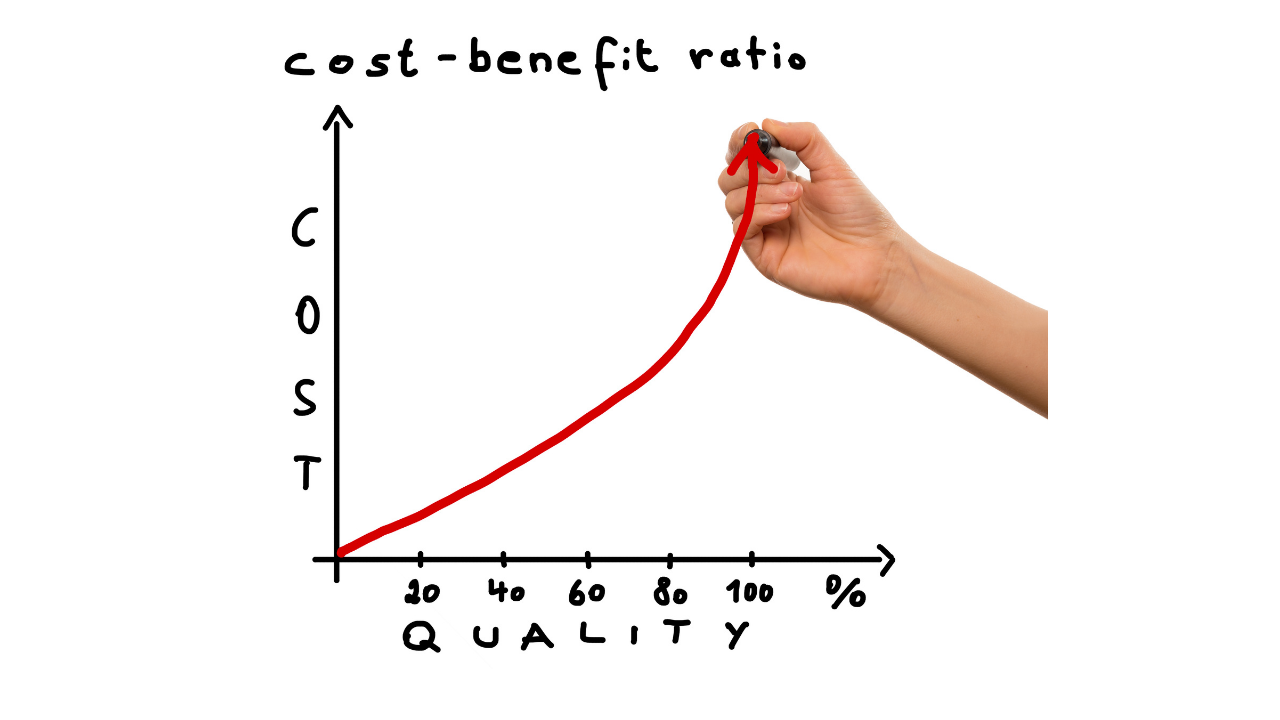
Alvin, I hope that makes sense. If I can bottom line this for you, Alvin, I would say this the biggest mistake or one of the biggest mistakes I did in my real estate investing career or our journey long ago was buying rental properties for the sake of buying rental properties in neighborhoods that I should not have been in. They were rougher lower end neighborhoods at best. They were often C class neighborhoods, C minus, arguably, maybe some of them were in what I’ll call D plus areas, but for the most part, they were in C-Class neighborhoods. And there are a lot of successful investors who buy properties and sometimes a lot of them in C-Class neighborhoods, but I just knew in my gut that really wasn’t where I was supposed to be, but I was there because they were abundant and they were cheap. They were more affordable.
And my invest dollar went further in buying more property at that time, but they were a pain in the butt. So they actually were difficult to manage, keep lease. They were expensive in terms of renovations and turnover and the costs ongoing. So I really wasn’t making the kind of money that I wanted to make. And you, in hindsight, knowing that I could have bought half as many or even a quarter of as many as I had purchased back then in much better neighborhoods, I would’ve done far far better in terms of equity growth. In other words, the appreciation and equity growth from the properties in better neighborhoods and fewer properties than I did with the larger number of lower-end homes in these what I’ll call cheaper homes in these lower-end areas like these C-Class neighborhoods. So, you know, stick to your investment criteria that is gonna be so important for you. You’ll be thankful many years down the road that you stuck to your guns and stuck to the types of properties that really made some it’s for you.
Okay, well, I’m pretty much at the 30-minute mark here, so I wasn’t expecting to go this long. I’m going to save the rest for another episode, but if you have any other questions about real estate or investing or finance that you’d like to throw at me, you know, go to passive real estate, investing.com and just click on the ask Marco link at the top and send those over to me. And I’d be happy to answer those questions. Remember to subscribe if you haven’t done so already, that way you never miss a weekly episode of the podcast, help us share this show with your other like-minded friends, people and whatnot. So everybody can benefit from it. Just go to iTunes, leave us a rating and review or whatever podcasting platform that you listen to. And that is it for today. Thank you for listening. I will see you all on our next episode.
Download your FREE copy of: The Ultimate Guide to Passive Real Estate Investing.
Get your FREE coffee mug by leaving us a Rating and Review on iTunes. Here’s how.
See our available Turnkey Cash-Flow Rental Properties.
Please give us a RATING & REVIEW (Thank you!)