
Hey everyone, and welcome to Passive Real Estate Investing. I’m Melissa Nash, your guest host jumping in for now. Let’s dive in.
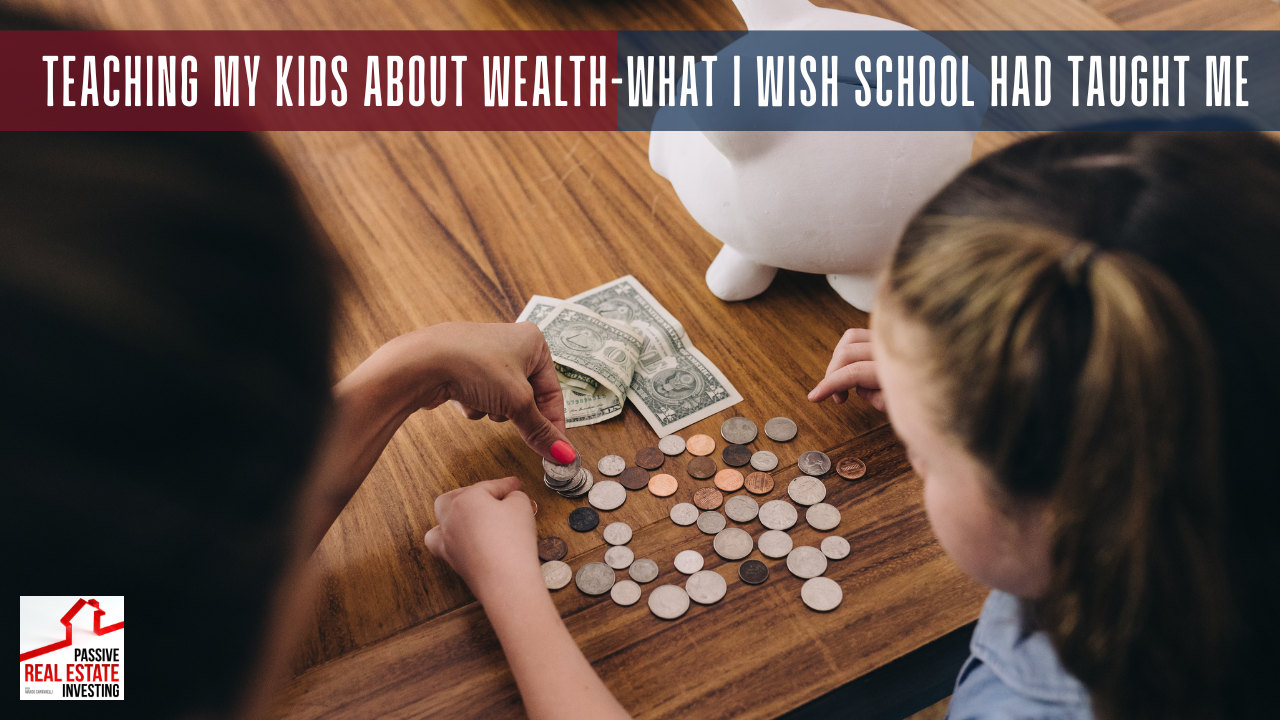
Money trauma is real and most of us are unknowingly passing it down to our kids. But what if you could break that cycle? What if you could teach your children how to build wealth, think like entrepreneurs, and create financial freedom for themselves? Well, today I’m sharing the real conversations and strategies I’ve used with my own kids from toddlers to college graduates. And in this episode, you’ll have practical tools to change how you talk about money at home, help your kids start thinking like wealth builders and even discover how I helped three of my kids buy rental properties before they turned 18. You know, I’ve been thinking about this episode for a while now, and to be honest, I’m a little bit nervous because talking about how to raise your kids and money, that’s really vulnerable stuff.
And I don’t wanna come across looking like I think I’m some amazing parent, or I’ve got it all figured out because I don’t. But what I have figured out is this, most of us are carrying around money, trauma that we didn’t even ask for and we’re passing it down to our kids without realizing it. So I want you to think about this for a second. Maybe your parents grew up in homes where money was stressful, scary, or taboo. So they pass those fears and habits to you and now you are doing the same to your kids, even though you don’t want to or may not even realize you’re doing it and it’s not your fault and it wasn’t their fault either. And here’s the thing, we can break the cycle. And that’s exactly what I wanna talk to you about today. I’m going to share some things with you that I’ve done with my kids from the time they were little until now as adults graduating college, some things worked, some things maybe I wish I would’ve done differently.
——————————————————————————–
FREE copy of The Ultimate Guide to Passive Real Estate Investing.
If you missed our last episode, be sure to listen to TBT: Ask Marco – Goal Setting in Real Estate Investing
Our team of Investment Counselors has much more inventory available than what you see on our website. Contact us today for more deals.
But my hope is that this here resonates with you and gives you some tools that maybe you can actually use. So let’s just start off and talk about the elephant in the room. Parenting today is intense, for a lack of a better word, from the moment our kids are born. It feels competitive. Does your kid read yet? What books are they on? And don’t even get me started with youth sports. That’s a whole other level of helicopter parenting and pressure. And I totally get where this comes from. We want our kids to get into the best colleges, the best schools. We want scholarships. We want them to have a headstart because we know what the real world looks like. We live in a very competitive capitalist country and money talks. We think, gosh, if we can just get them the best education, they’ll get the best job, make the most money, buy the house, and be set for life because that’s what we were taught, right?
And honestly, it’s exhausting and honestly it’s as stressful as hell. But here’s what I’ve learned. All of the pressure, all of that pushing, it doesn’t actually teach our kids how to think about money. It doesn’t teach them how wealth is actually built, and that’s what they really need. Now, most of us grew up in one of two households when it came to money. It’s either option A, you didn’t talk about money, it was private, taboo off limits, or B, money was stressful. And I’m sure you heard things like, we can’t afford that, or we’re gonna have to give up this because this bill is due. Maybe your parents fought about bills, maybe you got left out of activities because there wasn’t enough money. I remember not being able to do plenty of activities in high school because I didn’t have my own money, and that’s the real world, right?
So when I became a parent, I decided I wanted to talk about money with my kids in a way that was open and honest and try not to be stressful. Because here’s the thing, kids don’t need to know everything. In fact, I don’t think they should know everything. There’s no need to stress them out. They don’t need to know exactly what’s in your bank account, but they do need to understand how money works. So let me give you an example. So let’s just say you’re at target with your kid and you’re walking down the toy aisle. Of course their eyes are scanning everywhere, they’re overstimulated, overwhelmed, excited, they want everything, and then they lock into the toy, the one that they have to have right now. Mom, I want this. And what is your first reaction? For a lot of us, it’s we can’t afford that.
Now, I’m not saying that’s not true. Maybe you really can’t afford it. But think about what that phrase does to a kid. It’s instantly defeating, it’s vague and it’s scary. What does can’t afford it mean? Does that mean we can’t afford it today, this week? Does that mean we can’t afford food? Are we in trouble? Their mind starts spinning into dark places and you didn’t mean to do that, but you didn’t give them any context. And you guys, you can do this with young children. Young children. Understand what is another option that you can say instead of, no, we can’t afford that option one. Wow, that’s a really cool toy. You know what? Your birthday is coming up. Let’s go make a list. When we get home, it’ll be a fun activity. We’ll sit down together. But here’s the deal, you can’t ask me for anything else while you’re here, unless you see something else you want for your birthday.
And we’ll remember to add it to the list. So this is just a quick, easy way of just being like, Hey, you know, that’s really cool, but you can’t have everything that you want now you have to wait until your birthday or an event or something. It’s kind of like saying like, Hey, instant gratification is off the table, but maybe it’s something you want later. Option number two, wow, that’s really cool. Let’s look at it. Okay, so it’s $30. Do you have any money saved up for that? Oh, you only have $10. Okay, I’ll tell you what, let’s go home and make a list of different things you can do to earn some money so that I can help you get this toy. So you see the difference with this one. You’re not just saying no, you’re not just throwing out negativity, you are listening. You’re part of their team, you’re helping them brainstorm options. You want them thinking about do they really want it? How can they get it? You are making money. Something that they can create, not just something that they don’t have.
Now, option three, set them up before you go. You can talk to your kid before you get there and tell them about how you’re budgeting for something. Depending on what you wanna say. You could say, Hey, I’m, I’m buying this rental house, or we’re going on a vacation, or something like that. Teach them that you are budgeting and let them know it’s okay to wait and not have to buy something right then and there because you’re saving. So I want you to, to not only just tell them, but show them children, kids, adults, everybody. We learn by watching. Have an open, honest conversation. Maybe your family is going on a trip and we’re saving money together. This is a team effort and your kids will absolutely respect it. Even having older kids, these conversations are still the same. I was recently with my older daughter at Target and we were walking by the clothing section.
Of course, none of us needed anything, but we found something we liked and we were both holding onto something. And I stopped for a minute and I said, you know what? As tempting as this is, I don’t need another striped sweater. I think I’m gonna put the exact amount of this sweater in my Robin Hood account. And she was like, what’s a Robin Hood account? And it actually gave me a window to explain to her that it’s just an online stock account and another way to diversify my income. It’s a long-term investment and you know, if I pick something decent, the money might grow. And she was really excited to hear about it. And in fact, I’d even forgotten about that. I had a Robin Hood account. But it was just a really good opener, a good conversation to be like, Hey, you know what?
Maybe, maybe I don’t need it. Maybe I’m just gonna put the money into something else that grows my money instead. So it was just a conversation opener to get her to think about things like that. So switching gears, you know, I put an entrepreneur my entire life. I remember being a little kid and selling water to the joggers as they ran by our house. And of course they may not have had money that first time that they ran by, but they would see me there and then they would bring money out so the the next time they ran by they would actually gimme money and I would give them water. My parents didn’t always give me money, but I always knew there was a way to create money, even as a small child. I think that’s why I’ve always loved entrepreneurship so much and why I love real estate.
Now, there are so many ways to make money and create wealth through investing. And of course I didn’t know about any of this as a kid, anything about real estate or anything. And in fact, I learned much, much later in life. I didn’t even start investing in real estate until I was in my forties. But my kids did see me trying to create my own money, trying different things. Some things were good, some were bad. Maybe that influenced them, maybe it didn’t. Some of my adult children now have regular nine to five jobs, but I remember when they were younger, I always wanted them to think outside the box. You know, how can you buy the things that you want as a child? You know, maybe it’s lemonade stand, maybe it’s saving your birthday money. Maybe it’s waiting until Christmas or you know, a holiday or something to ask for something.
Maybe it’s doing chores for the neighbors. But here’s the thing, your kids are watching you. They’re learning from you. They’re picking up your habits with money, with lifestyle, with everything. Obviously there’s plenty of things I’ve had to pay for for my kids, but that’s where I always wanted to define wants versus the needs. Do they just want it or do they actually need it? Now, when I first started to learn about real estate investing, I knew it was extremely important to start teaching my kids what I was learning. I wanted them to hear me talk about it, the time freedom, the benefits, the wealth building. So it would be in the back of their heads when they were making career choices. And I don’t mean sitting them down for formal lessons, I just mean bringing up naturally little comments here and there. Like we were out for dinner and one of my kids says, Hey, thanks, thanks for dinner mom and dad.
And I’ll smile and say, well technically my rental property’s just paid for your dinner. I’m just sitting here. And they would laugh, but you know what? It all clicks and they start to understand that money can work for you. Or when my kids were talking about their future and one of my kids was trying to decide what major they wanted to be or wanted to do. And I remember saying something like, look, whatever career you choose is great. Do something that you love. But just remember, your job doesn’t have to be your only source of income. You can be a teacher and own rental properties. You can be an artist and invest. The goal is to build something on the side that brings in money while you’re working your full-time job that you love. So these are just small natural conversations, but they add up.
So I’m just mentioning these things to kind of think about and when you’re thinking about them, they come up naturally. You don’t have to force things or memorize anything, but just think about ways that you can make comments to make investing part of your kids’ conversations. So now I told you earlier that I helped my kids buy properties before they were 18. And I’m sure you’re wondering, how did I actually do it? So let’s break it down. So my son and my daughter had both saved up money and by the time they were in their late teens, they had each saved up. Maybe it was just around $10,000, maybe a little bit under. And you know, they had saved money from Christmas, birthdays, selling things, working part-time jobs, whatever they had saved. And I talked to them about it. I’m like, you know, you don’t have enough money to buy one property, but maybe you can combine your money and buy a property together.
So that’s exactly what I helped them do. So I helped them buy a turnkey rental property in, I think theirs is is in Tennessee. Now, if you don’t know what turnkey means, it’s a property. Now work. Of course when you’re working with me, it is a property that is already renovated, it is rent ready and it comes with a vetted local property management company in place. So you literally get to buy a property and start collecting rent. It’s perfect for beginners who don’t live near the property or people like us because we live in California and we could never afford to buy a property that actually cash flows here. So we’re looking in affordable areas like this one in Tennessee. Now, obviously they couldn’t qualify for a loan themselves, so I end up purchasing the property under our name, but we use their money to fund it.
So technically, yes, the loan is in my name, but it is their investment, it’s their money, it is their asset. Now here is the cool part. You can get a property for $20,000 down in other markets. Again, in California, this wouldn’t be possible bitten areas like the Midwest or the South. Absolutely this can be done. You put 20% down and you have a nice rental that is cash flowing every month. Now has it been perfect? No, there has been some expenses. The property has needed a few repairs and some of their cash flows had to go back into the property. But you know what, that is part of the education. I am showing them the real side of real estate investing, not some fantasy where everything is perfect and cash flow just rolls in with zero work. Now it was zero work setting it up and buying the property.
But there are things that you need to pay attention to after you own it. The property managers, yes, they are doing all of the day-to-day work, but you still get the statements every month and you still need to understand where the expenses were. Or maybe there aren’t expenses and that’s great, that’s even better. But I’m showing them that yes, things break, you have to plan for expenses, but I’m also showing them the long-term benefits, how the property is appreciating in value, how the tenant is paying down the mortgage, how their $20,000 is turning into equity and wealth. They’re learning this firsthand that this is a long game. They’re learning it at 16, 17, 18, 20 years old, not in their forties like I did. Now, let’s go back to my daughter who actually ended up going to college for art. That’s a very stressful major for a parent, right?
Well, I am like sitting here thinking like, how is she gonna make a living as a full-time artist in California? You know, maybe she will, maybe she won’t. But here’s what I do know. She owns a rental property. That property is already growing wealth for her. It’s already going up in value, it’s creating cash flow. And she can see that that money is working for her. I’m actually not that worried about her. She’s an entrepreneur in her mind. I just know her ever since she was a child, she understands the concept of making money work. And she understands the concepts of how the wealthy build wealth in this country because I have been saying this stuff to her since she was little. Now she may not act like she wants to hear it at the time. As long as I’m not lecturing her and I’m just dropping little hints, they go, they go in, she’s kind of thinking, and then they go back out.
And that’s what I want my kids to know more than anything. I want them to understand how to make money work for them. And honestly, they need to understand how the wealthiest families in this country passed down generational wealth. Now this is stuff that is not taught in school and it’s not talked about at the dinner table in most homes. This is information that we as parents should be teaching our kids. Whether your kid wants to be an entrepreneur, a teacher, an artist, or a doctor, these are foundational skills for living a lifestyle that they’re probably gonna want at the end of the day. Everybody wants freedom. Nobody wants to be stuck trading time for money the rest of their lives. And the best part, you can start with little conversations. Now, little examples. Let them see you. Let them see what you are doing.
You are teaching them by example. Now I want to talk about something really important because it’s not just about teaching our kids. Many of us are still carrying money, trauma from our own childhood. And until we deal with that, it’s really hard to teach our kids something different. So how do we change our own money? Trauma, for me, it was life changing when I finally saw my money making money instead of just being drained. So think about it like this, for most of your life you’ve probably watched money come in and go out immediately. Paycheck comes in, bills go out, paycheck comes in, groceries, gas, mortgage, credit cards, it just drains. And that feeling is exhausting and it’s stressful. And you start wondering, am I ever gonna get ahead and am, am I gonna have to work until I’m 75? What happens if I can’t work anymore?
But when you start investing, whether it’s a high yield savings account or the stock market, or hopefully at some point real estate something shifts, you start seeing your money, earning money. And I’m telling you, it is life changing. Now with real estate specifically, you do have to look at it the right way. You can’t just focus on year one of cash flow. I mean, it’s not gonna be huge. Owning one rental property that cash flows, let’s say cash flow is $300 a month. That is not life-changing money, however it is money earning money, your your money is doing something. But you have to look at the long-term wealth. You have to look at all of the profit centers. So again, with real estate, you’re making money multiple ways. Cash flow is your profit. After all expenses are made. So you are profiting something, appreciation. The value of your property is going up over time.
Equity pay down. Your tenant is literally paying off the mortgage for you. They’re buying you a free house, tax benefits, depreciation, deductions, all of that inflation hedge, your rent goes up, but your mortgage payment stays the same. And when you look at it that way, you realize, holy crap, I’m making money on my money. And suddenly your money isn’t sitting there. Being couch potato, lazy money anymore is working for you, building your future while you sleep. And to be honest with you, that changes everything. No more wondering about your financial future. No more stressing about retirement. No more wondering if you’re gonna work until you’re 75. I’m telling you it’s gonna be so much easier to enjoy life now without that constant stress hanging over your head. And when you start feeling that shift, you start feeling more free and less stressed about money. And your kids are gonna pick up on that too.
They don’t just hear you talking about money differently. They see you living differently. They see you more relaxed. They see you making choices from a place of abundance instead of fear. That’s how you break the cycle, not just by teaching them, but healing yourself first. So let me recap some of the things we talked about today. Change the conversation. Don’t just say we can’t afford that. Help them brainstorm. Be on their team. Number two, teach them to create, not just consume. Show them that money can be made, earned and grown. Number three, model the behavior they’re watching you. Show them what financial independence looks like. Number four, introduce real estate early, even if it’s just talking about it, plant that seed. Number five, focus on time freedom. That’s the real goal. It’s not just about making money, but making money work for you. And number six, heal your own money.
Trauma. You can’t teach them something you haven’t learned yourself. Now look, I don’t have all the answers. I’ve made plenty of mistakes. There are so many things I wish I’d done differently, but the one thing I’m confident about is this breaking the cycle of money. Trauma starts with us. It starts with being intentional. It starts with changing the way we talk, the way we teach, and the way we model. Your kids don’t need you to be perfect. They need you to be honest and supportive and willing to teach them the things that schools won’t because that’s how we build the next generation of wealth, not financially, but emotionally and mentally.
Thanks for listening you guys, and please don’t forget to go to the show notes below, check out the free resources and book a free strategy call with myself or somebody on our team to learn more about passive real estate investing. ’cause Really that’s what we wanna do here is help you take action and do it. I hope this episode was helpful. I would love your feedback or actually leave us a review. We need reviews, we wanna hear from you, we wanna hear your feedback, and that’s really helpful. If you appreciate what you heard today and you think, gosh, there’s somebody out there that I know that would benefit from this, please forward it to them. And again, thank you for listening today and we’ll see you on the next one.
Thanks so much, Melissa, for opening up and sharing your experiences. Your story is something so many can relate to when it comes to teaching kids about financial goals. We hope you enjoyed this episode and picked up some useful tips along the way. Don’t forget to subscribe so you never miss an episode. We truly appreciate your support and thank you for tuning in.
—————————————————————————————————
Download your FREE copy of: The Ultimate Guide to Passive Real Estate Investing
See our available Turnkey Cash-Flow Rental Properties