
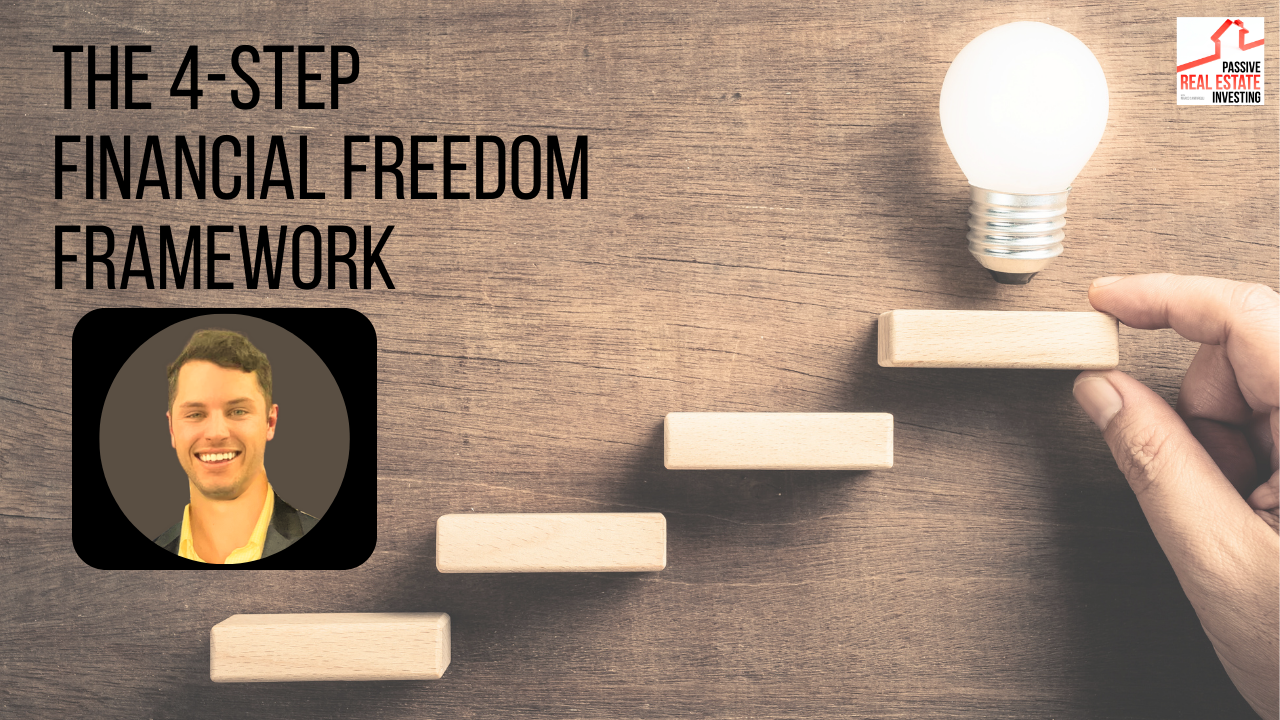
Hello and welcome to another episode of Passive Real Estate Investing. I’m your host, Marco Santarelli, and we’ve got a great show for you today. So, this show, even though it’s called Passive Real Estate Investing, is not always about real estate specifically. Sure. We talk about real estate strategies, we talk about real estate tactics, and it’s always focused around the broader topic of investing. But you know, we do talk about mindset and entrepreneurship and building a business or a side hustle and generating extra income because all of that will ultimately lead back to your goals of real estate investing and building a portfolio and creating passive income, and then ultimately financial freedom and from financial freedom to creating that time freedom. So you could do what you want when you want, with whom you want, but what if you could reclaim some of those most energy rich years of your life, regardless of what age you’re at.
I mean, if you’re young, fantastic. You’ve got time on your side, and you can certainly do all the planning you need to do to get to your goals sooner. But you know, we’re all at a different stage or chapter of our lives, and it’s always good to know what the possibilities are and have the strategy and tactics to shortcut your efforts to get to the goals that you want financially speaking time, freedom wise. But for some of you, it may be time to transition from being, let’s call it a high performing employee, to becoming a thriving entrepreneur. You see most advice on financial freedom, I say that in air quotes, is outdated. And high performers today, which I know a lot of you are listening to this show, you know, need a new essentially step-by-step playbook to replace that six.
That could be a business empire and that could be a real estate empire. It could be whatever your that empire is, but it’s something that’s connected to your time freedom and your financial freedom. You know, we always talk about buying a rental property or two per year, and that’s great advice, but what if you want or could achieve your financial investing goals quicker to do so, you need larger mindsets, larger methods, and more actionable strategies. The right strategies if you want to earn your freedom within the next six months or 12, 18 or 24 months from now. This is all doable stuff. It’s just a matter of how clear you are on what you want to achieve. Are you getting results? Is it scalable? Can you do it quicker? Can you be consistent? And that’s why I say earn your freedom within that timeframe. It’s not about whether it’s gonna be handed to you, but if you do the right things or you mirror the right people, you will get there.
So my guest today left a six figure corporate job back in March of 2022. This was during Covid, kind of the ending of it through investing in real estate and starting his own side business. And since then, he has traveled to over 35 countries around the world, full-time, while spreading his mission of helping 1 million or more people, other high performers, reclaim their lives from corporate America to finally live up to their true potential. And that’s what he still continues to do today. Interesting young gentleman. It was fun having an interview with him and we could have gone much longer and I think I might have him back on the show. So to talk more about what he does, he’s got a great book out and he’s got a great message to share and a lot to share. So we’ll get to that interview with Brian here shortly.
I hope you enjoyed today’s episode. And be sure to listen through to the very end. There’s a lot of golden nuggets peppered throughout, but even at the very end. So, I hope you enjoyed today’s episode and we’ll get to that here in just a minute.
FREE copy of The Ultimate Guide to Passive Real Estate Investing.
If you missed our last episode, be sure to listen to Will There be a Housing Market Crash?
Well, it is my honor and pleasure to welcome a special guest to the show. His name is Brian Lubin. Brian is an entrepreneur. He’s also a podcaster. He’s a real estate investor, and he is, well, I guess he was based out of Atlanta, Georgia. Apparently, he’s living in Austin, Texas now. But while Brian was in college, he built his first company, a company called Greek Beats. And then shortly after that, after graduating, he made it to one of the top Fortune 500 companies in their sales organization, only to quickly realize that living the quote unquote corporate American life for the next 40 years was simply not something he wanted to do.
He didn’t consider that an option. So, he set out to be an entrepreneur and became very successful at it. He now runs a successful podcast where he talks to seven, eight, and nine figure entrepreneurs on how to earn freedom in their life and business. And through his podcast and through his cash flowing real estate and his media company, he has generated enough revenue through remote income, meaning that he travels the world, and he doesn’t have to clock in or go to an office. His income sources earn him the financial freedom to do what he wants, when he wants, where he wants, with whom he wants. So, with all that, Brian, welcome to the show.
Marco, that guy sounds pretty cool. I think we should do a podcast with him. <Laugh>, I think we should. No, man, this is, this is awesome. Thank you so much for having me, and I have the honor and privilege of interviewing you as well for my show after this. I’ve been a long time listener of this and I’m excited to pour into the audience as much as possible. Guys, we’re gonna go above around a bunch of different topics and every single time we go high level, we’re gonna bring it down into stuff that you guys can actually implement today. So if you’re, if you’re driving, you know, take voice notes, please don’t write it down <laugh>. So we don’t want you to crash, but it’s gonna be a good one.
Cool. Well, Brian, that’s the stage very well. So why don’t we first start off by you telling us a little bit more about yourself. I mean, I gave the audience a bio, if you will, but tell us a little bit more about you and what led you from, you know, your corporate job going into popping on a jet and going around the world for six months straight and, you know, becoming an entrepreneur. Like, I want to hear how this happened and what you did.
Yeah, Marco. So I was working a corporate job and then I just had this twinkle in my eye to become an Instagram influencer. And it was just my life’s calling and I decided I wanna travel around the world and make all the money like that. So I quit my job. No, guys. So anybody that wants to quit their job, travel the world, build their own business with $10,000 a month plus in passive income, which raise your hand as the majority of the audience listening into this show that is the wrong way to do it. Travel influencers do not make money. I already tried. So how we did it was quite a bit better strategy, and that’s the one that I recommend. So I made it to the top of a Fortune 500 company, like he said. And there still is working as I say that I was number eight out of 5,079 to show that it wasn’t just a group of 20 dudes.
You know, we had a lot of people. And I spent four and a half years, five years, that was my entire identity, my entire life was making it to the top of that company. And I won sales rep of the year, rookie of the year rep all the different awards. And then they said, we’re gonna promote you to manager, to vp, and like you are on the freaking trajectory, man. It’s a rocket ship. And then I did this crazy thing, which the first piece of advice I give to the audience, I looked at my boss’s boss, and when I looked at that guy, no offense to him, wonderful human being, but I looked at the vision that I wanted my life to become, and I looked at his life and there was a discrepancy between the two. He was overweight eating donuts, missing his daughters grow up, traveling full-time in a corporate setting, not in a fun setting, just conference calls and PowerPoints and 15 minute increments on his calendar.
And I realized, I said, if I kick tail over the next five years, that will be me. That is not a game that I wanna play. I needed to plan my escape. So I started buying some cash flowing real estate, which will get into, I started up my own podcast, the Action Academy podcast, because I wanted to ask financially free people how the heck they got financially free and just literally apply what, what they said. And that’s what I did. And then in March of 2022, I, I quit that job. I was making a quarter million dollars a year. So it was, you know, a lot of income to replace that $20,000 a month. I left that job, booked a one way flight, went to Greece and lived in the Greek islands for a month, traveled full-time around the world for eight months, started up my new company, and now we do about 1.3 million a year. And I can travel full-time around the world making about 150 to $170,000 gross. Not net not take home, but it’s a really fun life that I live today. And then this podcast will dissect that step by step and help other people do this even faster and even sexier than I did.
Cool. Brian, you know one of the reasons I wanted to have you on the show is because, as we were talking a little bit offline, most of the people who listen to my show want to invest in real estate. They either invest in real estate already, they have a portfolio, or they’re just getting started. Maybe it’s gonna be their first property, or, or they just have one or two and they wanna buy more ’cause they wanna scale. Mm-Hmm, <affirmative>. And in order to do that, they have to have two things. They have to have credit and capital. And sometimes people struggle with growing or scaling into real estate because they don’t have enough capital. So, they’re capped at their employment, whether it’s a W2 job or whatever it may be. They just can’t earn more income. So, they have to look at becoming a business owner, like an entrepreneur and starting a small business or earning some extra income from side hustles. And this is something that, you know, you’ve done and you talk about. And so, like I said, that’s, you know, one of the reasons why I wanted to have you on the show. So, you know, I would love for you to talk about that specifically and the importance of starting a small business or a business in general, or having a side hustle, because it’s obviously how a lot of people can get to that next level, if you will.
Sure. So the advice that I give for people to start a side hustle is the same advice that I give to people to maximize the income that they’re making in their job. And it’s the same advice I give to people to learn how to raise capital for real estate or to invest in real estate. And that all begins with clarity. So everybody, there’s three different levels of clarity. So there’s directional, there’s sequential, and then there’s tactical. Everybody, the normal process that people follow as they begin with tactical, then they go to sequential, then they go to directional. So they begin with, how do I do something? How do I invest in real estate? How do I invest in the stock market? How do I increase my income? And then they go to sequential. How fast do I wanna do it? Do I want to do this plan or set these goals over one year, two year, five years, 10 years?
And then lastly, they get to directional, which is, why am I investing in the first place? What am I optimizing for? Because as you know, Marco, for somebody that like yourself where you raise capital for, you know, real estate assets are different based off of what you’re optimizing for. Are you optimizing for cash flow cash in your pocket or are you optimizing for equity? It’s a whole different ball game to play. You can’t have your cake and eat it too. You have to figure out what you’re aiming for. So regardless of what side hustle you’re starting or what piece of sticks and bricks that you’re investing in with real estate, you start with the end in mind and you begin with your vision. So I, I recommend this book called Vivid Vision by Cameron Harold. He’s now a personal friend of mine. It’s a wonderful book.
And he talks about in three years, a vivid vision is a written detailed description of what your life and business looks like three years in the future as if you are experiencing it today. And Cameron should pay me for a freaking riffing his book out like this. ’cause I tell everybody about it, it changed my freaking life, okay? And I was sitting in my corporate cubicle and I was making this vision of, you know, I’m traveling full-time around the world. I can make money anywhere with a mac and a mic. I have my mornings completely free in the afternoons, I have meetings for my own business. Now how do I get there from where I am today? Right? So the question was how do you, how do you increase your income at your job? How do you start your side hustle? Tactical advice for that?
So what I recommend to do your vision first is the directional. Then you go sequential, then you go tactical. That’s how you should go about your clarity journey. So where am I going in three years? How do I break that down into annual, quarterly, monthly, weekly, daily benchmarks? And then lastly, selecting the asset class to actually pull that off. And all of these revolve around the same singular piece of advice that I give to anybody. Do not make new models, take models. So if you’re in a job right now, especially in sales, somebody in your company is the top person at that position, do not try to reinvent the wheel. You can level jump experience by simply going to the top person and saying, how are you doing this? And replicating the actions that they’re taking each and every day, each and every week. That is what I did to become the top sales rep, is I went to the top sales rep as soon as I joined and I said, how are you doing this?
And she told me, I’m doing 50, 50 cold calls a day. I’m doing 50 door knocks a week in person. So okay, I’m gonna simply do that. And it worked. Same thing applies with your side hustle. Same thing applies with investing in real estate. If you’re trying to buy a single family house, there are thousands of people that have bought single family homes. If you wanna buy multi-family, there’s thousands of people that have done it. You simply do that. And I’ll give one more piece of advice, Marco, and then I’ll pause. But for a side hustle specifically, a lot of people think that there’s like this binary thing where it’s like, I work my job or I don’t. And it’s called side hustle for a reason because there’s a lot of gray area in between. I was investing in real estate and I started up my side hustle two years before I left that job.
So I was making income for my W2 and I was the best at it while I was buying real estate. And while I was starting up my side hustle and the side hustle is the same thing, who has done what I already wanna do and how can I take their models? So I was listening to podcasts like this and listening to other podcasts and I was like, wow, that’s a really cool business. I can start up a show and make, you know, affiliate revenue, but I ended up doing it in a different way. But I’ll say this, you want to make sure that you are keeping your job as much as you can and as long as you can while you build the additional income until finally one day you become undeniable. And then that’s when you know it’s time to leave.
And that’s what happened to you. That was the transition point. You built up the side hustle, your side income, and then that replaced your job and the income and then you just continued to scale that while you were traveling and creating free time for yourself. Correct.
So how I did it specifically was I had $4,000 a month coming from cash flowing rentals. So I was buying a house a year. I was doing the co-living strategy, also house hacking. So a house hack for people that are listening is when you buy a primary residence once a year and you live in one room and you want rent the other bedrooms out. So that’s why I did in North Atlanta, Georgia, I rented out I bought five bed, four bath houses. So there’s a lot of people in today’s market that are looking for house hacks and they’re getting frustrated because they can’t find cash flow with today’s interest rates. And what I recommend is, even if you break even on a house hack today, that’s still a win because you’re living for free and you can take bigger swings at the plate ’cause your risk tolerance is adjusted ’cause you’re living for free.
But for me, I was cash flowing really, really well on mine. For a lot of people would try to house hack duplexes or quadplexes, but in my market in Atlanta, there was either like $4 million duplexes in the middle of the city that were gentrified, or there was like a $40,000 duplex out in Podunk that you’re like, okay, what kind of drugs am I gonna find over here? I’ll buy accident. Right? Mm-Hmm <affirmative>. So I did what’s called a luxury house hack. I specialized in doing five bed, four bath houses, 1970s, building up 1970s to 1980s was actually a great year for houses. It, the building materials were actually better than they are today. And so I used those, I looked for in-Law Suites on the MLS people that had extra kitchens. And because building a kitchen from scratch will kill your cash on cash return.
And so, I would just snag these off the MLS. It took zero times, zero energy, zero effort. Once a year I would save up that, you know, 20 to $40,000 down payment and I would live on one side, rent the other bedrooms out. That was $4,000 on my income. Then I started up the podcast and then that, that ended up becoming a brand new source of income for me because I was just talking and interviewing these millionaires. And then I would recommend coaching or recommend masterminds that I was doing. And then they would sign up for the thing, and then the people actually ended up texting me and saying, Hey, like, we have a lot of people signing up for your thing through your podcast. Like, we should give you a a percentage of that. And so that’s how that business started. But this is a real estate podcast, so we’ll stick to that.
So you started with real estate, you didn’t actually start with a side hustle or building a business, right?
Correct. Yeah. I started by buying one house a year.
And then correct me if I’m wrong, but I am sensing that you might have accidentally fallen into the type of business that you’re running right now because of the podcast. Or did you actually have that plan from the beginning to let the podcast be essentially the front end marketing funnel to drive people into a business?
So the funny thing about business is like, and I call it passionate income, right? Yeah. So we, everybody knows about passive income. Mm-Hmm. So I think that there’s four types of income that I, I define. So captive income is income that you make from your job. A captive income. And then active income is income that you make outside of your job, but it’s still, you know, not completely passive. Think about wholesaling, land, flipping doing burrs. Like anybody that does them know that it’s not passive really. Mm-Hmm. <affirmative>. And then you go to passive income, which is what we talk about on this podcast. And that’s where you’re doing, you know, you’re an LP in syndications, maybe you have triple net commercial or you have multifamily, and then it’s just coming in while you’re laying on the couch. And then I define the last piece of income as passionate, which is how do you make money from something that you’re already happily doing for free? So for me personally, I recommend using passive income as a tool to find your passionate income. ’cause Marco, to correct me if I’m wrong, but even when you got your passive income to where you’re like, I’m good, did you just stop working?
No. <laugh> not at all. Correct. Double down.
Yeah. You now you work more than you’ve ever worked before, right? Yeah. And then that’s the whole, that’s the whole shtick of my book from passive to passionate is, okay, everybody talks about passive income, but nobody talks about what happens after. Because if people are listening to this show and taking action, they can get that $10,000 a month of passive income within two or three years if they’re doing the proper things. And there’s a lot of life to live afterwards. So I hit that at 27 years old, I believe I was, I’m 29 today. And so when I hit my $20,000 a month and I was traveling full time around the world, by week three I was hungover in Sunburnt <laugh>. And that’s like everybody’s goal. And the point of this is, if you’re a winner, you enjoy winning. And when you stop winning, you are no longer a winner. So it’s an identity crisis. So passionate income is what are you doing for work? You know, we talk about how do you do what you want, when you want, with who you want? How do you work on what you want, when you want, with who you want? That’s why financial freedom is like the beginning of the road, not the end.
Yeah. Very well said. So let’s kind of take a half step back and then I, I’d like to jump into, you know, this framework that you’ve constructed that you call the, well, I I think you call it Four Step Financial Freedom Framework, which is a great title and a good mouthful. You know, you kind of define, and, and this is, you know, a lot of people see this, you know, they, they chop a life span into different parts. You know, three parts, four parts, five parts, whatever you want to call it. But you know, you, you say that your life is designed from birth into essentially three distinct sections. You call it, you know, the first 25 years, the next 40, and then the last 20, I guess, you know, lifespans are getting longer. So maybe we’re living more than that 20 years after the quote unquote retirement. But can you just talk about these three distinct sections that first 25 years, the next 40, the last 20.
Oh man. Yeah. And then that ties in perfectly with the three different levels of freedom, because we just said financial freedoms where life begins, right? So it goes, financial freedom is number one, time freedom is number two. And mental and emotional freedom is number three. So number one, how do you get enough passive income to where you don’t have to work? Or you can choose to work on what you want when you want, with who you want. The second is, how do you have control of your schedule? ’cause Marco, how many people do you know that, you know, have a billion dollars of assets under management or make a million dollars a month in cash flow? But if you ask them to go do something on a Tuesday, they say, hell no. No way I could go do that. I can’t let my team down because they don’t have time freedom.
Right? They don’t have control of their calendar. And the last is mental and emotional freedom, which comes from margin. So where you do have time on your calendar and you have that blank space, and you’re actually asking the questions, how can I be a better husband? How can I be a better father? How can I be a better wife, a better spouse, a better friend? Like what impact do I actually wanna create? So I say that with the context of the, the first 25 years, the second 40 and the last 25 the first 25 years of your life, you’re conditioned to be a worker from kindergarten to elementary, middle, high school and college. They, you’re getting told where to be at what time and what to do. And you’re judged by those metrics. Then you enter the workforce for the next 40 years and they say, give us five days, we’ll give you two back.
Give us 50 weeks, we’ll give you two back. I don’t know about you, but from an ROI perspective, that seems like a pretty crappy deal to me personally. And then they say, if you do all this right at the end of the day, the last 20 years of your life, you’ll be able to go right off into the sunset and do everything that you want to do. But Marco, there was a problem that happened, and it’s a story, a quick story that I’ll share. Mm-Hmm. <affirmative> I flew to Rome, Italy, and one of my bucket list items was seeing in the Sistine Chapel. And I looked up at the ceiling and I was there at that was in 2019 before I did any of this, this is where I knew that I needed to pursue financial freedom. I looked up at the ceiling and it was the most beautiful thing I’ve ever seen.
And in the back, there’s a door that goes up to the spiral stone staircase that climbs to the top of the St. Peter’s Basilica. Mm-Hmm. <Affirmative>. Have you been Mm-Hmm. <Affirmative>. Yeah. So you know exactly what I’m talking about. Yeah, exactly. So you get up to the top and it’s the best view of Rome. You can see the entire Vatican city underneath you and you’re at the top of the dome. And it’s a difficult climb to get up there. It takes about 30, 40 minutes of like really narrow climbing. And as I was going up it, I noticed all of these people in their seventies and their eighties that were unable to make the climb, and they had to go back down because they had done all the things the right way. They had like saved money. They had retired finally at 70 or 80 years old, and now they couldn’t go physically do the things that they’d wanted to do their entire life. And that’s when I realized how important it was for us, while we have our energy and our youth to do it today. And so, you know, I don’t know about you, but I’ve heard this quote before where it’s like everybody spends their twenties, thirties and forties to become a millionaire, but all the millionaires in their fifties, sixties and seventies would give it all up to be in their twenties, thirties and forties again. Right.
I’ve heard that before.
So it’s, and I’ve asked them and they said, hell yes, because it’s an energy thing. So that’s why it’s important in the, there’s an urgency because we aren’t even promised tomorrow. And even if we’re planning for tomorrow we’re not promised it. I have friends that have gone entirely too soon out of nowhere. And so every single day I try to live as if it’s my last. So I’ll pause there. We could take that in a couple different directions.
Wow. That’s, that’s pretty deep actually. Yeah. I’ve, I’ve heard it said that, you know, we learn in our thirties, earn in our forties and, you know Mm-Hmm. <Affirmative>. If, if that’s not just necessarily true for everybody, but if it’s true that we learn in our thirties or up to that, you know, that decade of the thirties and then we l earn in our forties, we still have time and energy to, you know, enjoy our life. But sadly, a lot of those people are still stuck and tied or tethered to a job and they don’t have the, the time freedom that you were talking about to enjoy the things they want to do and do what they want when they want, with whom they want. Mm-Hmm, <affirmative>. So so, you know, this is why I feel like I’m beating a drum sometimes by just telling people, you know, make as much as you can as fast as you can, and put that into income producing assets like, like real estate, a hard asset.
Mm-Hmm. <Affirmative> that will preserve your wealth, grow your wealth, and generate passive income that will continue to grow year after year. As you know, you build your portfolio and take advantage of the effects of inflation with rents going up and whatnot. So it’s almost like a compounding effect. If you start early and do as much as you can as fast as you can after five years, 10 years, it’ll be compounds. Very impressive what you’ve achieved. Then you’ll look back and say, I wish I did twice as much back then. Right? Correct. So it’s not that hard. It’s not an unachievable goal. Literally, millions of people have done it and there’s no reason why, you know, anybody listening to this can’t do it. I mean, you’re 29 years old, you know? Yeah.
You’ve achieved what most people don’t achieve by the time they retire, you know, at age 60, 65.
So, exactly. Should we, should we break down the four steps to actually do it so they don’t think we’re full of it? Yeah.
Let’s, let’s, let’s jump ahead, <laugh>. I mean, we’re skipping a whole bunch of, of stuff I wanna talk about, but let’s just do it.
Sounds, sounds nice guys, but how do we actually do it? Let’s we’ll be quick with it. Yeah. So four steps. ’cause I like building frameworks. That’s my favorite thing to do, is how do you simplify the complicated? Yes. Because if you can’t simplify something, it means you don’t understand it. So the four step freedom framework, which is a mouthful, but it’s fun for me, <laugh> step number one is what the hell do you want? And where you going? Remember back to that clarity, that’s that directional clarity. That is the most important thing. And out of maybe 500, 600 interviews that I’ve done with multimillionaire entrepreneurs since a couple billionaires, it’s the one underlying recurring factor that is the same across all of them is they all know exactly what they want, and the more clear that they are, the more that they are rewarded and the luckier they seem to get.
So that three year vision, we begin with that, where are you going and what do you want? What are you optimizing for? Because that’s what helps us avoid shiny object syndrome. Because you know what to say no to shiny object syndrome is ’cause you lack clarity in your direction and you don’t know what to say no to. It’s not saying yes to things, it’s saying no. So I knew I wanted to travel around the, around the world, so I knew that multifamily where I was, the boots on the ground operator was not the best idea because I wanted to travel. So step one is clarity, that three year vision, step two is building your financial foundation. Like Marco talks about all the time on this podcast, ladies and gentlemen, building your financial foundation is having clarity on your numbers. What is your burn and what is your churn?
So I break down cash flow into three different levels, survive, arrive, and thrive. So survive is how much cash flow do you need to cover your base expenses? So have your mortgage, paid food on the table. Your living arrive is how much are you doing for your base expenses plus discretionary. So now you have some Amazon packages coming back from your wife, <laugh>, you know, and you’re going out to eat a couple of times more fun. And then thrive is your income is completely replaced. So for me, my numbers were 4,000 first survive, arrive was 6.5 and Thrive was 20,000 because a lot of people that make six figures like that 10,000 number can be intimidating, but if you chunk it down, it becomes really, really attainable. So your financial foundation is getting that survive number taken care of through passive assets like Marco talks about on the show.
So you’re investing in the cash flowing real estate, you’re doing a couple smaller deals, you’re getting your feet wet, like you’re really getting clarity on your numbers and getting that first baseline level done through pass truly passive income. Then step three is where we become a little bit more aggressive because we have clarity. We have some cash flow already, and now it’s time to introduce community. That is where you’re getting around people, whether free or paid. You are spending all your excess time, energy, effort, and possibly capital finding the people that are where you wanna be and getting in their world. There’s two different ways to do it. I got it from my buddy Gino Barbero from Jake and Gino <laugh>. He’s a good buddy of mine. He’s a good, good guy. Yeah, he’s a good guy. Yeah. Yeah. And he says, you pay to play or you seek to serve.
Seek to serve is free, but it takes your time. Pay to play is when you, you have your, your, your time is valuable and now you need to just pay up. And so for me and Marco today, we have to pay a lot of money to get in, to get advice, but in the beginning, you can just take your time and your labor capital to do it. So this is the point where you are joining those groups, you’re joining the communities, you’re getting with those mentors. You’re even going to that local flipper. Maybe you wanna build a flipping company and you’re asking ’em, how the heck do you do it? I’ll pay you or I’ll do deals with you, or I’ll find something for you. So those are step one, step two, step three, clarity, financial foundation. And now we’re getting into community. Now we’re introducing people into the mix.
Step four is now you’re scaling through and with people. This is truly who not how from Ben Hardy’s book, wonderful book. Now it’s like when you scale, you have a couple of rental properties. Now you are moving into the commercial properties and true passive income, it’s done with a team and it’s done because of systems and processes. The formality is what allows for the freedom, because if you have properties with terrible property managers, your passive income suddenly is not as passive anymore. <Laugh>. So that’s why your people matter the most. So the final step is where you’re, you’re partnering with people, you’re doing, you’re finding your operators, the capital raisers, and then that’s where you truly scale and have true passivity.
Yeah. That last part from, you know, when you go from me to we, the whole thing about
Bingo.
Yeah. The whole thing about leveraging your time through other people that could probably do what you do better and faster and maybe even cheaper <laugh>. It’s just…
It’s just your ego.
It was a game changer. I’m, I’m telling you, I wish I knew what I know now about delegation, automation and
Elevation.
What’s that?
Elevation Delegation. Automation and elevation. Oh, elimination
Yeah elimination. Automation and delegation. If I knew what I knew today about that 20 years ago, I probably would’ve been 10 times further ahead today just because I felt that I needed to do everything and I could do it better than anyone else. And it’d be faster for me to do it than try and show someone el how to do it. Meaning taking a step backwards in order to ultimately take two steps forward. I didn’t learn that soon enough, but when someone actually, a next employee kicked me in the <laugh> and said, look, you need an operations manager. You need, you need an executive assistant, you need this, you need that. And I started putting those pieces into play. It was a game changer. Things just started to move faster and I was able to scale and then I could shift my time and energy into growing other business ventures or focusing on other investments. It was a game changer.
One more day, one step away. Right.
Exactly. But you know, your, your financial freedom framework is great. So basically you, you’re breaking it down this way, have a vision. So you talk about clarity, right? And I like how you broke that down. And then correct me if I’m wrong, the second part was found a foundation. Mm-Hmm. <affirmative>. Yeah. And then you’re investing in mentors, peers, partners, and whatnot. Correct. And then the last part is, is scaling is creating a team and tapping into that team and growing your business or growing your investments. Correct. Okay, cool. Okay, let’s segue from there to talking about another framework you talk about, because it actually, you’ve already mentioned it and it plugs right in. You call it a CVC framework. And I know you’ve, you’ve talked about this, but you didn’t really define it. You put a lot of focus on clarity, right. Which I think is very important if whether you’re an investor or an entrepreneur or you’re just creating a side hustle. But that clarity I think is very good. And by the way, I’m gonna pick up that book. You mentioned the vivid vision. I never heard of it, but I’m gonna read it. So just talk about the CVC framework for a minute. I know it’s clarity, volume and consistency.
Consistency, yeah. Yeah. So yeah. So I’m a huge clarity guy. So there’s a quote, this one is a writer downer. For anybody that’s not driving, and that is, vision without action is a daydream action without vision is a nightmare. So that was said by the ancient Japanese thousands of years ago, and by me today, <laugh>. So it’s like, that’s my favorite quote, vision without action is a daydream. And action without vision is a nightmare because I’ve seen people that are on both sides of the spectrum. Both are equally miserable. So that’s why clarity, clarity gets rewarded, you know? And, and that’s why every single thing that I do, your reticular activating system fires off, which for people that are listening to define that, when you buy a new car, you go to the car dealership and you get that car, and all of a sudden you see that car everywhere in the road.
Mm-Hmm. <affirmative>, that is the same thing that works with your investing partners, your capital partners, your investments. If you’re buying laundromats, you start seeing laundromats freaking everywhere. Yep. That they didn’t just magically pop up, you’re just looking for ’em. Now, same with burn down rental properties or multifamily or self storage facilities. So CVC, clarity, volume, consistency are the three reasons that you aren’t where you want to be. One part of the equation is incorrect and you just haven’t, you know, had the, the guidebook within which to designate and delegate and make changes through your, your current operations. So clarity is what, what are you doing? What are you going and what is required? So for instance, if you’re trying to buy a single family house, or we’ll make it easy, we’ll say you’re buying like a, a multifamily property, you’re trying to buy like a 20 to 40 unit to get
And you’re saying, okay, I know what I need to do. I know what market I’m buying in. I know I need 20, 40 units, and you’re clear on your buy box, right? Your buy box is freaking everything. Now it goes into volume. The second, the v most people are hung up between C and V, they don’t even make it to the final C. So maybe they’re correct on the clarity, but I have so many students in our thing that are like, Hey, I underwrote 10, I underwrote 10 deals this month. This month. Oh, hold on a second. So a story from this is back when I was a sales rep, I was having this new rep ride with me and he said, I, I tell him, make cold calls and go do door knocks. And he goes, Hey, I made, I made 10 cold calls and I did 10 door knocks this week.
And I go, oh, that’s one fifth of what I do. And he goes, oh, I now know what is required. Right? So the same thing is now that you know what the actions are, you’re probably not taking the proper volume of the actions simply because it’s not that difficult across all commercial real estate, Marco. It’s like the, the metrics all break down to how, like, how many leads are coming across your desk, how many are you underwriting, and how many offers are you submitting? That’s it. And if you break it all down to offers submitted, Lois submitted, you are like, if you just make it a goal to submit 50 to a hundred Lois, then you just backtrack all the rest of your metrics into that, right? So now it’s clear on volume. So it’s clarity volume. And then the last C is consistency. So am I doing the proper thing?
Am I doing the proper volume and am I doing it for the proper amount of timeframe within which to do it? $10,000 a month doesn’t just come overnight. Even like with our thing like that is what I do for a living now with our business. It, I tell people, commit to two years. If we do this in two years, like we’re not the Instagram get rich quick thing. Like wealth is built in a crockpot, not a microwave, you know? So it’s just like we teach people how to actually be operators. So, you know, for my podcast for example, and we’ll close this out with this, this framework I do the proper clarity. I said, I want a million downloads. That’s what I wanted in the first year volume. I’m like, I’m gonna do an episode every single day, five episodes a week. And I couldn’t do any more volume than that unless I was John Lee fricking Domus, who we both know.
And I was like, hell no, I’m not doing that. Five episodes a week is a lot. And so I said, okay, I’m doing the proper thing. I’m doing the proper volume, but I still didn’t hit the result. Which means it’s just consistency and patience. Mm-Hmm. And that’s the hardest part of all of it is, you know, people want this $20,000 a month or this $10 million net worth. You just do the proper things and the proper volume, and then by the end of it, you just are patient and you can have validation that what you’re doing is the proper thing by going to the people that are worth 10 million by going to the people that have $20,000 a month of passive income. And you ask them, what did you do? What are you doing? And you use their models <laugh>. And it’s like, I do that today.
It’s like you simply use their models. And then like for instance, if I wanted to throw an event, I wouldn’t just say, oh, I’m throwing a conference. I’d go to you Marco. I’d say You guys have thrown hundreds of conferences. What do you, what’s your model for throwing a conference? And you would just say, okay, hey, I would do this, this, and this, and I would stay away from this. Got it done. There’s no emotion in that. But yet people are trying to reinvent the wheel with real estate investing, even though it’s been done millions of times.
For over a hundred years. Yeah. Yeah. It reminds me of what Tony Robbins used to say a long, long time ago when he came out with his personal power program, he would say, look, if you want to be successful model and mirror the people that are are already doing it because they’ve got the formula, they, they are successful and just copy what they’re doing. He referred to it as mirroring. And if you mirror the successful people and you do the same things in the same way and you have the same volume as you talk about, you should theoretically get the exact same results. Mm-Hmm. <Affirmative> if not better.
Yeah. And it’s shocking how it magically happens. I will say this quote that my coach taught me, which is gradually, then suddenly, that’s how it goes. Don’t expect a linear path. Don’t expect to be making 10 offers a week, 10 offers a week, 10 offers a week, and then get a deal under contract every single week. What happens is you’re doing that and it’s radio silence and everyone’s rejecting the offers until all of a sudden one day you have four, four deals under contract in a day. And you’re like, whoa. Okay. Like same thing with the business, same thing with social media. You have the one video pop off, it’s the same thing. It’s gradually, then suddenly.
Yeah, for sure. Well, listen, we can go on forever. <Laugh>, let’s end on this. What kind of final comments and takeaways can you share with my audience before we tell everybody, you know, where they can learn more about you and follow you?
Yeah. At the end of the day, guys, please remember, if I could give you one closing piece of advice, please remove your emotions from this process. The reason that you guys aren’t doing anything, and you’re listening to another podcast, after podcast after podcast, which both Marco and I both greatly appreciate you guys, but we want you to win. The reason that you aren’t is because you’re afraid. You’re not afraid of failure, you’re afraid of the appearance of failure of your friends and part peers and partners making fun of you, your coworkers. But I’m here to tell you, if you remove the emotion, you will go so much further, so much faster. And what helped me was a quote that said, don’t love something that doesn’t love you back. It also applies to don’t love someone who doesn’t love you back. The real estate won’t love you back.
Those those burned down houses, the multifamily self storage, the businesses, they won’t love you back. So you don’t have to have emotional attachment to ’em, it’s numbers on a spreadsheet. Go do what you gotta do for you, for your family, for your future generations. Knock, knock it out and execute and save your emotions for the rest of life that you actually wanna live as a result of what these sticks and bricks produce for you. There’s a lot of life to live, and I know thousands of real estate investors, air quotes that already have $10 million passive, or they’re worth a hundred million. And they’re saying, I’m doing it for my family to use as a direct excuse to prevent spending time with their family and their kids didn’t ask for any of it. Yeah. So remember, keep your one thing, your one thing. Remember what’s important.
Yeah. Very well said. Brian. Tell our listeners how they can follow you, get more information, find your, your, your free book supposedly. It’s a free book, at least that it was <laugh>.
Yeah, yeah, I know. So I have, I have a couple different resources. So the free the free book, I have a free 26 page guide. You can find it at w2toworldtravel. That’s the free guide. I do have a book that’s, you know, $14 and 67 cents is on Amazon. It’s From Passive To Passionate: How To Quit Your Job – Grow Your Wealth & Turn Your Passions Into Profits. I only spent 1,137 hours on it last year. So I put a lot into it and hopefully you guys enjoy it. It’s everything we talked about and more. And then lastly, free resources, you know, Action Academy Podcast. I just do this every single day across 37 countries, seven time zones. I interview people, and now I’m about to have Marco on my show immediately after this so you guys could be rest assured that there’s good people on there.
Very cool. Brian. I appreciate it. Anything else you wanna share?
No, man, it’s just, at the end of the day, clarity over everything. Yeah, clarity, clarity will yield you dividends above anything else. And the clear investor will take the experienced investor every single day of the week. So take the time, walk in the woods, go to a coffee shop and figure out what the hell do you want. And then all the rest of this will magically fall into place and you’ll be shocked. And then at that point, you come back and you leave Marco a five star rating and review for the podcast <laugh>.
Yeah, I appreciate that. You know, I will end on this comment, Brian, it’s amazing to me, given how busy I am, and I’m just thinking about everybody else listening to what you’re saying about clarity and how you keep emphasizing the word and the concept of clarity. It’s good to be reminded of it and to hear it again and again. And I actually am just sitting here listening to you and talking about clarity and realizing how much I actually need to stop and think about what it is I want and what I’m doing. Mm-Hmm. <Affirmative> and where I’m going, I have a pretty good idea, but it never hurts to pause. Take a break and think or rethink about what it is you want and where you want to be in three years and just get clear on, I I’ll say just get clear on being clear and get that clarity. Yeah.
You know, just filling the car up, otherwise you’re just driving down an infinite highway and the car will break down and that’ll look like freaking disease divorce. Like sometimes death people freaking work themselves to freaking death, man. Yeah. So it’s just like that’s the car breaking down, so you’re just pulling over to the side to fill it up with gas, get some water <laugh>, like that’s it. Yeah. Little pit stop. The importance.
Yeah, the importance of clarity cannot be, you know, overstated. It really is so important to know where you are and where you’re going, especially where you want to be in three to five years. And then let that clarity define the direction, the tactics, the amount of volume that you need to apply to get to where you want to get to and achieve those financial goals, that time freedom and, and then, you know, thrive on your passion projects and, and impact the world. So, mm-Hmm, <affirmative>
Bingo.
Very cool. Brian. Hey, thanks for coming on the show. It’s been great.
Thanks for having me. See you again in 10 minutes.
I hope you enjoyed today’s episode. It was a good one. It kind of opened my eyes a few times and just kind of gave me a refresher some of the things that I know that I don’t necessarily think about or implement on a regular basis. So for me, it was a great refresher in, in addition to a great interview. So I hope you enjoyed it. Again, remember to subscribe to the show. If you have questions about real estate investing, contact my team, whoever your investment counselor is, or you could send that to askmarco@passiverealestateinvesting.com. I was about to give you my email at Norada Real Estate, but you can go to that website as well, noradarealestate.com. That’s our real estate website that has all the different properties in the different markets that we operate in. And of course, you know, as a service, we provide everything you need from the properties, the resources, the education, the counseling, all at no cost. You have everything to gain and nothing to lose. So why not take a look at what we have to offer? That is it for today. Help us spread the word, share this show with your friends and family and the people you care about. Thank you for listening, and we’ll see you all on our next episode.
—————————————-
Download your FREE copy of: The Ultimate Guide to Passive Real Estate Investing.
Get your FREE coffee mug by leaving us a Rating and Review on iTunes. Here’s how.
See our available Turnkey Cash-Flow Rental Properties.
Please give us a RATING & REVIEW (Thank you!)