
Welcome to Passive Real Estate Investing. I’m your host, Marco Santarelli. We did a little interview today with a friend of mine, Dustin Hyman, who started the Real Estate Wealth Builders Conference, or Rubicon is a, is what we call it. Last year was the first of an annual event, and this year it’s Rub Con 2023. So we were talking the other day because he invited me back as the keynote speaker for this what is actually a three day event in Phoenix or in Scottsdale, Arizona. And we thought, Hey, why don’t we just do a podcast recording. We’ll both post it on our individual podcasts and we’ll just have, have a candid conversation or candid discussion about investing today. And we didn’t script this or, you know, put a, an outline together or figure out what we’re gonna talk about. We just thought, okay, well, you know, let’s just talk about whatever comes to mind and we’ll talk about where we are, maybe where we’ve been and where we’re headed this year in terms of investing, housing trends, the economy, interest rates, maybe talk about markets and whatnot.
And so we just thought, okay, you know, let’s just hit record and see where it goes. So anyway, we had a great conversation. I’m recording this intro after the fact. So we recorded earlier today and it was a great conversation. We had a lot of good points to bring up and interesting trends and some facts and some data and statistics, and just had a good time at it. So it was about a 35 minute interview, and I think you’re gonna get a fair amount out of it. And then towards the end, you know, we’ll take a minute and talk about the Real Estate Wealth Builders Conference or REWBCON that’s coming up in a few months in Scottsdale. So I hope you enjoy today’s candid conversation. I’m sure you’ll get a few golden nuggets out of it. And if you have any questions, you know, just by all means, contact me, my team, or Dustin and his team, and hopefully we’ll see you in a few months rubbing shoulders and networking and having some food and drink and whatever else out in Arizona. All right, well, enjoy the episode.
FREE copy of The Ultimate Guide to Passive Real Estate Investing.
If you missed our last episode, be sure to listen to Six Ordinary Steps to Achieve Extraordinary Financial Freedom
Well, I am here with a good friend of mine, Mr. Dustin Heiner. Dustin, let’s rock this thing. How are you?
Bless Marco. Thank you so much for having me. And it’s, it’s great getting to hang out with you again and just talk chop. I mean, that’s what’s fun about being an investor is we’re not just, you know, telling people how to do this. We invest. That’s one thing that if we’re gonna do anything, we’re gonna be investing in real estate. So it’s great getting Ellen to talk to you about this and really just share where we are in our investing and what we’re seeing coming in the future. Yeah.
So let’s just quickly set the stage. You and I were talking offline, in fact, it was another day and we thought, Hey, let’s get together and, and record, I guess an episode and talk about where we are in the market, you know, where we came from and where we are, what’s going on, and what we expect to see coming up in the future. And then maybe make an argument or two as to why it may be or is a really good time, time to invest in real estate right now. So this is completely unscripted. You and I don’t have an outline or a script or anything like that. We’re just having a conversation. We’re kicking some ideas around and our thoughts are really what we wanna share with our audiences, correct?
Totally. And, and I’ll be putting this on my show as well, sharing with them because like other people being able to listen to, to us, you know, expert investors, you know, being on fly on the wall, listening to how we’re talking, like I’m seeing right now, in fact just very similar, eerie similarities to 2008. So I started investing back in 2006. And so seeing all through the crash and investing through the crash and then not losing money, like the way I invest, like, just like you with, with passive investing, we wanna make sure that we’re making money every single month. We’re not flipping homes. We’re not, you know, trying to hope for appreciation. We’re not hoping for anything. No, we’re, we’re business owners. We want to make sure we’re making money. And so when I saw 2008 happen, I was kind of worried that I’d be losing money, but my rents went up because I invest for cash flow for a passive income coming in every single month. And I’m looking at now, it’s gonna be very similar. It seems like it’s gonna be similar. In fact, right now in Phoenix it’s dropped from the high in 2022, it’s already dropped. I wanna say it’s about 17% from the high of 2022. And I think it’s just starting to to be the best time ever to invest in real estate. What kind of similarities are you seeing from 2006 and and eight, all that that changed to where it is now?
Well, let me answer your question first, cuz I have a comment about where we’ve been over the last couple years. So if you look back to what happened in the early two thousands, we saw a massive run up and it, it was accelerating to the point where it got to a, essentially a blowoff top in 2006. And then things started to contract, credit dried up, people weren’t able to finance their deals, builders overbuilt, and then they pulled back. And so prices started to drop. And then, you know, the, the 2006 quote unquote crash led to the great recession of 2008. And then, you know, for a period of years we saw housing prices, well, asset prices across the board, but housing prices come down and what was expensive and overpriced became affordable and much less expensive. And numerically the, the numbers penciled out. You know, like the, the prices dropped, yes, rents dropped as well, but prices dropped faster and more than rents.
So you became, you’ve got a situation where you rent to value or rent a price ratio, made the numbers work, it penciled out. And so around 2012, 2011, 2012, that was essentially the trough the bottom of the market, more or less across the country. You know, you could argue about which market dropped the most, but as far as the timing perspective, 2011, 2012 was probably the best time to start getting back into a market because that was the lowest price point. So that’s what we saw back then. Now, I’m not saying that we’re seeing that same type of drop right now, but if you look at where we came from over the last couple of years in 20 20, 20 21, and leading into 2022, we saw essentially a 20% of rounding numbers here, of course. But we saw a 20% rate of appreciation in on average, every market’s different, but on average across the country for two years in a row.
Now 20% is abnormally high and it’s certainly unsustainable. But to see that happen for two years in a row is definitely outside the norm. And in fact, I don’t know if we’ve ever seen that in history. So we’ve had this massive runup, now what we’re seeing is corrections across the board. I’m being a little long-winded about this, Dustin, but you just let me finish <laugh>, I absolutely. So, you know, we had historically low interest rates about a year or so ago. You know, we’re down sub 3%, which is incredibly cheap credit, cheap financing. At the same time, we had supply and demand imbalances that were driving prices up rapidly. So you had a perfect storm. If you were able to know what was gonna happen, that would’ve been the perfect time to time your entry into the real estate market around that period of time.
Well, let’s fast forward to today. So a year ago in, you know, January, 2022, we had interest rates that were somewhere around three and a half percent at that time. It did dip below 3%. If you look across the a hundred major metropolitan areas across the country, there were only three markets that were frothy at that time. It was Boise, Idaho, salt Lake City, Utah, and Austin, Texas. And at that point, those markets were what you might call higher risk. Okay? The risk as in not like it’s, it’s a bad investment risk in terms of we are overpriced, overextended, and overbought to the point where there has to be a pullback. If there’s any change in the economy, any change in interest rates, you’re gonna see a drop in, in a pullback. So fast forward to today. Now, of that, those same hundred markets, 96% of them are what you would classify as overbought or high risk.
High risk. And, and they are, I I was gonna say they’re due to correct, but they’re already correcting. The majority of them are already correcting. And so, you know, if you stretch a rubber band far enough, you know, and you let go, it’s gonna snap back. It may be stretched out further than what it was originally. You know, it it because of that’s just what happens. But, but markets tend to do that too. That’s why a lot of markets are cyclical. Maybe, maybe not as much as, you know, other markets like the coastal markets. But anyway, long story short, what I’m saying is that today we are seeing these markets correcting and there has been an, a fair amount of correction tie that now again with mortgage rates starting to slowly come back down and you don’t have the perfect storm yet, but you’re getting to a point where it’s making more and more sense to invest in many of these markets around the country, some more so than others. And so, you know, you just gotta have your dry powder ready and start underwriting and looking at deals in different markets and pick, you know, the deals that make sense because, you know, we, we were talking about this offline. It for me, it’s not a matter of should I invest or if I should invest, it’s where should I invest. For me, it’s a matter of location. There’s always a deal out there.
A hundred percent. And everywhere you’re gonna be able to find deals. Now, the deals will be harder to find when it’s a seller’s market, but you still find ’em. My students are finding ’em all the time. I mean, we’re capturing equity. I mean, you would think in a seller’s market, everybody’s paying it over, let’s say 10% over or 5% over asking prices. No, we were actually getting 10% lower, 15 and 20% lower because there are always gonna be good deals. And what I see right now, so people ask me, well Dustin, if the market’s gonna correct, should I wait? Like, well, honestly, I don’t think so. And the reason, there are a couple reasons. Number one, I thought back into 2018 there was gonna be a correction back then. But if that didn’t happen, obviously. And so if I would’ve stopped investing then because oh, it’s coming, I would not be where I’m at and my students would not be at the same place.
So we don’t know when it’s actually gonna happen. That’s number one. Number two, on top of that, people ask you obviously the question, should I wait to invest? You don’t wait to invest. Deals are everywhere, just like you said Marco, but you don’t wait to invest. You like, I, I love this. It’s a saying. So you don’t wait to invest, but you buy real estate and then you wait. Mm-Hmm <affirmative>. So you hold onto that real estate over time you make money. And the beautiful thing about how, you know, if you invest for passive income, you passively try to invest so that you’re making money every single month. I love passive income from my properties, the cash flow. And so when the market crashed in 2008, I thought I was gonna be losing money. I saw so many people go bankrupt cuz they were either over leveraged, they were hoping for appreciation, they were trying to flip or whatever it might be.
But this, the difference or the crazy thing was, and I just happened to, because I was doing this, I didn’t, didn’t know it was the right way to do it. Whether the market went up, down or sideways. I made money and I made more money. Cuz people ask, well, if there’s foreclosures, the economy, everybody’s getting laid off. Like Disney just said, they’re gonna lay off 7,000. Google just decided to lay off 10,000. Amazon another like seven or 8,000. There’s a lot of people are gonna be losing their jobs, which is sad. But those would potentially be homeowners. And what happens to homeowners, sadly they lose their properties, they in foreclosure, but they have to live somewhere. So what is demand? Demand skyrockets for our rentals, for our properties that we buy and hold. And so I saw my income go up in the recession, which was just crazy.
And so with that, the last thing I’ll say, the reason why I say right now is the best time to invest in real estate is because just like if you were gonna go surfing, if you’re gonna go surfing, you sit on your board and then when a wave comes, you start paddling before the wave comes. So you can catch that wave and ride it all the way in. You do not paddle after the wave’s already cr out past you. You’re not gonna catch that wave. And so we have no idea when it’s gonna happen. So we invest now because there are great deals. As long as we’re making money every single month, as long as we know what we’re doing, listen to Marco, listen to how we teach, how to invest. If you do it well, you’re gonna be insulated from these big problems that a lot of people are gonna have.
But the biggest thing is that, I love this quote, when is the best time to plant a tree? Well, it was 20 years ago. Okay, well the next best time is literally today. Same thing. You do not want to be sitting 20 years from now thinking, oh man, I was listening to Marco and Dustin talk on the podcast, and I wish I would’ve started investing then. No, no. You don’t wanna be thinking that. You wanna be thinking. I’m so glad that I was listening to ’em. I took action, I started investing 20 years ago, and look at where I’m at now because in 20 years from now, we’re gonna forget everything that’s happening now. We’re gonna already have forgotten what happened in 2008 and we’re gonna be looking at these properties making us more and more money every single month. Yeah,
Yeah. Well said. If we stop to zoom out, take a look at the big picture, kind of the macro picture here. And you look at fundamentals. We’re still in a situation where we have a housing shortage. So yes, you know, there’s been a pause because interest rates have gone up. There’s a bit of a pause because consumer confidence has dropped a little bit and which is exactly what the Federal Reserve has trying to do. They’re trying to dry up consumer demand. But if you look at the fundamentals of population and population growth and the number of homes we need, we need 17.1 million homes. If you measure it from 2020 to 2030. Okay? So think about that 17.1, we have not been able to keep pace with that. Now granted, builders have been aggressive and we have been closing that gap. But where we stand today is we’re still at a 1.7 million household shortage today.
And this is 2023. So although we’re catching up, we’re still in a deficit. So the fundamentals are very strong that there will be continued housing demand. And here’s another interesting data point, if you will. So if you look at the last five decades, right, from 1980 through to today, and you look at 30 year olds, like kind of that age where you’re now considered like a full on adult and you’re either married or you’re planning to get married, and now you’re, you know, you’re looking at home buying you, right? You wanna get your first home, a starter home, affordable home, whatever you wanna call it. If you look at the trend, you’ll see that there’s tailwind that’s pushing us forward with home buying. And that is this. Today, 30 year olds represent only 32% of home ownership in that demographic. In that age group it was 58% In the, the 1980s, 58% of 30 year olds were buying a home.
It dropped considerably decade after decade to the low today of only 32%. So what does this mean? I mean, th this tailwind means that there’s additional pent up demand. Call it shadow demand if you want, but there’s pent up demand for these 30 year olds to get back out there in the market and they’re looking to buy a home. So, you know, again, that’s favorable for us being landlords or you know, rental property owners, whatever you want to call us. So you gotta look at the fundamentals, you gotta consider the big picture, not just what’s happening this year or in this quarter with interest rates or anything like that. You, you’ve got to step back and look at things from a long-term perspective. And if you do that, you’ll be successful. Cuz if you go back to any year, any decade, and look at what people did when they bought property, whether it was a low market or a high market, they made out very, very well. When you fast forward 5, 10, 15, 20 years down the road, it’s, you know, back to your tree analogy.

Yeah, you don’t wait to buy real estate. You buy real estate and wait, it’s just over time things are gonna work out better. Now I remember 2008 and I couldn’t get enough prop. There’s so many properties, I didn’t have enough money. I wish I had enough money. So now I’m actually blessed to have money access to capital, all this stuff. Cause when it does happen, I’m gonna be ready to buy. Talk to me about what your, what you saw going through that entire, you know, 2010 and how we can make sure that we’re capitalizing. Because if there is something like a crash, which we don’t know if there is or there isn’t, we just know that real estate’s a fantastic investment as long as we’re getting good deals. What did you see? Any lessons that you’ve learned going through that process of 2010? All the, you know, the, the crash through 2010 that we would be able to start implementing now and as we see this happening, being able to utilize in the future?
If I really thought about it, I’d probably come up with multiple lessons. The first one that really just popped in mind is probably the biggest mistake, quote unquote investors made back then. The investors that we think were investors were really speculators they were buying because they were just hoping for continued ongoing price appreciation. The big mistake they made is they were buying properties that couldn’t cash flow from day one. And so look, if the market quote unquote crashed and their property values dropped 10, 20, even 30, 40%, as long as they had a tenant in there paying rent and that rent covered their operating expenses and their debt service, they could have weathered through that entire recession without a problem. Because the property value will always change. It’ll always go up and down like that variable is the constant. But as long as their property’s paying for itself, or I’d like to say as long as the property carries itself, you can weather through any recession, through any storm, you know, any kind of market cycle because that’s the smart way to invest. You invest with ideally positive cash flow. Negative cash flow is not ideal. But there are certain short-term circumstances where it can make sense. But, you know, if they would’ve invested intelligently, they would’ve had properties that basically carry themselves and paid for themselves. But that’s not what happened. They were speculators, not investors. So that was the number one biggest problem is everybody became a real estate speculator, but thought they were investors. <Laugh>
I a hundred percent agree. In fact, I knew lots and lots of people. In fact, you probably, if you were just watching the news in 2010, you just see bankrupt, bankrupt, bankrupt. Like everybody’s going bankrupt hotels. And here’s a sad thing, I know there are quite a few people who are quote unquote Airbnb experts. They got two properties and they’re making like, that’s much money. And they’re like, oh man. And it’s the best thing in the world. Like, well I remember in 2009, 2010, hotels weren’t doing very well back then. So recently the last, what, four or five years we’ve been having a lot of great economy. In fact, feds just been printing money, dumping it into the system, which just props everything up and devalues our currency. But anyways, with that, it’s always been a up cycle or a booming economy. But at the same time, what happens when it’s a down economy?
I see if you’re speculating, like you said, that’s a great word to use, you’re speculating, you’re hoping it’s gonna go up. What if it doesn’t? That’s the downside. And so what I love to do is I love to build a business. So this is one big lesson that I learned because when I first started investing, I didn’t know to build the business. I didn’t know to get the right people in place. I didn’t know any of stuff. The only thing that I save and grace was I, I invested for cash flow cuz I wanted money. I wanna be able to feed my family. That was the only one saving grace. But over time I learned that in building a business, I was able to scale my business even more. Finding the right property managers, the right contractors, inspectors, insureds agents, mortgage broker, like we have the right people in the business that are gonna make sure we’re not doing it wrong.
Meaning your property manager, that’s, here’s, here’s a an example of would it be wrong? Let’s say you buy a house, you can do everything the quote unquote gurus tell you, mark and I wouldn’t tell you to do this, but quote unquote, Gus will tell you to do this. Find a, find a property, you run the numbers, you maybe make a little bit of money in passive income, spent thousands of dollars to buy the property, spent thousands of dollars to fix up the property. And then you find a tenant and then you find a, try to find a property manager. I’ve had so many people say, Dustin, I did what those GU gurus said and then I tried to call property managers. And the property managers would say, no, I won’t manage that property cuz I’ll get shot there. Well, it’s a bad area because you no longer have a li an asset anymore.
You have a liability because you can’t manage it or somebody else is not gonna manage it. How much better would it be is if you built the business first. You already have experts there. Instead of calling, Hey, property manager, I bought this property. Instead you say, I’m looking to buy this property. Would you tell me how much you could rent for? What’s a vacancy factor? What’s the type of clientele? And will you manage the property? If they say no, well then you haven’t wasted all the time and money. You’re buying the property and have a liability. Instead, you actually have somebody who says, oh, I know that area. Like they’re the experts. They literally own on the ground. Zillow was saying we can, in that same area, we had similar property, Zillow said maybe $1,400 a month, we couldn’t get 1400, or we can only get $1,300 a month.
Well, that’s expert advice that they, they’re literally boots on the ground that are gonna help you to make sure you’re doing it right. Mm-Hmm. <affirmative>. So for me, the biggest lesson that I learned was building the business first so that all the properties that I buy and all it is, is just a piece of inventory. I will probably never even care to see it, let alone live in that property. But my, my customers will with that. My customers are gonna be renting my inventory. So I build the business first so that I could then buy the property and put it into my business as a piece of inventory. And as just like any business, you wanna be making sure you’re making money every single month. Just like if you had a candy bar and you know, without a shadow of it out, you can sell it for a dollar all day, every day.
Well, it might cost you 50 cents. That’s great. You buy it for 50 cents, sell it for a dollar, you pocket it 50 cents. But here’s a great thing about real estate investing. Let’s say you don’t even have to 50 cents to buy the candy bar. You can borrow it that 50 cents for 25 cents and in your out of pocket 75 cents, none of your own money, and then you can sell it for a dollar. You make 25 cents every single candy bar. You, you will not get enough money. You’re like, I wanna do more. So when you build the business, you understand your business model, you understand your inventory, your type of clientele, what type of rents, what your expenses are, and then you’re saving yourself of all this headache of not knowing. I don’t buy a property unless I know with a 99% certainty that I’m gonna make a minimum of $250 a month that I have people managing it, people ensuring it people, everything, doing everything in the business before I even buy one property.
Yeah, yeah. Very, very well said. So you want to spend a few minutes talking about what we expect to see going forward in the months and year or two to come?
Totally. All right. Totally. I I can go ahead and actually I’ll let you start. I just talked a lot. Let me have you start <laugh> and then I’ll, I’ll add in what I’m thinking because I’d, like I said, in Phoenix it’s already dropped. Last time I heard it was last month when I heard this. So it’s even more than that now. But it was 14% last month. It’s from the high to now it’s dropped 14%. It’s probably like 16, maybe 17% dropped now. But from that point forward, what are you thinking, thinking and seeing? Well,
There’s probably a lot of thoughts here. First of all, I I, you know, it’s worth repeating what I said before. It’s, it’s not a matter of if I should invest, it’s a matter of where I should invest. There are always opportunities peppered all around the country that are of course, market specific. Like they’re, they’re area specific, neighborhood specific. So there are always opportunities. It’s not a matter of if, it’s a matter of where. And I also like to say it’s not a matter of when the time is now, it’s a matter of where, but we have three interesting conditions that are going on right now that are improving affordability, which, you know, of course, of course helps homeowners, people who are moving into the real estate market as a homeowner or people who, who want to move up, which just opens up inventory for those who are moving in.
But, you know, one is we have rising incomes, however low that may be. But we have, you know, conditions where there are rising incomes. Second, we are seeing falling home prices. We’ve seen that for a little while now that will, you know, that trend will continue until things start to normalize. But you know, I don’t see anything happening that’s, I would consider a quote unquote crash. You know, I just see adjustments. Some markets are pausing and taking a breather. Other markets had run up too much too fast and they’re adjusting to the new normal of whatever that’s gonna be. And then, you know, coupled with that, you know, the third trifecta is the falling mortgage rates. You know, they ran up very, very quickly, which was unprecedented. It was a 41 year, you know, high run up. But now they’re coming back down and they’ll probably normalize around 5% I would think, for a period of time.
Cuz I think the Federal Reserve wants to just keep, you know, an ace in their pocket of being able to adjust if they need to. They want that extra leverage or lever to adjust if they need to. But we have rising incomes, falling home prices. We have mortgage rates that are dropping. All this is these three conditions lead to improved affordability, which is just gonna help, you know, the housing market as a whole, which will stabilize pricing. And then, you know, long-term, you know, things will continue to appreciate because of inflation and, and of course, you know, demand outstripping supply. So I think those are all positive things. You know, we’re still a little too high on the affordability scale, if you will, that, you know, there’s still room for adjustment there. It has to adjust. But I think I’m, you know, bullish. I may have been more bullish a year ago than I am now, but I’m still bullish. But I, you know, I know things move in cycles. And so going forward, again, long-term perspective, invest with the long-term mentality and you’re gonna do very well. Real estate is just a very forgiving asset class.
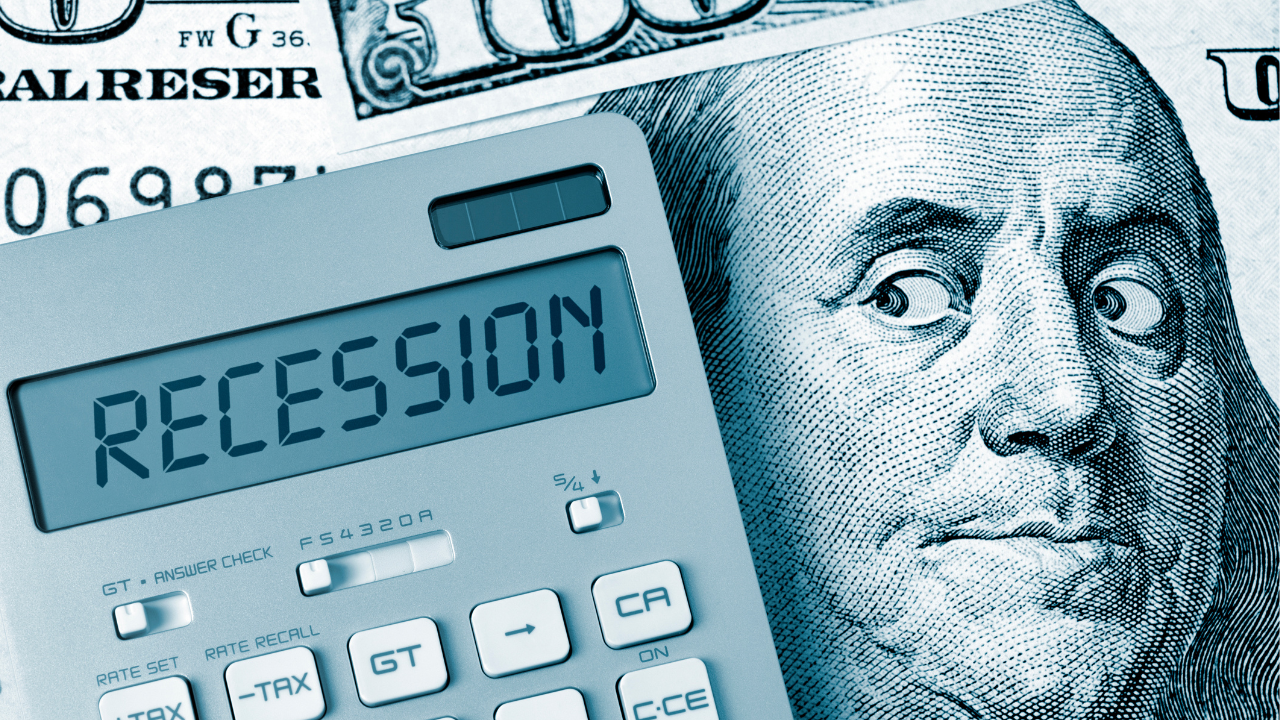
Love how slow real estate moves. Like you could see it coming, like a stock could drop in one day. You’re like, where’d my, where did everything go? It’s gone. But real estate moves rather slow. And then at the same time, you’re in control. That’s what I love about real estate. You’re in control of your asset. And so with that, what I’m seeing also, so I, I definitely see a lot very, very similar things. I think that the Federal Reserve is eventually gonna I think there it’s, oh, we’re already here, but we’re in a recession. I know that. But also as far as a crash, not sure if we’re gonna have a crash crash meaning like everything, the sky’s falling. Not not saying that, but I’d see a lot of companies doing layoffs and that hasn’t really even hit the market yet. Like, that hasn’t hit the economy like this, that much less money coming.
So like I said, Google’s laying off 10,000, Disney literally just yesterday said, living laying off 7,000 Amazon and another 10,000. Teslas, all these companies, even like Chase, like mortgage divisions of banks are laying off thousands and thousands of workers. So they’re getting ready for something it seems like. And I remember chase Bank, Jimmy Diamond, it was about a year ago, give or take, said that he sees a lot of economic storm coming, a huge economic storm coming. So whatever the case may be with the economy as it’s coming, I love what you said. It’s not if you should in invest, it’s where, because everywhere in the country there’s always gonna be a market for us to invest. Some will be better than others, but at the same time, even in a specific market that you want to invest in, you’re gonna find great deals in there that other people won’t be able to find.
Cuz all the other ones aren’t good deals, but you find a good deals. Who knows. In fact, some of my students, they’ll, they’ll find somebody that’s getting a divorce and I just wanna stick it to my spouse. I hate that person. I just wanna sell it and get out of it. Like, okay, I’ll take it from you. You know, so there’s always gonna be good deals. Now I’m seeing that you’re a hundred percent right with interest rates. It seems like the, especially the banks, they’re like, oh, my mortgages are drying up. We’re not, we’re having to lay off our workforce of doing these mortgages. And so they’re looking at the interest rates going up as well as like mortgage rates. But then also Federal Reserve this last week, the, when he came out I can’t remember the Fed share’s name, but he came about being much more dovish, not hawkish and like, like we’re gonna raise, we’re gonna raise.
So that’s gonna help. But here’s another big interest rates. You know, when I say help, interest rates gonna be stabilizing, stabilizing off and not continue to rise. But another thing, affordability for the homes, the price of the homes I love. Sellers are fantastic, but I love the idea that they’re nostalgic. Nost sellers are always nostalgic. They’re thinking, Matt, six months ago I could have got this much a year ago I could have got this much, so I’m gonna hold on. So that’s why prices haven’t dropped, like they probably will in the next six months. So you’ll see some more correction. Like you said Marco, 20% year over year increase. That is nuts. That is crazy. There needs to be a correction. And here’s a great thing. Well I live in Phoenix and for incident lead Phoenix is where the real estate wealth builders conference is gonna be at where you and I are gonna be speaking and and sharing with people.
And, and with that, in Phoenix the market went up like in two years, 50%. It was just a dramatic increase in values or, or price of homes and who was overbidding. It wouldn’t be me or you. We don’t overbid for properties we don’t pay top dollar for, or you know, 10% above it’s homeowners. Mm-Hmm <affirmative>. But the funny thing is now homeowners are now priced out of the market of certain homes. So in Phoenix, remember this is the desert three bedroom, two bath was selling for $500,000. Like this is the desert. Why in the world isn’t selling for that? It’s because homeowners kept driving it up. Cuz they have us cheap money, two and a half percent rent. Yeah, I’ll be able to afford that. But that $500,000 mortgage at two and a half percent is totally different at a 7%, six or 7%. Mm-Hmm <affirmative> that only goes $250,000.
So who is priced outta the market are competitors. You and I, Marco and everybody listening to your show and my show, we’re not competitors, homeowners, they are our competition. They’re the ones that overpay, but they’re now priced outta the market, which then brings prices down. Sellers are definitely nostalgic, so it’ll eventually come down a little bit more, but when it does, we’re gonna see like rents have gone up. My rents have just skyrocketed the last couple years. It’s absolutely amazing. So prices will come down well, we’ll then be able to buy properties, remember good deals everywhere. And then when you buy it, capturing that equity if you can, but then also getting that passive income. So I honestly think, so it’s 2023 now by 20 24, 20 25. I think right now is the best time to get started if you’re not already starting. But then be buying deals now because when it does, if it does come where there every screaming, oh it’s the worst time ever to buy. I like what Warren Buffet said, you need to buy when there’s blood in the street. When everybody says don’t buy, that’s when you buy. When everybody says to sell, that’s when you don’t sell. Yeah. You do the opposite of what everybody else the crazy people wanna do. Yeah.

Yeah. And you know, just to add to that, I would argue that because of it rising interest rates among other factors that even investors, a lot of investors have kind of put the brakes on or stepped to the side. So, you know, if homeowners are a competition, I would say that this is, you know, becoming a really opportune time for, as a real estate investor, cuz there’s still a lot of real estate investors that are, you know, waiting to see what’s gonna happen. They’re on the sideline, they’re gonna, you know, try and time a particular market, whatever the case is. So you have less competition, you know, trying to chase after or bid on particular properties in certain areas if that’s where you’re looking. So, you know, I, I think conditions are forming where it’s very opportune to, you know, push the gas pedal at least pretty soon and start acquiring more property.
Totally. I’m really looking forward to, and so everybody, you’re listening to our show, I mean, you’re listening to basically Marco and I investors telling you what we’re doing and how we’re seeing the market. And what you’re hearing us say is literally that right now or every single time that you’re thinking about investing, that’s the right time. You just need to find out where to invest and which property to invest in. You need to find the right deals because they’re gonna be out there. In fact, my students, even all through 21 and 22, 20 21 and 2022, where prices were just crazy, sellers were holding onto properties. My students were cash inequity because we put in offers and we go after the deals. We don’t buy bad deals. Like you won’t buy a candy bar for a dollar 25 if you could only sell it for a dollar.
Why would you do that? You’d be losing money every single month. Might as well only buy the good deals. And so a hundred percent. So I definitely believe, and this is the reason why we’re putting on the Real, real Estate Wealth Builders Conference, is because we see you and I see in all the, and actually we have 42, 43 now, 43 speakers, man, it’s gonna be awesome. All expert investors of different things from land investing to storage units to passive investing like you Marco, to mobile homes to mobile parks. Not necessarily the boxes, but syndications, everything. All the above. And we’re showing you that even now, especially now, like that’s the only time to invest is now. Right now there are great deals out there and we’re gonna show you how to actually do it.
Yeah, yeah, well said. I’d like you to talk a little bit more about that, you know, so people know where and when it is and all that kind of stuff. But, you know, just kind of a closing comment, I mean, we could have multiple closing comments here. You know, for people who are wondering, you know, whether we’re gonna be in a recession or have a recession soon, you could argue that we are already in a recession, you know, maybe not technically speaking, but this year we’ll probably see the media start talking about a recession more and more. And then, you know, there’s al already a lot of talk about, well, if we’re in a recession, you know, the fed’s gonna try and have a soft landing. I think they just want to kind of curb consumer demand. So that way, you know, we don’t see a crash anywhere across the board, whether in the stock market or the housing market.
I, I think they wanna lower inflation, curb, consumer demand, let markets adjust and then, you know, just let things kind of continue forward in a more controlled growth mode. You know, controlled pace. I think as an investor in many asset classes, the only thing I am really concerned about, and I think the biggest concern that most investors should be concerned about is what I refer to, to as the highly unlikely event or what you might call a Black Swan event. The unknown unknowns. You know, you couldn’t predict, you know, the SNL crisis, you couldn’t, you know, predict the coronavirus, the Lehman Brothers collapse and you know, all that, that fiasco back in 2008, I mean, you know, aliens coming down and swooping us up. These things you can’t predict. You can have theories about it, but you just don’t know what’s gonna happen or when, like a nine 11 for example. So these Black Swan events, you know, certainly can and do happen. That’s a major disruption. But you know, if you look back at every event like that, we’ve come out of it and may have taken several years, but we’ve survived and we’ve come out of it. So to me, that’s kind of the worst case scenario. If you do your due diligence upfront and invest intelligently, you’ll do well. It might take a little longer if you make a few mistakes, but you know, my only concern right now are Black Swan events.
Well, if we see from Coronavirus, you know, in 2020, that was a Black Swan event. Nobody saw that coming. But you see how much more ripping roaring after that that we, that So we, we always bounce back. Absolutely, we’ll always bounce back. But those black swan events, we have no clue if they’re gonna come. But as long as we’re trying to best to protect ourselves, making like you, you know passive investing, getting cash flow every single month, if we do that, more than likely we’re gonna be okay. And it eventually will weather past it and eventually to come back and we’ll be better than ever. And so even through the, you know, crash in 2012 to the coronavirus and all that sort of stuff, I make more and more money every single time something like this happens. You know, it’s, it’s a bummer in the beginning, but eventually I make more and more money.
Yeah, for sure. So what do we have going on in Phoenix, the Real Estate Wealth Builders Conference or REWBCON for short? This is the second annual event. You’ve invited me to come back as a keynote speaker. I appreciate that. So why don’t you share the what, the, where, the, when and the why <laugh>?

Yeah, absolutely. And so just like you, I have got a lot of people that are in our community. And so I created the Real Estate Wealth Village conference to bring all of us expert speakers, expert investors, to bring our community, to build a community. It’s not a sales pitch type of Yeah. Run to the back and give us money. No, it’s all about you and community. So it’s gonna be in Phoenix, May 4th through the sixth, and it’ll be here. It’ll be a three day conference. And it’s literally all about giving to you as an audience. Marco and I will literally be walking the halls, hanging out with everybody, talking with everybody. And you, you’ll know a lot of other conferences, speakers will come, they’ll do their one speech and then leave. They, they don’t stay for the conference. No, this is a community that we’re building.
So come hang out with Marco and myself. And actually there’s 43 total speakers and these are expert investors, people experts on subject two, like how to give properties with subject two financing you know, subject to the loan to Airbnb, to storage units. All the above. We are all investors and there are so many great ways to invest. We’re gonna broaden your mind to how you can invest, how you can protect yourself, capitalize in the recession, and become even better investors. And like I said, you’re gonna be able to hang out with Marco at, at rub con and you’ll, you’ll be able to see him. He’s, he’s one of the, one of the taller guys at, I’m not that tall, so I, I always, I, oh, Marco, you’re pretty tall, <laugh>. This is pretty fun. So it’ll be great to be able to hang out with you Marco.
Yeah. Again, but then all of our audiences, like, we’re all of the speakers, we have our own students and audiences. We’re bringing ’em all together. We’re just trying to build a big community of everybody helping each other out. Cuz we’re not competition really, when you really look at it, we’re not competition. If we view it as we’re helping each other out, my goodness, life gets so much better investing. Yeah, and actually everybody, if you’re listening to it, I would love for you to come and I even wanna give you 10% off code. Use the promo code, Marco, use the promo code, Marco, it’ll give you 10% off your ticket. We just wanna see you become real estate investors or continue if you’re a, if you’re an accredit investor, we have opportunities for you to invest as well. It’s gonna be absolutely phenomenal and I’m glad that you’re gonna be up there keying again and sharing your insights and everything. So everybody needs to come so they can at least to hang out with you. If anything, that’s what they need to do.
Oh, they should hang out with everybody there. Cuz like you said, it’s a community. There’s some great people. Like I had a lot of fun last year. I met so many great people, you know, I was learning a little bit of stuff from everybody that I was talking to. So, you know, it’s just, it’s kinda like a mastermind, you know, everybody’s kind of sharing their knowledge and asking questions and getting help and everybody’s contributing it. It, it’s just a great, great environment to be in. And if you’re an investor or a wannabe investor, this is a place to be. You know, you, you really need to rub shoulders with people who are doing it, making it happen.
And how much more do you realize that the people that are putting their money to fly to a location, buy a ticket and then they, they’re serious. They’re not just kicking tires, they’re not just saying, I kind of want it. No, no, these people are serious about their business and they’re serious about investing. And you getting around, like in my life everybody knows that I’m an investor. Everybody from church, everybody from the gym, everybody from all but nobody’s investors. I can’t, I had to put this on to get investors around me. And so imagine all over the country, even I have people flying from outta the country into America to come to the conference. So with that, you’re getting these, these are the cream of the crop. These are the people that are, they’re very serious about investing mm-hmm. <Affirmative>. And then you’re gonna be able to network with them. And you guys are gonna be growing so tremendously in your business and in your investing, but definitely get your ticket. 10% off user promo code Marco. And I just wanna see you grow just like all of us we’re, I’m gonna be there growing as well. I love learning from everybody.
Yep. Awesome. Dustin, this was a lot of fun. I’m glad we kind of had this last minute impromptu conversation.
Absolutely. Same here, Marco. It’s great seeing you again.
All right, well I’ll talk to you soon and we’ll encourage everybody to join us in Phoenix for your next event. Well, that is it for today. I hope you enjoyed the episode, you know, the conversation with Dustin. Hopefully you got a little bit out of it. It was fun and I would do it again. But again, you know, this is a great event that’s coming up and we wanted to talk about whatever came to mind, but at the same time also tell you about REWBCON 2023. That’s coming up again soon. So that is it for today. Remember to subscribe if you haven’t done so already. My team is here for you. If you want to have a strategy session with them, just by all means, give them a call or just shoot them an email through the contact form on our website. That is it for today. Thank you for listening and I appreciate you being here and we will see you all on our next episode.
Download your FREE copy of: The Ultimate Guide to Passive Real Estate Investing.
Get your FREE coffee mug by leaving us a Rating and Review on iTunes. Here’s how.
See our available Turnkey Cash-Flow Rental Properties.
Please give us a RATING & REVIEW (Thank you!)