
Hello, and welcome to another episode of Passive Real Estate Investing. I’m your host, Marco Santarelli. Well, today’s topic is something that I find pretty exciting, and I hope you do too. For some people thinking about the concept of economics is boring. But listen to today’s episode because I can guarantee you it will not be boring for you. You know, economists and the economy is something that some people just find to be dull and boring, but the reality is, is it’s not when you really start to understand what it is and how it impacts you, because it literally impacts every single one of us. But although many economists are reluctant to admit it, economics is not a science discipline that requires expert knowledge and specialized tools to gain understanding. It’s not like biology where you need to know organic chemistry and have access to a microscope or some other equipment to know what’s going on in a living cell.
And it’s not like astrophysics where you need to know the relationships among forces in the universe and have access to powerful telescopes to figure out the properties of a black hole, let’s say. But like psychology, economics is a social science. It’s an attempt to understand human interactions and how they affect the world around us. So it really focuses on those relationships as they relate to money, as well as the goods and services and the resources that money buys, and the transactions, the financial interactions that we take amongst us. And that’s what really shapes our economy, and that’s where we see market cycles, business cycles, economic cycles, peaks and troughs, highs and lows, booms and busts. It’s really all what we make of it. It’s what we do. So I wanted to bring on a great guest who came up with a book very recently called Understandable Economics, great title.
And he really, I hate to say dumbs it down, but he really makes it simple and easy to understand. And I thought, as I looked at the book and started going through it, I realized I really need to get this guy on the show, because he can explain things in a very simplistic way and make it easy and fun to understand. And so my guest, Howard Yaruss, is someone who agreed to come on, and he gave me 45 minutes of his time, and I could have literally talked to him for hours. But the thing is, is he had a 45 minute window. So that’s what we had. Anyway, enjoy today’s episode. I’m sure there will be several, if not many takeaways for you. I would encourage you to pick up his book just to get a better understanding of economics and how it works and how it impacts you and all of us here in the country and literally around the world. So with that, let’s jump into today’s episode and enjoy.
FREE copy of The Ultimate Guide to Passive Real Estate Investing.
If you missed our last episode, be sure to listen to The Science That Shows Success Starts with Your Thinking
It’s my pleasure to welcome Howard Yaruss to the show. I’ve been looking forward to this interview for a while. Howard is an economist, a professor, an attorney, a businessman, and an activist who greatly enjoys explaining complex issues in a clear, interesting and easily accessible way. Howard graduated from Brown University. He studied at London School of Economics, and he’s earned a lot of grief from the University of Pennsylvania. He has taught on a variety of courses on economics and business, and currently teaches at New York University. I hope I got that right. Absolutely. And he also has served on the boards of organizations that advocate for safer streets, help the homeless and support the arts. And we were having that conversation before we started recording here today, which is very interesting. And with all that, Howard, welcome to the show.
Thank you so much, Marco. Great to be here.
Well, it’s great to have you on. Why don’t you tell us a little bit more about yourself? I mean, I had, you know, kind of an introduction for you, but you’re a more colorful person. Do you want to just add a little bit to that?
Well, I’ll add my motivation for writing the book. I think when, when it comes to the economy, there’s so much misunderstanding about how it works. I think people get intimidated by it, and the economics profession doesn’t, doesn’t really help matters. <Laugh>, I think it’s very insular, and there’s a lot of jargon, and it alienates a lot of people. Most people go through high school, never taking a course in economics. People go to college, many don’t take a course in economics, and those who do are just confronted with a bewildering. I don’t know whether you took one, Marco, did you? I don’t want me to put you on the spot.
No, I, I did not. In fact, I actually hated the idea of studying economics, especially macroeconomics. But then, as you know, I started to gain more and more interest in money. Economics became a very interesting topic, but please continue.
So there’s just so much misunderstanding out there. And I think because of all that misunderstanding, people who may have motives you and I may not agree with, are able to pull the wool over a lot of voters’ eyes and put through a lot of policies that are, are not great for them and not great for the economy. I think this is a thought on the part of a lot of people that, well, economists just plug numbers into a formula and outcomes and answer. That’s not how it works. How we divide up society’s resources and goods and services involves values. You can’t, there’s no right answer. It’s a decision we all need to be involved in. And if we’re not involved, someone’s going to make that decision for us, and we may not agree with the conclusion they come to.
Well, that’s a perfect segue. You wrote this new book called Understandable Economics, which is by the way, a great title because most people, when they see the word economics, they think that it’s these complex formulas and charts and, and theories and whatever else. So, you know, the, the fact that you can break it down into simple, easy to understand concepts is great. You started answering one of the first questions I wanted to ask you, and that is, why did you write the book? I think you started answering that, but I’m gonna let you answer it anyway.
Sure. Because there’s more to it. I really think our economy and our society is not as good, is not as productive, is not as fair as it could be, because there are all sorts of people with ulterior motives that are calling the shots. And I think people need to take more responsibility. I don’t need to to sound like a downer here, need to take more responsibility for understanding what’s going on at asserting their views. Again, when it comes to the economy, it’s about values. It’s not about formulas. It’s about how we, we provide opportunity, how we divide up the, the great bounty our nation produces. And people need to be involved in that to make sure their values are represented, not necessarily the values of the lobbyists and the people who are funding the political campaigns in our country.
So what are the important factors? Why is it important to actually understand what you’re teaching and talking about? Why do we need to grasp that? Most people, I think, rely on economists and the talking heads on the news mainstream media, and we, we just take it as if it’s gospel, but we don’t question it. And probably because we really don’t understand it. And I’m talking about the majority of the population.
Okay, I’ll give you an example, A very simple example. There are a lot of people, a lot of politicians who say, we need to give tax cuts to the wealthy to spur the economy. Giving tax cuts to the wealthy is going to create jobs. Well, if you think about it, you don’t need a complicated formula for this. If you think about it, what do wealthy people do with, with extra money, with when extra money comes in, they save it. They pretty much have everything they want. If they want something, they buy it. They’re not going to get a, a, a slight decrease in their taxes and say, oh, now I can afford an extra pair of shoes. If they wanted an extra pair of shoes, they would’ve bought the extra pair of shoes. On the other hand, if you give, put money in the pocket of someone who’s middle income or lower middle income or poor, what are they going to do with that money?
They’re likely to spend it. And what happens? Yeah, when they spend it, businesses have greater demand for whatever they’re selling for the goods and services they’re selling. And how do they react to that? They expand. They hire more workers. The economy grows. So this claim, by some politicians, certainly not all that giving tax cuts to the wealthy expands the economy, creates jobs, increases GDP, gross domestic product. That’s the output of goods and services. If you think about, think it through and don’t just accept what some others are saying because they’re quote experts. You can see through why that’s just not correct. And that’s one of the points of the book. The way to learn about the real world is to look at the real world and to use common sense and not be passive and accepted. And why is this important? That was your original question. Because it allows policies to, to get enacted that, that are really not helpful to the economy, like tax cuts for the wealthy to spur economic activity. If more people understood that that doesn’t work, maybe we wouldn’t see those policies as frequently as we do.
So that’s a good point. Is that similar to what Adam Smith talks about with the invisible hand, is it essentially the market takes care of itself? You don’t need to incentivize it with tax cuts?
The market, to a large extent, does take care of itself, but there are problems. It’s like a highway. Highways are pretty much self-regulating because there are rules. You drive on the right. You don’t go over 65, 75, name your name, your top speed limit. You don’t have drunk drivers, you don’t have underage drivers. You stop at red lights. There are certain rules that make the highway work. If you didn’t have those rules, if you get to decide which side of the road I I’m going to drive on, I’ll floor the accelerator and see how fast the car goes, or I’ll hand the car over to my six year old, the highways wouldn’t work. It’s the same thing with the market. Markets work really well, like highways when you have basic rules that allow everyone to benefit, but if you don’t have rules, they just don’t work.
And what are the, the, the equivalent rules in the economy? Well, you can’t pollute. You can’t mislead consumers. You can’t commit fraud. You need an enforcement mechanism for these rules, just like the highway. It doesn’t happen naturally. The government has to come in and say, drivers, you drive on the right drivers, you stop at red lights. It wouldn’t work if they didn’t do that. Just like the market wouldn’t work unless the government came in and said some basic rules. But I just wanna add one thing. Sometimes they go a little too far and they, they start in a, in acting rules for rules sake. And that’s a problem too. But to say that because there’s, there’s, there are excesses because the government occasionally, or even if you think often does things that are unnecessary, that are overkill, doesn’t negate the fact that they have an essential role. And the goal, I think should be to, to make sure they fill that role correctly and not throw out the baby with the bathwater.
Yeah, good point. So I agree with you. We do need rules, you know, regulations, policies, but not too many. I mean, we, we want rules, not rulers, essentially. Right? Right. Are you basically saying, if I was to like grossly oversimplify what you just said, we can put rules in place and the market will correct itself and find its way we don’t need to have incentives. Is, am I summarizing you correctly?
Most of the time. But you know, it’s economics is not like physics or biology. You plug some things into a formula and boom, outcomes an answer. It’s about psychology. It’s about human values, for instance. I’ll give you an example where that doesn’t work. The economy turns down, there’s a reason I make this point in the book, that a downturn in the economy, the word for it is the exact same word that they use for a downturn in a person’s outlook. A depression. There’s, there’s no magic way out of that. The government, if people aren’t spending and businesses aren’t spending, the only spend or left, is the government. What would happen if the government didn’t come into the market and start spending money in a depression or recession? People spending slows down. So businesses have less income. So they start laying off people. What happens when they start laying off people?
People spend even less. And what happens when they, you go in, the economy goes into a death spiral. So clearly in a case like that, there’s a need for, for government action. Again, a lot of people feel the government overreacts. It is, is too active. Yeah. And, and I think clearly there are instances, I’m, I’m on my local community board in, in New York City, and there’s no shortage of examples. I can fill up dozens of your podcasts with examples of, of overzealous regulation and, and yeah. Literally insane spending by the, by the government of New York City. But on the other hand, you can’t just say, well, they won’t do anything because the economy eventually would come crashing down if, if they just abdicated their role for having some basic rules that make the economy function for having some basic provisions for making sure it doesn’t go off the rails.
Yeah. There’s a lot of arguments and counter arguments to all that, which we might touch upon a little bit later. But before I get too far off the book, I just kind of wanna wrap up the need for the book one more way. And that is, you know, we’re talking about economic forces and how they impact our lives. I mean, they drive so many aspects of our lives, given that, why are there so many people ill-informed about understanding economics and the economy when it, it really impacts literally every single one of us?
Well, why don’t we learn about the economy in, in high school, did you take, I, I asked you if you took a course in economics in college. I just assumed you did not take one in high school. I went to high school in New York City. Trigonometry was required, economics was not required. Right. That literally makes no sense to me. And, and believe me, I have a, a great regard for math. I was a math major in college, and I think that’s insane to, to use the literal word, I believe that characterizes that policy. There’s a lot of misunderstanding regarding it. And as I said before, I think the economics profession doesn’t do itself any justice because they often talk in, in jargon, and they don’t mm-hmm. <Affirmative>, they don’t make an effort to make it accessible to the average person. As I say, in Understandable Economics, mathematical tools are good for teasing out some precision with regard to the relationships in the economy. But the basic relationships don’t need math. They don’t need formulas. You should just be able to look at the economy, think about it, use some common sense, and they should become apparent.
Yeah. My understanding, you know, in a very loose sense about economics is, is it’s not about math and it’s not about formulas. It’s really about people and people’s interactions with each other. I think, you know, the field of study in that area is called behavioral economics, but it really comes down to people, people’s behaviors and spending patterns. Right?
Well, absolutely, and I think all economics is behavioral economics, actually, because that’s what determines the outcome. It’s not biology, it’s, it’s not physics. It’s something that is the result of human interactions. And just like, as I said before in, in a depression, what does the government, I’ll give you a specific example. So the, the people aren’t spending, businesses aren’t spending, the government has to spend, how much do they have to spend? I’m sure there are economists out there who give you a formula, but the point is that it’s just like your friend who is, who’s laying in bed and can’t get out because they’re, they’re too depressed. How many good things have to happen to them to get them up and, and, and about again? And it’s, it’s not necessarily clear. And, you know, the fed, the Federal Reserve, the, our America’s central bank tries when the economy is turning down to inject more money into the economy. But it’s, it’s an art, not a science, is what I’m trying to say.
Yeah. Well, money is a motivator. I mean, if you, if you get outta bed at six in the morning, cuz you have to go to work for eight o’clock, it’s partly, or mostly because you have to earn a living, make an income. Yes. You could also love your job and be passionate about it mm-hmm. <Affirmative>, but, but you’re going there because you have to make a living.
Yes, so absolutely.
This, this could be kind of a philosophical question, or it could be a technical question, but how would you describe our economic system? I could ask 10 people this question. I I probably get 10 different answers.
I would describe it as mostly a free market economy. The point I’m making, I, I opened the book by talking about socialism, communism, capitalism. Right. And the point is, these words have lost their meaning. The, the words are thrown around more often as insults than as, as means of helping to understand someone’s worldview. I, every day I pick up the newspaper and read about how these people are trying to stop our government who are against the, the peaceful transfer of power are called conservatives. So the words have been turned on their heads. So those words, in my opinion, are virtually useless. We, like every nation on the earth, from China to North Korea have basically more or less in North Korea is much less, but more or less a free market economy with government intervention. And it’s a lot of government in intervention in the United States. The government is a literally a partner in every single business through the tax code. Mm-Hmm. <Affirmative>, they regulate who can be hired, how they’re hired, what can be produced, where it can be produced. So the government has a very robust role in our economy and virtually every economy in the world.
So, speaking about our economy, does the size of our economy matter? I mean, I’m not even sure how big our economy really is, but you can measure it in terms of GDP, you can measure it in terms of, of human resources. Right. But how would you answer the question of how big our economy is? And does the size really even matter?
Well, I could give you one word answer, which, which is, is correct, but doesn’t really give any insight. 22 trillion, that’s roughly our GDP. What does that mean? GDP is just a measure of all, a dollar measure of all the goods and services that are produced. But does that matter? There are some people I’ve spoken to on the left who, who say, well, we don’t need continual growth. We already have enough. If we’re just divided up better, everyone would be fine. And in theory, that seems to make sense. But on the other hand, I really think the people who are the most marginal in our country are going to hit the hardest if there isn’t growth. If there isn’t growth, I don’t think it’s going to hurt the people who are doing well the most. I think it’s going to hurt the people who are struggling the most. They’re gonna have to struggle more. So I do think growth is good. I do think it’s essential because economy, the economy is just not going to reorder itself just on its own. I think a growing economy helps provide opportunity, particularly for those at the bottom of the ladder.
So does that mean or imply that bigger is better? Or does that imply that the GDP or the economy has to continue continually grow all the time in order for the wellbeing of every citizen within the country?
Does it have to theoretically, no, it doesn’t have to grow theoretically, as a practical matter. I think it does because the way the economy is not going to reorder itself so that the people Yeah. On the, on the lower end of the spectrum, get more if growth stops, I just am a practical person. And I feel that a growing, growing economy is more likely to provide opportunity to the people on the lower part of the spectrum than an economy that’s stagnant. Could you reorder reallocate things if the economy is stagnant? Theoretically, you could. I don’t believe it’s gonna happen. I put my faith in a grow economy to help people on the lower part of the spectrum. And, and also on the upper part of the spectrum growth, theoretically, benefits can benefit everyone.
Yeah. Well, if it, theoretically it should, you know? Mm-Hmm. <Affirmative>, if people are living hand to mouth, people in the lower income strata, if you will, they rely on that regular paycheck, that salary, and they have to have employment. If they don’t, they don’t have the savings to survive. Right. You know, probably three, four weeks. So yeah, it, it has a huge impact on them. But if you’re asset rich and you’re cash flow rich, you know, you can survive a six month recession or six month, you know, bout of unemployment. Mm-Hmm. <Affirmative>, not that you may even need it, but you know, it’s there.
And all sorts of statistics, I’m sure you’ve seen them about how wealth is becoming more and more concentrated in our society and wealth. There, the statistics on wealth are not as good as the statistics on income because income is at least most of it is regularly reported to the IRS. Wealth is just not reported. So you don’t see statistics on wealth, not because it’s not important, simply because we just don’t have the same kind of reliable statistics on wealth that we have on income, but wealth is, is clearly more concentrated than income. And wealth is becoming more and more concentrated because as I discussed in Understandable Economics, the very favorable tax provisions regarding inheritances.
Yeah. Well that’s very true all over the place. I mean, if my principal residence goes up a hundred thousand dollars in property value, my net worth goes up a hundred thousand dollars. I don’t have to report that or disclose it. You know, there’s a lot of shadow wealth, if you will. Right. And I don’t even know how important that is. I mean, you know, wealth until you actually sell it and realize a capital gain, it’s not taxable. Right. It’s, you know, it’s an unrealized gain. So there, it really doesn’t matter. But well, it matters the number one question.
Sorry. No, it matters for your errors because they acquire not to get too technical, the No, that’s true. The, the higher asset, the higher value, the basis goes up to the higher value, so that if they sell it after your demise, they’re not paying any tax on it. So that increase in wealth essentially goes untaxed if it goes to one of your heirs.
Yeah, very true. And that’s a sore spot for a lot of people too, is, you know, death tax and all that stuff. You know, the number one question I get asked often whether in person or via email is, are we in a recession or do you expect a recession in 2023? I’m gonna throw that question to you. Curious to hear what you have to say.
Say about the risk of undermining my credibility. The word recession to me is almost like the word socialism, capitalism. It’s, it’s sort of lost meaning, the meaning that most economists use for recession is two, back to back quarters of declining output. If our GDP goes down in one quarter and then it goes down in another quarter. Where in recession. Yeah. What does that mean? It means that the economy is not, is is not growing. It’s the, the economy is shrinking and forgetting the hard and fast definitions. Are we in recession? No. unemployment is extremely low. 3.5% is, is historically low and output is robust. So I don’t think we’re in a recession now. Will we be in a recession six months from now, eight months from now? I don’t know. And anyone who tells you they know is, is probably busy on MSNBC reaching a huge audience, convincing them that they know. Yeah. When they can’t possibly know.
Well, now you have me curious, I, in your mind, is there such a thing as a recession and what does a recession look like to you? When would Howard say we’re in a recession right now?
I think the, the economist definition is not a bad one. Two, back to back quarters of declining output, we have not seen that yet. If we had two back to back quarters of declining output and unemployment went up, it’s, it’s extremely low now. And if it went up, I would probably say we’re in a recession. Yes. I, I would agree with that. So the word is not as important as looking at the, the real world and seeing what’s going on out there. If the, if the drop in output is, is very small and the increase in unemployment is very small and it quickly turns around, it doesn’t really mean much to me to say whether we were in a recession or not in a recession. We should just be thankful that there was a slight downturn and we’re, and we’re back to normal. So it’s, it’s not a binary kind of thing for me. It’s, it’s, it’s a way of looking at the world and seeing if the the patient’s doing well.
<Laugh> okay, well hopefully the patient’s alive. Yes. So, well, when we think about recessions, we think about economic cycles, right? And often people think about booms and busts, which are, to me, strong words. You know, they, they point to extremes like peaks and troughs, but the economy cycles. And a lot of people don’t understand why we have economic cycles. What would you tell somebody who’s asking you, why does the economy cycle? Does it need to cycle, and is there a way to prevent it?
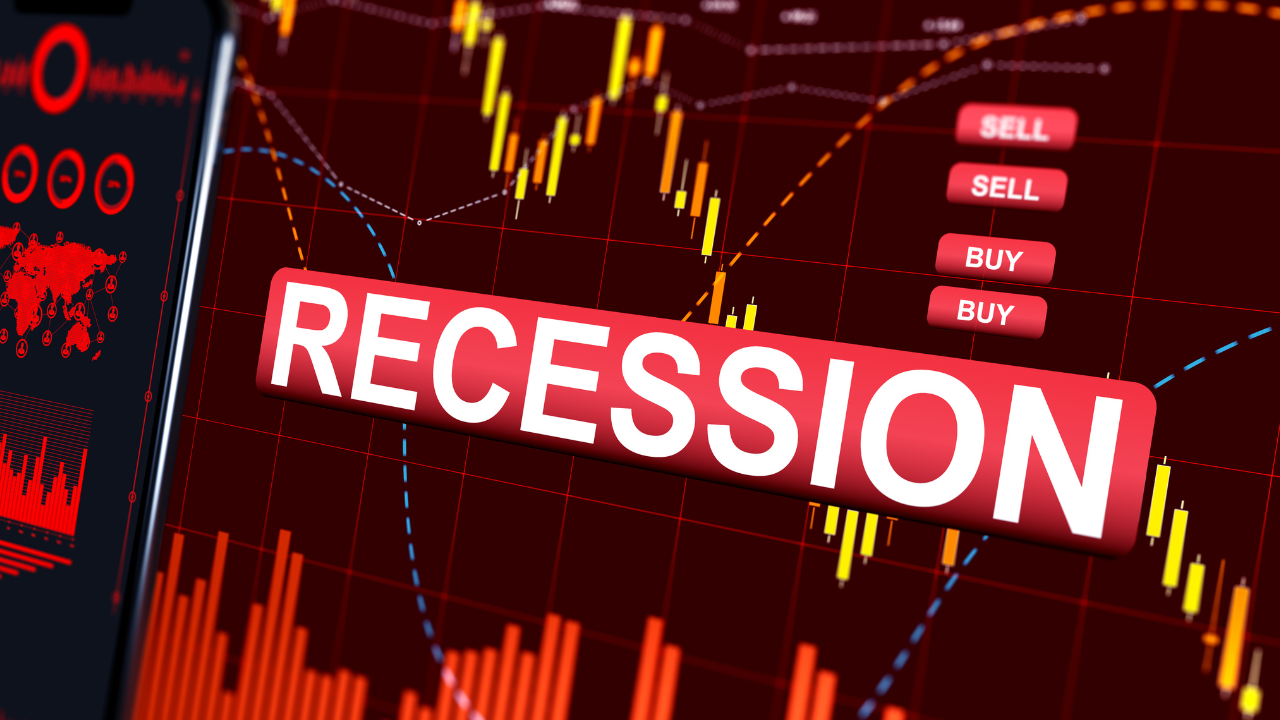
Well, I’ll just make a historical point. Before the Federal Reserve was set up in the early 20th century, the swings in the economy were much more significant. The economy was much more volatile. There were all these bank runs people lost their life savings. Again, the economy had enormous swings. Since then, the economy has been much more stable. Do we still have a business cycle? Absolutely. And there’s a natural ebb and flow people, people start, it’s, it’s, again, it comes back to human psychology. When the economy is going up, people are very optimistic. They’re willing to invest in more risky types of ventures, and they’re throwing money at it, and eventually it becomes unsustainable. So the economy turns down and they pull back, and then the cycle repeats itself. The goal of the government is to reduce the severity of the swings to make it less volatile. And to a large extent, it has achieved that.
So I don’t know if I’m gonna be pushing back on you a little bit with this, but my understanding is that your example, bank runs that wasn’t prevented because of the Fed that was prevented because there were no regulations. Think back to the roaring 1920s, you know, and then the the stock market crash and people, you know, racing to the bank to pull out everything they had. It, it was because there were no regulations in place to, to curb or prevent that it didn’t have anything to do with the Fed. The FED was actually new. It only came out in 1913.
That’s exactly right. I, I oversimplified there. I could sum up in one word what really prevented bank F D I C, maybe that’s forward federal deposit. The Federal Deposit Insurance Corporation the Fed was established to provide liquidity. When a bank, when there’s a bank run, it was supposed to be delivering cash to banks to prevent a, a great panic from ensuing. And as Milton Friedman pointed out, the Fed failed in its responsibility. It was there, it was, it was relatively new. It failed in their responsibility. I don’t think they would fail that way. Now. They haven’t. And they also have the added protection of F D I C insurance. Almost all bank deposits are insured up to $250,000. So the vast majority of people have no fear about losing the money they have in the bank, and therefore a bank run becomes extremely unlikely. We haven’t seen any, any in the United States since this, since the F D I C was set up.
Yeah. Okay. So I’m gonna go back to my original question here, which I’m not sure you fully answered, but why does the economy cycle like it does?
Well, as I was saying, you can call
It, you can call it a business cycle if you want, but economically speaking.
Well, you should be, everything can be explained. You know, the tides can be explained by the gravitational pull of the moon. So what explains the, the <laugh>, there’s an explanation for everything. What explains the changes in the economy? Well, when things are looking up, people put more and more money into risky investments cryptocurrencies, all sorts of very, very speculative, kind of risky investments that ultimately can’t be sustained. For instance, 2008 real estate was, was bit up to levels where the average person was having a very hard time finding a house that’s just not sustainable. And so, as was reaching the top, think of a roller coaster. Real estate prices were becoming too high, putting real estate out of the, the hands of the average person so that real estate prices stopped increasing, the increases slowed down. And what happens when they slow down? All these investors who threw all this money at real estate said, huh, this may be the peak.
Let me get out. And as everyone rushes for the exits, you have a crash. And then eventually real estate declines and, and investors start looking at it again. It’s a cycle. That was a particularly extreme part of the cycle. But that’s generally what happens. There’s, there’s more money going in. John Maynard Keynes called it the animal spurs, we’re gonna make money. We’re gonna throw a lot of money at this. It’s going to do really well. And, and when the economy is growing, it does do well. But the, it reaches a point where it’s, it’s just not sustainable and starts to turn down. Everyone pulls back at the same time. And that’s where you have the trough, the, the fall in the economy, the recession, the depression, whatever word you want to use. And it’s, it’s a cycle that repeats itself because it’s all due to human psychology. It’s not something that comes out of a formula. People get optimistic, they get burned, they pull back, they get optimistic again. It’s a cycle. And the goal role of the government is to make that that’s, those swings just somewhat less volatile, which it has more or less done.
Yeah. This kind of goes down a rabbit hole from my perspective, because you can think about, you know, answering the question of the economic cycle or you know, why the economy cycles because of human behavior. Yes. Which, you know, you can label as behavioral economics. But then if you keep going down that line of thinking, it’s, people behave the way they do because of policies and incentives that are placed in front of them. Like mortgage rates, interest rates, how available credit is, which leads all the way back to monetary policy and even, you know, fiscal policy. So who’s at the end of that chain? You know, it, it seems that the Fed and or the government is at the end of that chain that has this ripple effect that leads up to how people behave because credit is loose or credit is tight, et cetera, et cetera. So yeah, I agree with you that behavior impacts economic cycles, but what’s affecting people’s behavior, it’s the environment that they’re put into.
Absolutely. And if you had the perfect interest rate and the perfect policies for keeping the, the economy stable, maybe you should be appointed the head of the Fed. The point is, it, it comes down to psychology. How much do you lower interest rates to get people to invest but not invest too much? It’s an art, not a science. And to fine tune it so you get it perfect. So there’s no business cycle. No one has been able to do that yet. But the point that I want to make is that’s not a justification for throwing at the Fed and, and replacing it with, I have no idea what the point is that they ca they don’t get it perfectly right. They can’t fine tune, fine tune the economy because it, if the economy relies on individual decisions in human psychology. But the point is, are they making it better or is it better than a hundred years ago when there were bank runs and at all sorts of panics? And the answer is yes, but will they ever be able to, will a psychiatrist, will a psychiatrist ever be able to perfectly cure every kind of mental affliction that they come across? Probably not, yeah. But the, the test is, do they help people feel better, be more productive and more happy? And that’s the goal of a psychiatrist. And I think it’s, it’s an analog to what the people who make economic policy for our nation, do they, they just try to make it better? Will they get it perfectly? Probably not.
So in the theme of Understandable Economics, and for those people that don’t fully understand, you know, the levers that the Fed plays with, how does the Fed fight, if you will, that’s not a great word, but fight, you know, downturns and recessions or help stimulate the economy. I mean, in other words, what do they do?
Well, this is where a lot of people’s eyes glaze over, and I promise your listeners, they, they won’t do it. Now, 30 seconds or less, when the economy is slow, when people aren’t spending, when business are businesses aren’t spending the fed lowers interest rates, how does that help? Money’s cheaper. If you are thinking of adding an addition onto your home and interest rates are 6%, you’re less likely to do it than when interest rates are 2%. So by lowering interest rates, they encourage people on businesses to spend thereby spurring the economy. And on the other side of the coin, when the economy is too robust, when inflation is breaking out, when people are spending too much money and they fear that the economy is going to overheat, they raise interest rates, discouraging people from spending and therefore rating the economy back in. That’s the Fed in a nutshell.
And would you agree? Thank you for that answer by the way. Would you agree that the only lever the Fed has left, if you will, is the adjustment of Fed funds rate? Basically the adjusting rates up and down.
They have some other technical levers. They, they pay interest on bank reserves. They can provide forward guidance by saying, we’re going to do this. Playing again, playing with people’s psychology. There’s something called quantitative easing where they buy long-term bonds. It’s, it is all very technical, but the, the bottom line is what they’re trying to do is influence spending. And the main way they do it is by raising interest rates to slow down, spending money becomes more expensive or to encourage spending by lower interest rates and thereby spurring the economy. That’s basically in a nutshell what they do.
Okay. Well let’s begin landing the plane here. There’s probably some things that people are concerned about, such as the national debt is the national debt, which continually increases <laugh> a threat. I mean, a lot of people are concerned about it. Some people believe that it is a threat to our national wellbeing. Other people will say, no, it’s normal. You have to have it, it will continue to increase. It’s just we’re down this course that you cannot reverse.
Well, the debt’s the debt. It’s not a question, do we want it or not want it? It’s here to stay. It’s like your debt, it’s there. And what is it? It’s approximately 30 trillion. I personally cannot get my head around 30 trillion. It sounds very much like 30 billion. 20 trillion. They all sound the same to me. So what I do in Understandable Economics is break that number out on a per American basis on a per person basis. And it comes out to, when I wrote the book about $68,000 per American, that’s number you and I and all your listeners can get, can get our heads around, is that too much? It’s your own judgment. Again, it’s about values, it’s about judgment. Is $68,000 too much? Well, almost everyone who went to medical school, virtually everyone who borrowed money to buy a home, most people who set up businesses have debts far exceeding that.
So it’s, it’s obviously not the existential threat bankruptcy inducing crisis that a lot of politicians make it out to be. Is it too much? Maybe It depends what we spent the money on. If we spent it on really good education for kids, roads, infrastructure. In the book I cite a headstart program, which has a 13% ROI, return on investment. For every dollar we put in, we we get a dollar 13 out if we spent the money on that. No, it’s not too much. Maybe we should be higher if we’re getting that kind of return on it. If we’re, if the money was spent on just pushing the government’s ongoing expenses down the road to our children, no, that’s a waste. So it’s, I’ll make two points about it. One, it’s not an existential bankruptcy inducing threat the way a lot of politicians make it out to be. But two on the other hand, whether it’s bad or good, depends upon what we’re spending the money on. If you heard someone took out $68,000 that to go to medical school to be some kind of needed specialist, you’d obviously say that’s not a waste. If you heard someone took out $68,000 cause they don’t feel like having a job and just want to use the money to have a good time, obviously it’s a waste. It depends on what the money’s used for.
Yeah. Well, in real estate terms with our real estate investors, we always talk about good debt and bad debt. Good debt is what you use to acquire assets. Mm-Hmm. <affirmative>, you know, to create cash flow and create wealth. Bad debt is money used to spent on a credit card to go on a vacation. Right. Which is just, you know, stupidity in most cases.
That’s a perfect analog.
Yeah. But the one thing I will comment on that you said is that, you know, if you, if you pay down your, if you were citing me if I pay down my debt, you know, it’s, it’s a non-issue. But the thing is is I can pay down my debt. I can pay off my debt. Right. I choose to have debt for, you know, for the reasons I just mentioned, but we can’t, the government, the US government just can’t pay off the debt, you know, tomorrow if they wanted to. Yeah. It’s, it’s 30 trillion. So it’s always there and it’s growing. It grows like a balloon. It it’s never really gone down. You know, it’s just been increasing year after year.
Well, it went down for a few years under Clinton. Yeah. It was quite, yes, you’re right. Yeah. It, when the government runs a deficit, just so all of your viewers understand this, when the government spends more money than it takes in in taxes, it can’t print the money like they did in Weimar, Germany. It has to borrow the money period. Every dollar the government spends is either tax or borrowed every dollar. You can say every penny. Then the government spends his tax bar. So if taxes are less than spending, the rest is borrowing. It’s, it’s that simple. And every year, right, the federal government spends more than it takes in in taxes. The deficit is declining. It has been declining. It reached epic proportions during covid during the last two years of Trump’s presidency. It’s declining now, but it’s still massive. They predict close to roughly trillion dollar deficits each year as far as the, I can see.
Yeah. So, okay, let’s call it an unbalanced budget. What’s the cost?
It’s definitely an unbalanced budget. Well, let’s think about the cost. Borrow the money and have to issue bonds to finance it. Where, who buys these bonds? Well, the majority, the vast majority of bonds are bought by other Americans.
Right.
It’s, it’s not that Chinese own a significant amount. Actually, the Europeans and the Japanese are more than the Chinese, but most of the bonds are bought by Americans. So what happens when we pay that, that back those And, and the Fed? The Fed, yes. The Fed buy, buys and sells government bonds. Yes, absolutely. Not directly from the government, but they buy them in the open market. Right. So what happens when these bonds are paid off? Because they do get paid off bonds. It’s like a, a rotating revolving Credit. Bonds are paid off, new bonds are issued, more new bonds are issued than bonds are paid off. Who gets that money? Who wait, let’s think of two things. Who pays to who, who comes up with the money to pay them off? And who gets the money when it’s paid off? It’s the same group of people, more or less.
The American taxpayer provides the money to pay off the bonds. And the American taxpayer, most of the bonds are owned by American taxpayers. So really it’s not as bad as it sounds. It’s money shifting from one pocket to another pocket. American taxpayers are paying to pay off the bonds. But who’s getting that money? It’s pretty much American taxpayers. And again, to a minor, to a smaller extent, Japanese, Chinese, other people throughout the world are, are getting interest payments on the bonds that they own. But again, the vast majority are owned by Americans. So it’s money coming from Americans pretty much to other Americans. And I’ll add one thing. China does own about 9% of our outstanding debt and does get a, a certain amount of money from us every year. And, you know, I’m not so sure it’s a necessarily a bad thing for them to have an interest in the continued existence and threat and success of, of our economy. That may not be such a bad thing after all. So yes, growing debt is, is an issue. It’s something that needs to be looked at. $68,000 per American is a lot of money. But again, it, it needs to be thought just like regulation. Some of it’s good, some of it’s bad, and we shouldn’t throw everything out because some of it’s bad.
Yeah. Okay. Fair point. Personal question and we’ll wrap it up. I am just curious personally, if you’re a fan of Milton Friedman? Yes. first of all.
Yes. Absolutely. I don’t think he has everything. Right. just like the Fed doesn’t have everything. Right. Nobody does regulars, but he has a lot of interesting ideas and I I cite one of them very favorably in the book. So yes, I I am a fan, but I could say very clearly I do not agree with, with everything. Right.
Agreed. I I agree. I I really like Milton Friedman. What about John Mayer Keynes?
Yeah. Well, he was the one who popularized monetary fiscal policy. The, this is an important point for, for a lot of people before he came along, a lot of economists thought the economies like the weather goes up, it goes down there. This is, there’s not much you could do about it. <Laugh>. And that’s why it was so volatile. He was the one who said the government needs to get involved and try to mitigate some of these swings in the economy. And I’m not sure it was his original idea, but he gets the credit for popularizing it and getting people to governments to go along with it. And I think we, we owe less volatility in the economy to John Mayer Keens to, to some extent.
Yeah. And I, I think he also gets a bad rap and gets <laugh> kicked in the gut a lot, lot with, you know, Keynesian and that, you know, we have to spend and we have to spend a lot in order to keep things glued together.
I, I don’t, if he saw today’s deficits, he might not not go along with that. He said we need to spend more when the economy is turning down. He did not Yeah. Have the figure trillion dollar deficits in anything he wrote.
Okay. One takeaway for our audience and then I’d like you to share how people can follow you and get more information. Sure. Get your books and all that stuff. But what would a final comment or takeaway be for our listening audience?
Don’t be intimidated by economics. It’s not like physics. It’s not like biology. You don’t need to know complicated math or how formulas or know all this jargon. Look at the world and think about what’s going on. Remember the example I gave about tax cuts to the wealthy versus middle income people in terms of spending and growing the economy? Don’t, don’t be afraid of. Okay. Don’t be intimidated by it. Use your common sense. Use your values and then stand up for what you believe in.
Yep. Well said. So the book is Understandable Economics, new book, great book. I recommend people pick it up. Tell our listeners how they can follow you or get more information, whatever you wanna share.
Well, I have a website. It’s howardyaruss.com and you can reach me that way and I’d love to hear from you. And the book is available and it, wherever books are sold, as they always say, and certainly it’s on Amazon and, and Barnes and Nobles. So I hope they take a look at it. And I’d love to hear from people if they have any thoughts on the book. Again, they could contact me through howardyaruss.com.
Awesome. Very cool. Well, Howard, great conversation. Thank you for coming on the show. This has been invaluable. Thank you.
And I really appreciate it, Marco.
I look forward to meeting you in person one day in New York.
That would be great. Thank you, Marco.
You take care. Thank you.
You too.
Thank you for joining me today on today’s episode. Hope you got something out of it. I really enjoyed my interview and I’m gonna finish reading his book because it is a very good book. Download our free report on our website, The Ultimate Guide to Passive Real Estate Investing FREE download. And it’ll be essentially a primer for you. Remember to subscribe to the show. If you haven’t done so already, contact one of our investment counselors if you’d like to have a conversation about investing in real estate. It’s a free strategy session. It’s there for you. That is it for today. Thank you for listening, and we will see you on our next episode.
Download your FREE copy of: The Ultimate Guide to Passive Real Estate Investing.
Get your FREE coffee mug by leaving us a Rating and Review on iTunes. Here’s how.
See our available Turnkey Cash-Flow Rental Properties.
Please give us a RATING & REVIEW (Thank you!)