
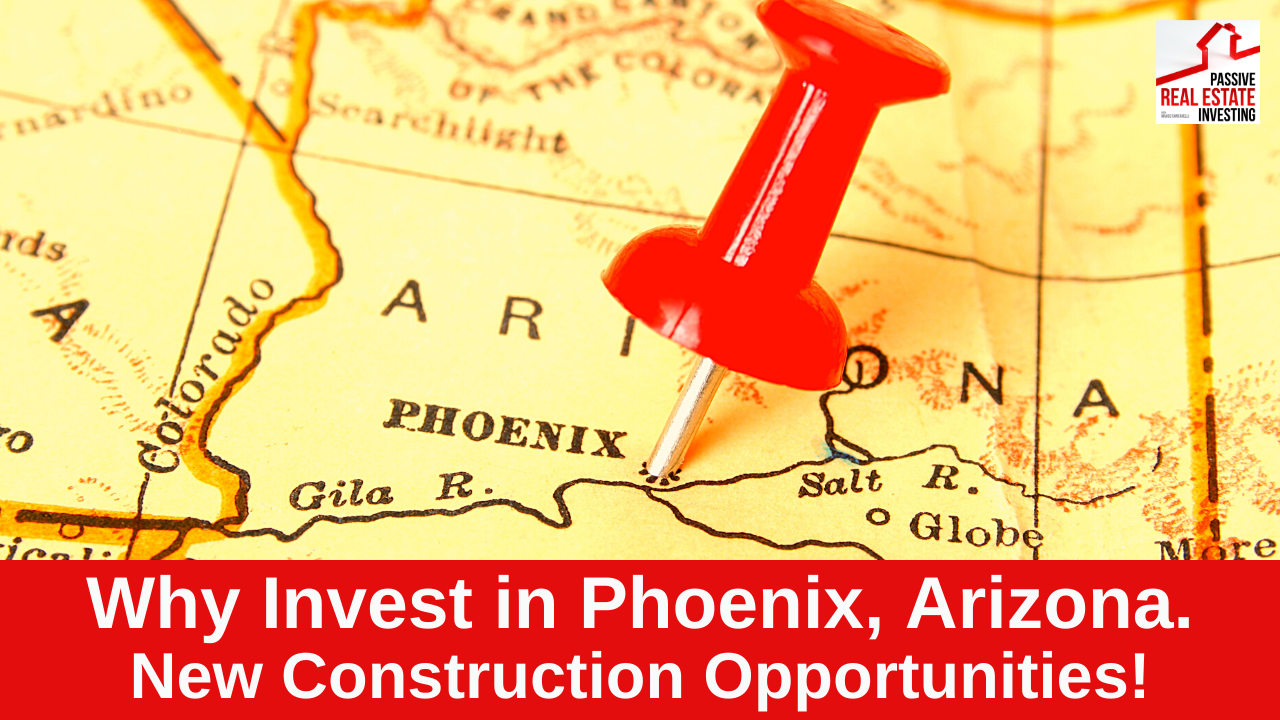
Welcome to Passive Real Estate Investing. I’m your host Marco Santarelli. Well, we have a very special episode today because we’re going to talk about the Phoenix, Arizona Metro area and why it is such a hot market yet again, for investing. And along with that, the new construction opportunities that are available there, which I’m very excited about. And you’re going to learn about that today, and then you’ll understand why I’m so excited about it.
Download your FREE copy of The Ultimate Guide to Passive Real Estate Investing.
If you missed our last episode, be sure to listen to Single-Family vs. Multifamily Rental Property
– – – – – – – – – – – – – –
Download your FREE copy of: The Ultimate Guide to Passive Real Estate Investing.
Get your FREE coffee mug by leaving us a Rating and Review on iTunes. Here’s how.
See our available Turnkey Cash-Flow Rental Properties.
Please give us a RATING & REVIEW (Thank you!)
SUBSCRIBE on iTunes | Stitcher | Podcast Feed
So let me begin by introducing Steve, who is our primary point of contact with our builder, who we’ve been working with for many, many years in other markets, including Houston, the greater Salt Lake City area, even in Idaho that has been on fire lately. So Steve, welcome to the show.
Good to be back. Let’s see. I see. I didn’t offend you too badly last time.
No, you did it. And in fact, uh, I was so forgiving. I thought I’d bring you back on.
Oh, that’s nice of you. All right. I don’t get another chance this time, but I’ll do my best. I’ll behave.
No, we love you, Steve. It’s always great working with you and we, we do a lot of business together, so it works out. Um, so look, I’m really excited about the Phoenix area and when I bring up Phoenix to some people, they look at me a little bit surprised because Phoenix has been on an incredible run in terms of population growth, price growth. In fact, I pulled up some numbers on one of my tools and I’m looking at the appreciation rates in that market, in the Metro area. And in the last quarter, annualized, it was 9.9%, almost a 10% annualized rate of appreciation. The last 12 months was 8.3%. Over the last two years, it worked out to seven and a half percent annualized. But if we go back like five years, we’ve seen an average overall rate of appreciation of 9%. And if we go back 10 years, it’s also a 9% average annual rate of appreciation. And I have to think a lot of people from California are moving to Phoenix and just driving property values up, but it’s a hot market. So tell me what you think about what’s going on and in general with Phoenix and why we should be investing there.
Well, as you mentioned, we do a lot of new multifamily construction in a Utah, Idaho, Houston kind. If we drill down to the Western us though, you know that spine of the Rocky mountains, you tires on Idaho. It’s been an interesting setup because we all know that Phoenix along with maybe what Vegas and Southwest Florida, that was ground zero of the 2008 mortgage meltdown, right? That’s where a lot of the speculation occurred in the markets. You really took it on the chin accordingly. And you can look back on that and you can say why there’s lots of reasons why, but always concerned about having a diverse employment base, right? Can people get jobs? Can they afford the mortgages and the rents that they’re signing up for? And that turned out to be in Phoenix, back in 08, not, not really to be the case, right?
There was a lot of speculation that was driving that when you look at it, now it’s a different place, right? We’re talking about a much more diverse employment base. Now the demand for the housing and some of that appreciation that’s been happening that you’ve been talking about is very much warranted. There’s a shortage of housing in the Valley or Maricopa County there. And I think much of it comes from people are leaving California, right about businesses are arriving into Phoenix. That’s a warm year-round good economy, business friendly, landlord, friendly. All of these things are reaching a tipping point where people are saying, okay, we’re going to move there now. And they’ve got a good natural birth rate as well, but, uh, definitely that population growth. And I think one thing that people don’t pay attention to in some of these markets, this is mostly true nationwide, but it’s especially pronounced in Phoenix.
When you look back on 2008, seems like an eternity ago. A lot of these builders and subcontractors that went under never came back tile setters and framers and suppliers, right? Because if you remember, Oh eight, 2009, 2010, new construction, it just completely dried up. Almost nobody was doing it. Everybody viewed it as we have too many houses already, why would we build more houses? Right. Nobody’s going to do it well, as often as the case, the economy overreacts and it goes too far, one direction before it settles back where it should be. Right. And so what happened is we didn’t build anything for, for many years. You yet, the population still continued to grow that excess housing from 2008 has been absorbed a few times over, but many of these subs and builders that went away and away, they haven’t returned. And now, you know, I have a joke, millennials, they want to code apps.
They want to drink coffee at Starbucks. They don’t want to set tile or hammer nails or put on shingles. Not only do we have a housing problem, a shortage, we have a labor shortage that is continuing to drive prices and rents across the board because that, that demand really is there. It got shaken a little bit during the first few months of the COVID lockdown when nobody really knew what was going on. But since then it’s emerged, you know, the job market has its trouble, but that’s primarily black swan event related. The underlying fundamentals are still pretty good and people need to live in these places. So I think that’s important to think about it that way, that this is not your 2008 Phoenix. There’s a lot of different employers there. Now, the move to that area, for many of these reasons that I’ve just told you about.
So does Phoenix have a labor shortage, a labor problem right now? Like it happened back in 2006, 07, 08.
Well with like subcontractors builders and such. Yeah, essentially it does. I don’t know that it had that in a way. And I think if there was a lot of material, a lot of labor and little demand compared to it, they were putting up so much inventory. Now the problem is flopped on a Ted because there’s a lot of demand, but you just, you know, getting a framer or a plumber to call you back to show up at a job, you better be a big ticket item for them because they’ve got more work than they can possibly handle. And they just cannot keep up with the demand for housing.
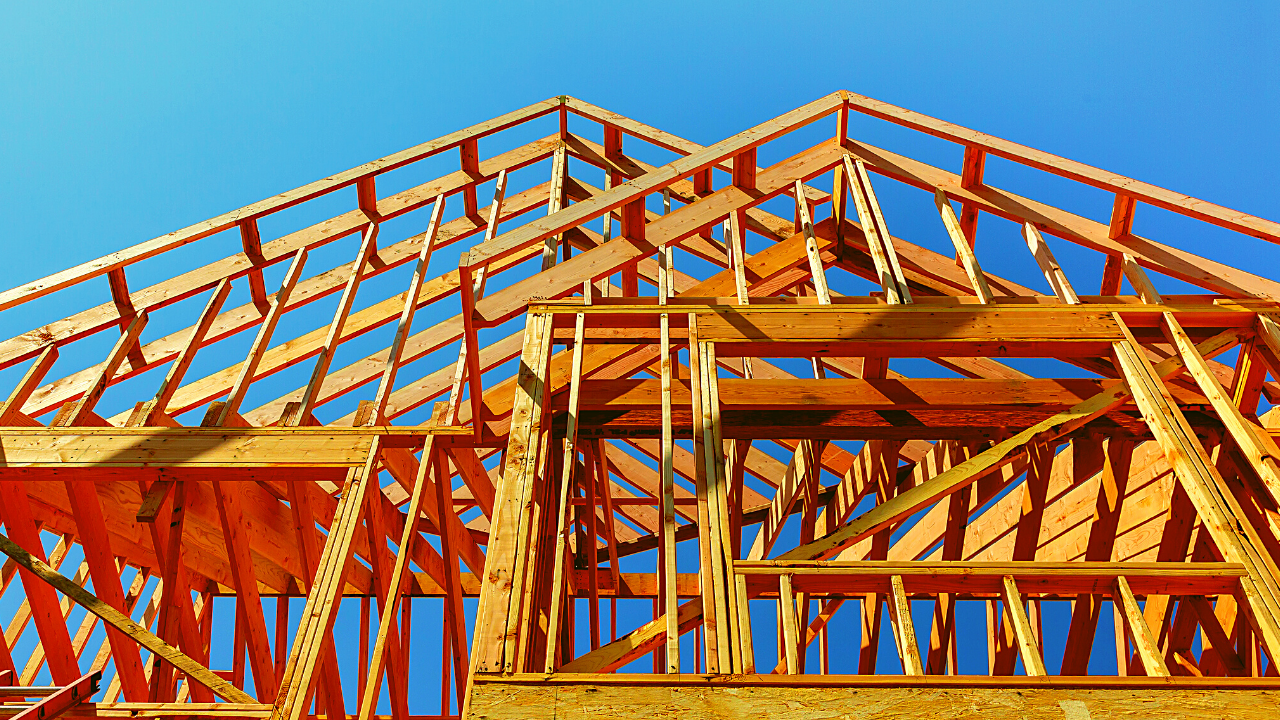
We’re going to talk about that in a few minutes, as far as you know, how we’re contributing to the inventory shortage there with some new construction investment opportunities. But I want to continue talking about the market and why we should be looking at Phoenix or investing in the Phoenix. Metro, you know, you mentioned, you know, the local economy and industry, what is making up the industry. I know Phoenix is a very, very big city in terms of population geographically. It’s a huge fact, you know, there’s just more land than you could ever build on there, which is a good and a bad thing. But as far as people that are employed there, what makes up the bulk of the industry in the Phoenix market?
Well, you’re right. The Metro is so big that that answer isn’t necessarily very simple anymore. Right? You can pick a smaller town and say, this is an oil town, right? This is a shipping town. Phoenix is an everything town. It depends on what part you’re talking about. Right. Right. And in the downtown sector, you’ve got your government and education and infrastructure and, and on your West side, you’ve got logistics, you know, warehouses and you know, this Amazon effect, right. You’ve got your financial center in downtown and in Scottsdale, you’ve got all the professional services everywhere. You’ve got a huge tourism economy and it’s, it’s spread everywhere. I mean, you’re not just people sometimes ask me, well, how far is it to downtown from your development? My answer is, it doesn’t matter. There’s five or six other employment centers all within a 15 to 20 minute drive. That’s how big the city is.
Right? Yeah. So employment is not concentrated in a downtown core. Like it is in some cities it’s spread out through all the metropolitan areas in the sub markets and suburbs. So yeah. And yeah, and that makes a lot of sense. And I do know I’ve looked at what industries are in the Phoenix Metro area and it’s everything from healthcare, retail, manufacturing, there’s finance and insurance, which is very high, you know, educational services, professional service, construction, public administration, and the list goes on and on. It’s very, very much diversified. It’s not one specific industry or focused on a particular commodity like steel with manufacturing or oil and gas. Like you see in parts of Texas. It’s very diversified. So that’s a good thing.
Yeah, it is. It’s, uh, it’s different than 08, you know, the market’s grown up a lot.
So what have you been seeing in terms of rent growth as it relates to price growth? Because, you know, I talked about this a minute ago where I looked at the last quarter, 12 months, two years, five years, even as far back as 10 years. And I just averaged out the annual appreciation rate and it’s been on fire. I mean, you look at what you would typically expect for appreciation being four to five, maybe six to 7% on the high end. And that’s not necessarily sustained year over year, but we’ve been seeing that a lot across the United States here for a number of years. But we’re seeing what is essentially above average rates of appreciation. What do you think is driving that, you know, I’m not asking you to look into a crystal ball or anything, but what do you foresee for the next one to three years?
That’s a good question. Those appreciation rates have kind of stood true with what you’re talking about on home values, right? They’ve, they’ve certainly kept pace with that. And anybody that takes a couple of minutes to Google Phoenix rent growth, you’re going to find ample evidence of that. It’s it’s, it’s universally agreed upon that. Phoenix has been one of the markets where the rent growth has been the most robust. You can break it out into sub markets if you’d like, and they’d pick that a little bit, but really across the Metro, it’s been very, very good. So we think that’s being driven by the net in migration and the shortage of new bills. Like I said, you know, you would think that since 2008, you know, they’d say, okay, we’ve got X amount of net in migration. We need to be building an X amount of units per year.
Well, they did. And in fact, many metros didn’t write it, it lags. And so they’re still trying to catch up to that and keep up with it. I think part of it too, is what are you building? I know something that we’re able to benefit from is the fact that, you know, we’re not old rundown, you know, older, single family homes in bad neighborhoods or C class apartments, but we’re not your class, a really lux apartment complex either. Yeah. It’s a good middle ground where people get some level of amenities, but they’re not having to pay those tiptop prices. They still want a community that’s maintained and taken care of in many cases gated, but they don’t need 2200 square foot units with court’s counters and a dog groomer either.
Yeah. Yeah. Well, it, it definitely is a strong growing market with lots of momentum behind it. You know, all the research I’ve done on the market, it shows that it is in the top 10% of all us Metro areas in markets in terms of price, growth, appreciation, and momentum. And I don’t foresee that slowing down in the foreseeable future, which means that you’re going to continue to see population growth, demand for housing and price growth. So if you are an investor looking for price growth and appreciation, and then there’s no guarantees about this, but you know, I always refer to it as the potential for price growth or potential appreciation. This is definitely a market that has been on the radar for a number of years now. And we’ll probably stay on that list for the foreseeable future. So let’s kind of start breaking it down. Steve, let’s talk about the areas in the Phoenix Metro area, where we are constructing these, um, new construction triplexes, and let’s paint the picture of what kind of neighborhoods these are. Let’s provide some color as far as what we’re looking at and investing in.

Well, there’s certainly a range there. We’re trying to build an areas that have demand that are close to these major employment centers. And, you know, there’s some of the sub markets that are too expensive for our business model to work in. And these are places that you’re going to go. Uh, if you go to Phoenix that you’d you’d live or you’d want to vacation in, right? We can’t make our business model work in Scottsdale or Gilbert, Arizona. Right. We can make it work in some of these other areas. A lot of the West side cities like El Mirage and surprise and Glendale and Goodyear, some of those along that new three Oh three freeway that runs North and South along the West side of the Valley, that’s what connects down to the 10 freeway. And the 10 goes all the way from close to where you are, Marco and Los Angeles and all the way on to Florida, right?
It’s a major logistical freeway. And you’re, you see a lot of that expansion in happening in that 10 area and the three Oh three in Phoenix and that’s feeding more and more jobs. And that multiplier effect that happens on a local economy as a result. So we’ve got a number of communities planned to up and down that corridor. The triplexes you’re talking about are near that those were in El Mirage, also near Luke air force base, right. Which is out there on the West side of, of the Phoenix Valley. And we have another project that we’ve been working on in surprise. It is right there. Uh, just, just barely West of the three Oh three good growing, uh, suburb, you know, new toll brothers, community, new Costco, right near it. So those are all good signs, you know, you love to be
Starbuck’s and Costco
Oh yeah, yeah. I mean, nothing warms your heart more than when you’ve got sticks coming up out of the ground and you see a Costco sign nearby and you say, okay, all right, I think we’re going to be fine here. Right. So we got one of those communities. And then we’re working on a couple on the South side of the Phoenix Metro down in your South mountain that, that kind of community that’s actually in Phoenix city limits and, and even a great opportunity zone project that’s in, in, uh, being Phoenix as well. So we’re, we’re working in these areas where we know there’s demand. It’s not, you know, these, aren’t your going to be your, your top five star public schools, but they’re going to be areas where we’re working class people or, or even, you know, the white collar crowd, you know, people that work in local offices, they just need something a little more affordable. And when I say affordable, there’s a connotation that comes with that, which many people take to mean section in housing, but I don’t mean it that way. I just mean it doesn’t cost as much as a class A apartment, you get some of those same benefits.
So would you say these are like middle income middle-class type neighborhoods? Or is it something that..
Yeah, yeah, I would say so. Yeah. You know, for example, this one we’ve got in surprise, you know, these, there’s a beautiful toll brothers community brand new that’s just South of it, you know, that’s middle or upper class. Right. And so our units are going to be kind of on the lower end of middle-class for that area. Right. It’s all relative of course. Right. Because some of the really nice units going and which I think in a rental product is exactly where you want to be. That’s my 2 cents, but it resonates with a lot of people.
Right. Okay. So let’s talk about these properties, describe what they are, some stats about them, you know, size or square footage or type of footprint and the price range of what they are, cause I know that’s going to be affected by the lot that it’s being built on and the potential rental income that these can generate.
Yeah. So we talk a lot in cap rates around here. You know, when you’re in the multifamily arena, that’s a very simple way to going to distill everything around. I know a lot of people think about investing in terms of rent to value ratio, right. That RV ratio, which can be useful. But I tend to like cap rates because cap rates do take into account the underlying expenses, right? You’ve got a rent to value ratio too. But if your expense ratio is 70%, who cares, right? So we have to take that into account, your floor plans, pricing, rents, like you said, Marco varies by the area and the floor plan. Anytime you’re looking at a, a chunk of raw, you know, 10 to 20 acres, there’s a certain floor plan and density level that you’re going to be able to get approved with the city that kind of ends up dictating the pace.
And we look at local rents and have to back into it from there. Uh, we’ve done some smaller one bedroom units before that are in kind of a stacked apartment style building where an industrial might own two, three, four units together as a duplex or four-plex for example, that’s on the smaller side, we’ve done some stacked units that are two bedroom, two bath, and you’ll have a little balcony and kind of, it looks like an apartment community to the outsider and to the tenants. But what they don’t know is that every triplex in that community is owned by Bob, the doctor, Susan, the attorney, right. That’s all separately owned. And the way we keep it from descending into madness is to put an HLA in there so that there’s a uniform standard of maintenance care and insurance across the whole community. That’s kind of on your more economical end.
Some of the projects we’re working on Phoenix right now, our townhouse style, they’re two-story, about 1400 square feet with a two-car attached garage. And that’s going to be in a community with a little clubhouse and a gym and a pool tot lot for the kids, usually some kind of a, a dog run or dog park. So those are, you could spend as low as, you know, probably 400K for a duplex. We’ve done some triplexes in the half million range. And some is as high as, you know, eight 50 and everywhere in between. There, it depends on the floor plan and community and a variety of other factors. Typically Marco they’ll pencil on the proforma at a cap rate of anywhere from six to six and a half percent, which in the Phoenix, Metro is a solid cap rate because what you’re usually seeing properties absorb that on the market, there is a cap rate in the high fours.
Okay. So a quick comment about the RV or rent to value ratio for those that are listening. First of all, if you’re new to the show, you know, the RV ratio or rent to value sometimes referred to as a rent to price ratio is simply the gross monthly rent divided into the purchase price. And in the past years past, it was loosely defined as, you know, a way to evaluate a property. I’ve always said that it’s just a quick litmus test. You know, people have always said, Hey, try and target a 1% rent to value ratio. So as a hypothetical example, a hundred thousand dollars property would rent for a thousand dollars a month that works on the lower end of the price spectrum. As you go up in the price spectrum, that percentage tends to drop to 0.9% and sometimes 0.8%, even 0.7%, which doesn’t mean it’s good or bad. It’s a doable property. It just depends on what the actual numbers are. But, you know, that’s the point I’m trying to make is it really comes down to the actual numbers because when you look at your cap rate and your cash on cash return and your cash flow from that property, you can only do that by looking at actual income, actual expenses, even if they’re proforma, but you have to look at those numbers as it relates to that unique property or development. So you can’t take the RV ratio in isolation because it can be misleading. It’s just a quick litmus test. So, you know, if you’re looking at something in California and you see, uh, an RV ratio of 0.4%, you know, you don’t need to do any more research or due diligence. You can stop right there because that’s going to tell you pretty quickly that the numbers aren’t going to pencil out.
So what Steve is talking about with the RV ratio is that it probably won’t be 1% and that’s okay. And it’s usually not 1% or better when it comes to new construction. Anyway. So the fact that you’re in a market like the strong growth market, like Phoenix, and you have new construction, those numbers, they’re not going to work out on an RV ratio basis, but the cap rates are certainly of interest. They’re interesting and good, and the numbers pencil out. So you have to actually dig in a little deeper. So don’t rely on any one metric ever, regardless of what it is. You always have to look at an investment a little more holistically. Now having said that, Steve, I don’t know if you touched on this, but can you give us an idea of the price range of these, uh, new construction properties? Like what would be the low high, uh, we’re not holding you to a specific number because I know that lots, um, vary in price. You know, the final price will be determined by the location, as well as any extra amenities that you might be adding to the property. But just so the listeners have an idea of what they’re looking at for a property purchase. And then we could look at that on a per unit basis, and then what the rents are.
So the, on a fourplex, and we’re just talking townhouse style here, right? So you’re looking at four townhomes in a row, but it’s planted as one tax ID number it’s one property, as far as the County is concerned. And I think on your low side, you’d be 750 on your high side, 850, right? Those are three bed, two and a half bath units with a two-car attached garage. So, uh, what I mean, your cost per unit is somewhere in the high one hundred to maybe like 2, uh, 2 20ish per door.
Yeah, yeah, yeah. It’s 187, five per unit on the 750 4-Plex.
You’re probably going to get a gross rent of, um, somewhere between 1550 and 1700 a door on a unit like that, that can vary of course. And there’s some additional income opportunities that can be had, you know, sometimes we have some parking fees and things like that that investors can get to. So I think this probably lands in that 0.7 ish range, like you were saying, and which on new construction is probably to be expected, but in the Western US that’s exceptional on new construction.
Yeah. Actually it works out to be a more than that. I just did the math, taking a $1,600 a month rent and dividing it by the 187,500 per unit. And that’s an eight and a half percent RV ratio. Yeah. That’s really good. Or excuse me, a point 0.85%. Yeah.

I would think, you know, on our 1600, you know, that’s, it’s, I think it will be a little lower than that because you’re gonna get that assumes higher rent on the lowest price unit and that’s an adverse deal, but anytime somebody comes along and tells you that kind of story, right? Like, Hey, this cap rate is 6.3 and in the market, it’s only 4.5, you know, there’s a catch, right? There’s, there’s a reason why somebody is going to buy at that cap rate and with us it’s because we do this, pre-construction an investor goes through the build process and they, they have to wait for the unit to be built and get leased up. That’s why they can get a better than average return is because they’re, they’re taking that risk or saying, Hey, I believe in the Phoenix, Metro, I’m willing to wait for this product to get built. And I understand the risks associated with it because if you were to sit around and say, well, I want to buy a brand new one already leased. All sure that’s possible, but you’re not going to get it at that RV ratio. Right. Because somebody else already pulled all the risk out of the equation for you.
So there’s triplexes as well, not just fourplexes, right?
Yeah. We get a few, we did one entire development of triplexes there and we’re making our way through the construction closings on that. It’s, it’s, it’s possible something falls out of contract and an investor could, could swoop in on that. But those, yeah, triplexes quadplexes, there’s a smattering of duplexes out there as well. What happens Marco is when we do a site plan, the engineer will say something like, okay, we can get 10 townhomes in a row. And this little stretch right here. Well, we’re going to divide that by four and it doesn’t come out even. So we’ll plant that as two fourplexes and then a duplex on the end. So you can see based on some of the setbacks and our density, it’s not always fourplexes. In fact, the project that you’re probably hinting at was almost entirely triplexes. And that’s because we had to build them vertically and the city had a limit on how high we could build, which is three stories. So there you go. Triplexes.
Okay. Yeah. So I guess where I’m going with that is just what is going to be available in the coming weeks and months. So that way investors listening to this who may be interested will know what they’re looking at. Are they looking at only four-plexes or are there going to be available triplexes and maybe even duplex?
Yeah. We mostly do fourplexes. That’s our target because that’s where your efficiency is with Fannie Mae and conventional loans, right. On those one to four unit deals. However, inevitably, because of that cladding, like I said, there, there are usually a handful of triplexes and duplexes. We’ve got a lot of dirt under contract. We should end, we should be able to start taking reservations on those projects here over the next few weeks and months. So investors should engage and participate in that process and that dialogue in advance so they can understand it. So that way, when we do get the green light, they’re ready to go,
Okay. What about warranty products on properties? What does that look like?
There’s a one-year builder warranty for all that kind of, you know, just because the unit’s new doesn’t mean it’s perfect attendant gets in there and they break it in, right? Yep. So there’s going to be some warranty claims and, and we’ve got an in house property management that coordinates those directly with the builder. So you typically don’t even really hear about that stuff. You’ll see it on your monthly statement from the property manager. Maybe there’s a $75 charge for a plumber, but then on the next line, it’s zeroed out and is identified as a warranty claim. So it works out pretty well because you get the, you get it, that property to be broken in on the builder’s warranty time.
And then what about construction time? So someone puts or picks a lot, puts a triplex or fourplex, or even a duplex under contract today. What are you telling people in terms of, uh, break ground dates and then completion dates?
Well, from when you close on your construction and start that the completion time is anywhere from 9 to 12 months. And that, like I said, it depends on availability of materials and phasing and many delays on permits and things. The builder is contractually obligated to perform within a 12 month period though, that’s their max that they can do otherwise, they’ve got some penalties they have to pay to the investor.

So this is kind of a random question and just kind of thought about it kind of like coming out of left field, but when someone says or makes a comment that, Oh, wow, it’s 12 months away or nine months away before, you know, this is completed and I can lease it up and have an operating and stabilized property. What do you say to people who make that comment like, Oh, wow. It’s like nine to 12 months away.
Yeah. I say two things. I said, number one, you’re going to need an investment property in nine to 12 months still. Right. And if you want to get into the new construction game and you have to do something out of the ordinary, because it’s just simply too competitive to go out there onto the open market and look for something. I mean, you’re hearing these horror stories about bids above list price. Like I am Marco all the time. It’s crazy. So I would you like to just take all that off the table? That’s one reason to do this. And number two, like I told you, when you are the investor that says, I’m willing to take a little bit of extra risk and reserve this property and close on construction financing, that takes a lot of risk off the builder. So the short of it is you’re buying that property for less than what it’s worth. And there’s a reason why I say that investors can reach out, but you just, just think of it this way. You and I both know the cost of what it’s going to take to buy a two by four right now, does anybody really believe that’s going to be cheaper in six months than it is now, multiply that out across an entire building. And you see what I mean?
Yeah. So you’re, you’re buying at today’s price, but you’re taking advantage of tomorrow’s value. That’s right. Well, yeah, that makes sense. And that’s why, I mean, again, there’s no guarantees, but that’s why almost in every single case, we’ve seen our clients over the years acquire or purchase these new construction properties, you know, not just your inventory, but inventory across the board and in different markets from Florida North, by the time they take possession of that property, often six months down the road, but it could be less or more. They’re always, you know, walking into more equity than what they contracted for. And often they contract for a price that is already less than the current market appraised value. The day they put it under contract. So they already have, you know, more equity in the property than just their down payment on day one. And then when they take possession of that property six months or whatever down the road, you know, they found that they’ve gained even more in terms of equity growth from that appreciation.
I’m not going to say it’s an impossible to lose from that perspective, but it’s almost hard to lose. You always seem to be ahead of the game when it comes to that, especially at the environment we’re in right now with the housing market, the way it is and the demand and the shortage of supply. So I think it’s just a smart, smart decision. If you can get into some of these new construction properties, single families, mostly in Florida right now, but duplexes, triplexes, fourplexes in different markets that, you know, you guys are building in, so
Right. Oh yeah. You never want to guarantee that spread in value just because you can’t, but that’s certainly been what the trend is. I, you know, investors, I don’t know of a case where they’ve been patient and held out and waited for the build and leased up and for that market to kind of solidify and emerge where they haven’t done better than where they originally started. So, but even if you don’t, the cap rate is still pretty solid. The cashflow is there, which is really the key, right. And what the cash flows there. We can weather these, these short-term blips or even long-term blimps, right? Cause you’ve, you’ve got your cash flows, you’re safe and you can ride it out.
And that’s the idea. I mean, the cashflow is there. It keeps it’s, it’s the glue. That’s keeping your deal together. As the equity grows over time, and nobody’s buying these to flip. I mean, we’ve had a client or two that sold them a year later and walked away with a pretty sizable six-figure chunk of equity. But, you know, their strategy was to take that and do a 1031 exchange and just buy more investment property from the equity gains from that property. So that’s fine. You know, that’s a good strategy. Usually that’s a, long-term not a short-term strategy, but that’s what they ended up doing when, and there’s nothing wrong with that. But these make sense, you know, at every level they’re cashflow positive, they have a good rate of return in terms of a cap rate and cash on cash return. And they’re in strong growth markets and they will have whatever equity block that they will have when you close escrow, meaning you take possession and there’s a certificate of occupancy. The likelihood of future price gains are pretty strong. Um, where we sit today and you know, it’s new construction. There should be no maintenance, no deferred maintenance. You’ve got a warranty and you’re in a very solid market that is experiencing growth. You’re essentially in the path of progress based on the maps I’ve looked at. Yeah. There you go. All right. And just to wrap this up, any final comments as it relates to property management, is there anything you want to share about the management side of things
It’s integrated? Right. So there’s a handoff between builder and property manager. And like I had hinted at earlier, like warranty things go direct from property management to the builder. So that tends to work pretty well. Yeah. I mean, you have to be patient when you’re a part of a project that say 200 doors that goes through its initial visa, you know, because it’s not like you’re renting one house on a city block somewhere and we’re dealing with 200 doors that have to absorb out onto the market. So even in a really good market that sometimes can take a, a number of months. So when people reach out, we’ll go through how that works and how to typically plan for it. I’ve seen some that take awhile. I’ve seen others that lease up super, super quick. But the point is is if you understand what the destination is here and the hang on and your patient it’s worth it, you’ve got a great cash and property typically got that equity spread there. So just keep that in. But we’ll talk to investors about that as we interface with them on this.
Good stuff! Steve, I appreciate you taking the time and anything else you want to add before we wrap it up?
No, you got all you’re getting out of me today. That’s it?
You’re tired. You’re done with me. Okay. I get
It. I’m so done Marco with you. Not that the listeners are great. I don’t know about, see, I told you I wasn’t going to mess up and I ended the podcast by insulting you.
I’m used to it. I can take it. No problem.
All right, no problem. Okay.
All right. Well, listen, I appreciate you taking the time Steve. So anybody listening, if they want to learn more about the Phoenix market as an investment location, certainly reach out to your investment counselor here. And we can tell you more about what we have going on in the different developments and the product that we talked about with Steve today. That is pretty much it. So just reach out to us. We’re here to help. If you have any other questions, you know, be sure to reach out to my team. And if you’re new to us, just schedule a strategy session. There’s no cost or obligation with one of our investment counselors. We’re here to help you and just want to help you map out a plan to get to where you want to get to from where you are. And, uh, investment real estate is one of the best ways to do that. Especially today, especially in this climate and the way the economy is. And with all the money printing that’s going on, being juiced and put into the economy, this is going to come home to roost and there is nothing better than investment real estate as a hedge against inflation. So the currency is being devalued, and this is a great way to keep pace or even outpace that potential inflation that’s coming down the pipe. So that is it for today. Help us spread the word, visit us on iTunes, leave us a rating review. We will see you again next week. Thanks for listening.
– – – –
Download your FREE copy of: The Ultimate Guide to Passive Real Estate Investing.
Get your FREE coffee mug by leaving us a Rating and Review on iTunes. Here’s how.
See our available Turnkey Cash-Flow Rental Properties.
Please give us a RATING & REVIEW (Thank you!)