
Welcome to another episode of Ask Marco where I answer your investing related questions. I hope you’re having a great day. Today’s question is really more of a statement than anything else, but I’m going to turn it into a question and it comes in from Cameron and Cameron writes, and he says, it is mentioned on the podcast that you offer a session with an investment counselor to help those interested in real estate. I’d like to sign up for a session and learn more about NORADA, the markets, and how to make my game plan better.
Cameron, great statement. I’m glad you wrote in this might be a common question. I’m not exactly sure, but let me talk about that for a minute. And I’m going to break this down into two parts, the mentorship part and the investment counselor part.
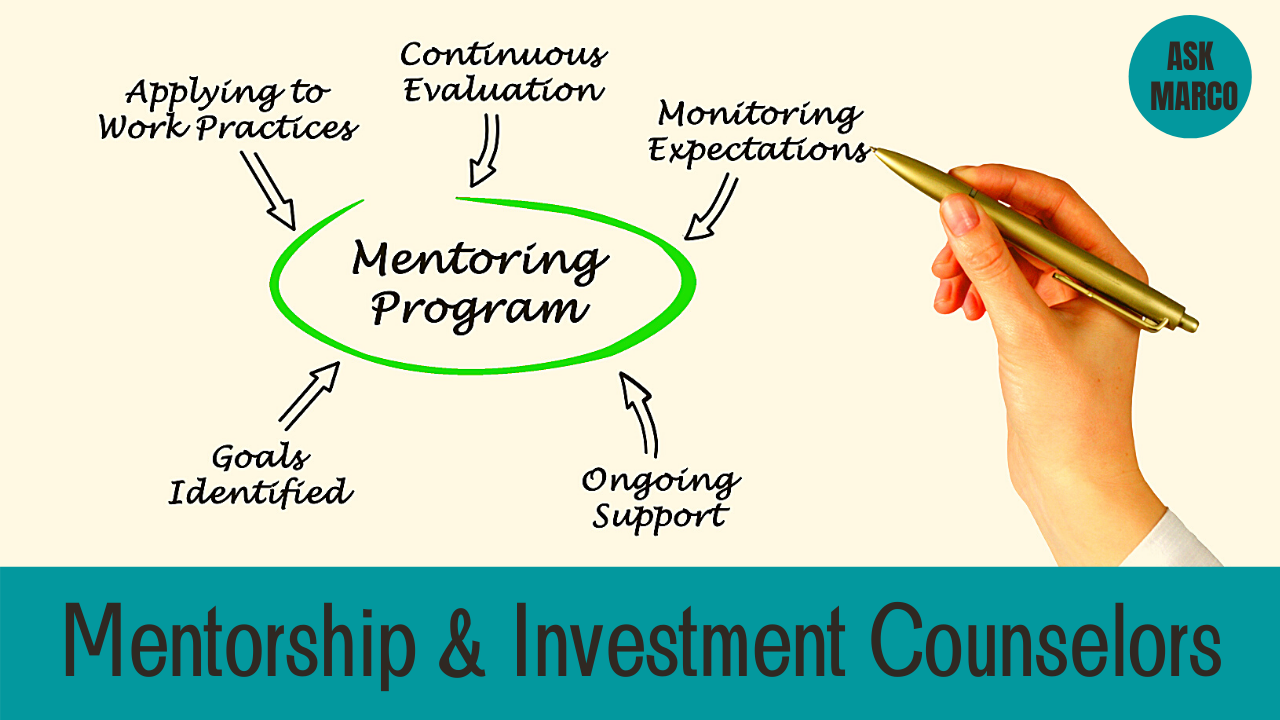
So let’s quickly define mentorship because for some people it means different things. It’s certainly not coaching per se, but mentorship is essentially a relationship in which someone or a company that’s more experienced than you, or has more knowledge than you provides guidance to essentially a less experienced or less knowledgeable person. That’s all mentorship is. I say that I have many mentors. Now. Some of them are people that I engage with, that I talk to and interface and ask questions of, although I don’t come right out and ask them for a mentorship relationship where I want to be mentored by them. It just comes out of the relationships that I have. But then there’s also the mentors that I have that are people that I’ve never met before, who I just love to learn from or listen to, or read their books or listen to their podcast or audiobook or whatever it may be. And because I’m learning from them and I want to absorb the things that they’re teaching and talking about.
I consider the mentors, I look up to them and I learn from them. So, I mean, Tony Robbins was one of my first mentors, even though I’ve only met the person one time in person. And I’m sure he doesn’t remember me now that this was so long ago, but still to this day, I really love the stuff he talks about. And so I consider him a mentor. So he’s just someone who’s more knowledgeable, more experienced about a lot of things that I want to learn about. So we don’t officially offer mentorships. And I get asked from time to time from people. If you know, I have the time to mentor them or be a mentor, I guess if there was the right place at the right time, I’d be open to doing that provided it’s a mutually beneficial relationship and it doesn’t take up a lot of my time.
But right now, a lot of the stuff that we put out in terms of articles, this podcast, the interviews that I do on other people’s shows and podcasts, the interviews with newspapers like USA today and whatever else, the stuff that I contribute is a form of mentorship. So I’m just going to continue to put the content out there. And I have some other stuff lined up this year. That’s coming out as well that you could look at as a form of mentorship. But aside from all that, what we do offer through our investment counselors, for someone who’s thinking about investing in real estate, or is actively involved in investing in real estate, building their real estate portfolio. But it’s just looking for more help or guidance because they want to move the ball forward and level up. In other words, continue building their real estate portfolio, invest deeper, or maybe change them and shift a little bit in what they’re doing.
That’s why we’re investment counselors come in. So you refer to it as a game plan. And that’s actually a very good description. So when you work with an investment counselor, first of all, that initial strategy session is free. In fact, we don’t charge for anything, all that counseling and the guidance that we provide. It’s not specifically investment advice. You have to make your own decisions, but the counseling and the guidance and answering questions and all that that comes at no cost, we’ll never charge you for anything. So it’s free the investment counselors in what we do is free to you as our client, the investor, but the game plan is a good description because we want to basically know where you’re at and where you want to go and what you have in mind in terms of your thoughts and criteria in terms of what you want to invest in.
A lot of times, it actually makes a lot of sense, but there are times where people’s expectations of what they’re looking for is unrealistic. Sometimes people are looking for a unicorn when it just doesn’t exist in the current environment, current market. So we’re going to make sure that your expectations are in check with reality and help you map out a game plan to get from where you are, to where you want to be. And that could be in terms of the number of units, the number of properties, you know, the amount of cash flow, the markets you need to be in, how many properties in different types of markets, are you a cashflow investor, or are you more of a growth investor where you want more appreciation, potential, and that can shift over the years. And so we’re just going to help bring clarity to all that at the end of the day, what we really want to help you do is have a vision of where you’re going, have a path, pick the right markets that make the most sense for you today based on what your investment goals are, and then identify properties within areas within that market.
And as you work with us, as you get to that third, fifth property and beyond the markets will change, you might have a footprint in one market where you have three to five properties or more, and then you go to a different market geographically different often in another state that gives you geographic diversification. And so now you’re going to build another three to five or more properties or doors within that second market. And do that a third time. That’s kind of the foundation that I’d like to talk about three to five properties in three to five different markets. And that’s a great foundation and a great portfolio for most people unless your investment goals are much bigger than that. But anyway, that’s a conversation you can have with the investment counselor and more, I mean, it’s, it’s kind of a Q and a session. And interestingly enough, some investors know enough that after that first conversation, they probably don’t need any more conversations.
Maybe they go to a second one or the occasional five or 10-minute conversation on the phone here and there. But for others, they’ll have that first conversation. And then communication just morphs or shifts into email sometimes a lot, but sometimes just, you know, as needed. But there’s often a lot of communication via email, just because of the nature of the purchase process. But once you get to the point of having markets picked out and you’re starting to look at properties and then you will, you know, will escalate to a point where you put them under contract and continue doing your due diligence, like your inspections. And you work with your lender, who we will put you in touch with as well. Cause we have a list of mortgage lenders that we work with. You’re just going to eventually close escrow and start purchasing one property after another to achieve those investment goals of yours.
And that’s how the process works with an investment counselor. This is more of a high level, but you know, you’ll get into the details or what I say, get into the weeds with your investment counselor, as you start to work with them and have conversations because then you’ll kind of lay out what the next step and the next step and the next step on as part of that game plan. So anyway, that’s the mentorship and investment counselor relationships that you can come to expect and working with us. So, Cameron, that was a good question about what we offer mentoring wise and with our investment counselors, I’ll leave you with a couple of tips. First, never stop educating yourself, get started, and never stop continue educating yourself, just like Robert Kiyosaki. He’s always taking notes even as a very seasoned investor and very successful person. He’s always learning and he always continues to learn.
And I’ve always seen him watch and listen from the back of the room with a notebook or note pad in hand. And he’s just taking notes. So never stop educating yourself. And then second be open-minded to learning something new. I mean, if you’re looking for a mentor of some kind or just working with someone like my team here, our investment counselors, for some people, it’s a small shift. And for other people, it’s almost like a paradigm shift where they’re coming out of a different investment world, like investing in the stock market or, you know, commodities or whatever it may be. And investing in real estate is a little bit foreign to them. I mean, yeah, they’ve heard about it a million times, but maybe it’s not something they’ve done before. So whatever it is be open to learning something new question things, there’s nothing wrong with questioning new ideas or concepts or new markets or neighborhoods or types of property, whatever it may be.
That’s how you continue to learn is just learning new things, questioning things that conflict with what you have been taught. Sometimes you need to unlearn what you’ve learned in order to move forward. It’s like taking one step back in order to take two or even three steps forward. So that’s pretty much it. I appreciate you writing in now. Quick side note. I know I mentioned this one other time. I’m just going to throw this out there just to plant a seed in some people’s minds. I know a lot of people who listen to this are young entrepreneurs, small business owners, medium-size business owners. Some people are actually working within larger companies, but two of my partners and I have put together a new mastermind that we are just launching called power room. It is the power room mastermind, and we’re going to be building that up and I’ll have more information to follow, but I just wanted to kind of plant the seed in your head.
That there’s a pretty powerful group coming together here called the power room mastermind. And it’s primarily geared towards business owners, entrepreneurs, and people who are looking to build and scale a business, whether it’s your own personal brand or a company of 50 people. So the main focus will be business development, leadership, marketing, sales, entrepreneurship, and all that stuff. That’s about 70% of the content. The other 30% we will build up to be investing related, whether it be real estate or cryptocurrency or stock market or taxes, whatever it may be. So this is a hunk of clay that we’ve shaped and now we’re going to tweak. And once we get that finalized, I will obviously make it known to you. And that is it for today. So the men, any questions you have, I appreciate you listening. Remember to subscribe to the show and thank you for listening. I will see you on our next episode.
Are you having a hard time finding great investment properties? Unfortunately, the best deals are rarely found locally successful investing begins with the right properties in the right markets. Norada real estate provides everything you need to invest in the best deals across the US. Our simple proven system will help you create real wealth and passive monthly cash flow. Get your free copy of the ultimate guide to passive real estate investing at www.NoradaRealEstate.com/guide.
Get a New Business Formation for as Little As $0 (excl State Fee)