

While the value is tremendous from learning about the great strategies and tactics shared on the show, much can also be said about their application. In this episode, Marco Santarelli lets us in on how the theories from the show are applied in this Client Spotlight special. He invites over Tim, a new client who is off to a roaring start with five closings. They talk about Tim’s journey along with some of his tips and advice for other investors out there, both seasoned and new alike. Looking into the future, Tim shares his goal of getting 50 properties in the next five years, laying down his plans to achieve that and going over some of the learning experiences he has had that will help him face the challenges along the way. Whether you are in this journey a long time or not, the wisdom you gain will always remain invaluable. Read about Tim’s story and learn a thing or two or more about navigating your way through real estate investing.
Download your FREE copy of: The Ultimate Guide to Passive Real Estate Investing.
If you missed our last episode, be sure to listen to Market Spotlight – Kansas City, MO
Enjoy the show!
– – – – – – – – – – – – – –
Download your FREE copy of: The Ultimate Guide to Passive Real Estate Investing.
Get your FREE coffee mug by leaving us a Rating and Review on iTunes. Here’s how.
See our available Turnkey Cash-Flow Rental Properties.
Please give us a RATING & REVIEW (Thank you!)
SUBSCRIBE on iTunes | Stitcher | Podcast Feed
Fifty Rental Properties In Five Years (Client Spotlight)
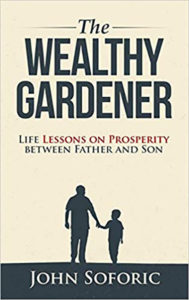
I hope everyone is staying safe and well as many of us have to be quarantined during these interesting times. I received a message from one of our new clients and he reached out to me and said, “Your show significantly impacted my real estate purchases. I worked with one of your investment counselors and we closed on five houses. Thank you for the information you provide for us to reach our financial dreams. I picked up the book, The Wealthy Gardener, and I can’t wait to dive in. Keep the show flowing. Thanks so much.” This person is Tim. He’s a new client and I realized that he started working with us a few months ago. He’s off to a roaring start with five closings in a few months. I thought this guy has a lot of energy and he’s goal-driven. I thought it would be a great idea to get him on the show. It’s been a while since I had an investor client on. I thought I’d invite him and I did, and he graciously accepted. With that, I’d like to go straight to the interview and find out what Tim has been doing and have him share some of his background, his journey and some of his tips and advice for investors, whether you are a new investor or a seasoned investor. Let’s get straight to the interview.
—
It is my pleasure to welcome one of our clients. His name is Tim. He is a great guy and I know that he is excited about what he is doing in terms of investing because from the messages I got from him, I can tell that he was passionate about what he’s doing. He grew up in Southern California. He went to California State University in Long Beach. He got a career in the fire service. He’s a married person with three beautiful kids and he’s got some lofty goals that I’ll let him share with you. Tim, welcome to the show.
Thanks for having me, Marco. It’s an honor and a privilege.
I was excited to get you on because to be quite honest with you, I don’t bring too many clients or investors onto the show. It’s more of the show about the tactics and strategies but a lot of readers like to know what other investors are doing, what they’re thinking and how they made their decisions. This is why I was excited to get you on the show because I thought, “This guy has passion. He’s got some clear goals. He knows what he wants to do and where he wants to go.” I know that because you shared it with me, but I’m going to let you do the sharing. Let’s begin with you. Tell us a little bit about yourself and what keeps you motivated.
I grew up in Huntington Beach and became a lifeguard for the City of Huntington Beach. That transition to that career in the Fire Service naturally. When I was going to get hired from 2008 to 2010, it was that economic recession. That slowed down hiring in the Fire Service and it made it competitive. One thing that pushed me through is a mindset. That mindset was what Napoleon Hill talked about in Think and Grow Rich. You need to focus on something and don’t let anything stop you. With that mindset, I got hired pretty quickly in comparison to a lot of my peers. My wife and I live locally here in Orange County. We homeschool our three kids and I provide for the family as the sole breadwinner and she stays home to manage our households. All my motivation comes from being able to spend as much time as possible with my wife and kids. We enjoy taking an RV that we have a partnership in all over the town, out-of-state and camping, surfing, rock climbing, you name it. I enjoy spending time with my family and watching our kids grows and mold them. We’re focused and based in our church locally and that has helped keep us grounded. As we see these future gains, it’s not going to change our lifestyle, which is going to try and have that snowball effect to push through to get that financial freedom. I don’t have to be gone 72 to 96 hours a week working at the firehouse.
I didn’t know you homeschooled, Tim. You probably know that we homeschool our daughter and interestingly enough, I’ve had a number of people come out of the woodwork asking me the email, “How do you homeschool?” They’re asking questions and I thought I’ll record an episode on homeschooling. That one is set to come out. It’s interesting that you homeschool. I had no idea.
I would love to say that I homeschool but it’s mostly my wife. She is a saint and she is good at what she does. We prayed hard about it because we were at the point where almost all three of our kids were going to be at the school. We live about 100 feet from the school that our kids went to. Having them home instead of having them away during the day, we take advantage of that time to make our marriage stronger. It was a big decision but I would never go back and change it. We give our kids the option every single time. We talk about homeschool versus public school and they always say, “We don’t want to go back.” I know we’re doing the right thing and it has shown in our kids’ behavior. Their learning and their achievements have been astronomical.
Family is a great motivator and I love the fact that you mentioned Napoleon Hill and Think and Grow Rich. I assume you’ve read it at least once and it’s probably a great book to read once a year because the principles in there are essentially timeless. The whole thing about focus is that your energy flows where your focus. I forgot how the saying goes, but where you focus is where your energy flows and you’ve got that clarity. What are your real estate goals? You must have defined goals by the sounds of it.
Reading a lot of your blog, I remember the saying that, “People underestimate what they can do in one year but overestimate what they can complete in ten.” My goal was to have a short-term goal of five years. What can I accomplish for five years? Since I’m objective base at my job, I can put every single effort every day to make sure I’m advancing toward those goals. Our short-term goals essentially are lofty, but my goal is to get 50 properties in the next five years. After that, reassess and see what that looks like, see what our financial situation looks like and how the performances of those properties stack up.
You’re well on your way because if I remember correctly, you closed on five single-family homes in the past few months.
I work with a firefighter and she was working with Oliver Fu. I was sitting at the table at lunch and she was going through her property thing and that’s how I got exposed to the whole thing. We closed on five properties in three months.
I was about to say that’s aggressive. It’s not aggressive, that’s just quick. You’re focused on not sitting on your butt thinking about it, you’re doing it. That’s great. That’s what I wish more people would do because there’s a lot of people sitting out there that have the desire, knowledge, credit, capacity, and cash to do it and they think about it for a long time, then ultimately they make the decision. They look back and realize, “That wasn’t hard at all. I should have started sooner.” You’re doing it. I hope that it’s an inspiration to some people reading this. I think of real estate investing and investing in general as a journey. Tell me about your journey as an investor, whether it’s real estate related or otherwise. How did you get started in real estate investing? You spoke to this lady. Did you have anything going on before that? I would imagine you probably were thinking about investing. How did you start your journey here?
Either you are born an entrepreneur or you fall into it and you become one. I was born one and never knew it until I started reading books and realized I’ve been thinking like an entrepreneur for years. It wasn’t until I read Rich Dad Poor Dad. That book made everything click and clear. We were fortunate enough to have the Dave Ramsey style mentality of living simply within our means and debt-free. We saved up a significant amount of money to buy a house in 2013. That house has appreciated significantly over the years. Once we had zero debt, we had our mortgage payment, we saved and saved. I got a little letter from our lender saying, “You may qualify for a cash-out refi at this rate and this price.” That was right when I was working with my firefighter at the station. She was talking about how she’s going to finance her loan to purchase those investment properties. All of a sudden, everything started to click. I realized I had several hundred thousand dollars of untapped equity. Interest rates were low. I could cash-out refi and put this money to work and start snowballing this whole real estate investment.
It’s a great way to start too. Interestingly, I interviewed a lady who is not a client but about to be a client. That was episode 226.
Was that the one where she wanted to invest $700,000?
That’s correct. She is in a similar situation where she was sitting on several properties. She was equity rich, cashflow poor as I like to say. She had this deployable equity that she could put to work. She called it dead equity, dormant equity but that’s exactly what I call it. When you come to that realization that you can put equity to work and turn it into additional income-producing assets, something opens up. Something clicks and you realize, “There’s a lot that I could do here. There are a lot of pent-up potentials.” You came to realize that. Was it the lady that turned you on to that fact or did you discover that on your own after reading Rich Dad Poor Dad and thinking about all this investing stuff?
It wasn’t one single event. It was after I read that book and I was talking to my friend, Jenna. She has a commercial real estate background. Her parents are investors. She was way ahead of me and coaching me and mentoring me and I would bounce questions off of her. We had a couple of firefighters at the station that had done some real estate and had been savvy. It was a rad learning environment where everybody was all on the same page, “We need to invest in assets and not necessarily in liabilities.”
You could have started anywhere. You could have gone down the road of taking an active approach to investing, wholesaling or buying properties to fix and flip or to fix and hold, which is what a lot of people do to start with because that’s what they believe real estate investing is. It’s rolling up your sleeves and being actively involved in creating value or equity in a property or maybe selling contracts. You chose not to do that. Was there a reason you chose not to do that? Maybe you weren’t even aware that there were these other active modalities, but you chose to go with passive rentals. Why did you do that?
The one thing I’m limited the most on is time. I work 48-hour shifts, two on and then four days off. Oftentimes, we’re required to spend extra time working at the station because we’re in a staffing pattern that requires us to put forth more time than we’re necessarily obligated to in overtime hours. Time was the biggest consideration is. I don’t necessarily have time to go out and rehab a house, especially I’m homeschooling three kids and trying to spend time traveling and investing in that. Although that is an option that I’m looking forward to in the future especially with the potential for the next several years, depending on what this Coronavirus does to the housing market. Essentially, I did that with our primary residence. We bought it and put some money into it and I did 100% of the rehab, which helped sweat equity, put over $300,000 worth of equity along with the growth of the market. I enjoy that so much. That’s what I’m passionate about is construction and building and that’s what my assignment in the Fire Services. It comes down to time. If I can put the equity from my house into houses that are going to put money in my pocket and I don’t have to do a thing to earn that money other than 1 or 2 hours a week to make sure that the accounting is squared away, I’m 100% in.
It works well. You’re a person that doesn’t need that extra income and you’re in what I call growth mode. You can focus on building a portfolio that’s going to grow in terms of equity rather quickly. You can then redeploy that equity into more property and grow your portfolio faster. You’ll be at a point where you have a large enough portfolio where you can start to focus on shifting that into greater cashflow to supplement your lifestyle and do the things you want to do, and create that financial freedom. You don’t have to give your age out, but if I’m not mistaken, I believe you’re in your 30s.
I’m 35.
You’ve got plenty of time on your side. There’s a lot that you can do going forward and we’re certainly going to help you do that. How has your experience been working with my team here?
I have already told all my friends, all my coworkers, they’re sick of hearing me talk about real estate and Norada and my friend, Oliver Fu. The overall experience has been nothing but successful. A lot of people get skeptical because there is a significant amount of trust that I have to put out in Norada and the team that they have. At the end of the day, I’m taking their wisdom and their advice, your wisdom and your advice and having to make a financial decision based on that because I don’t know everything. Luckily, I met up with Oliver Fu through Jenna Stark. Oliver and I got along well and we clicked. I took his advice and so far, it’s been nothing but rewarding.
We appreciate your trust and it’s our role to educate and guide. We are not financial advisors and we don’t give specific advice. We provide you the knowledge, tools and resources that you need to make the right decisions. All we can do is point you in the right direction and provide you with that knowledge, tools, education and resources. At the end of the day, you’re making the decision. Hopefully, you’ll make the right decision based on objective information and not emotional decisions. Part of that is taking the blinders off. A lot of people walk around with blinders. They don’t realize what they can do, should do, where to look and what to avoid. I talked to a lot of people who are California residents and they believe, “I have to invest one mile away.” That’s what I was told by the “gurus.” They’re living under this false paradigm of investing within a one-hour drive of their home. They’ve been looking for a deal for three years and they can’t find it and they still won’t be able to find it. They’re going to be stuck where they are for the longest time. That segues into a question I’d like to ask you is, did you have an issue with long-distance or out-of-state investing?

No, because the team at Norada and the trust that we’ve developed over time have made it easy and smooth. Speaking with Aaron Chapman, I trust him. I’ve followed his advice to the T and everything. We closed in 28 days on all the properties. Trusting Oliver saying, “Let’s go with linear markets that are going to cashflow as our base, not necessarily jumping into cyclical markets at the peak of the market.” I know I’m going to make mistakes, but the key is to earn while you learn. That was my mentality. Luckily, Oliver and I lined up our goals. I took his advice, my wife and I prayed about it and we took our trust reported into Norada and Aaron Chapman’s lending team and ultimately, we trusted the turnkey providers that we invested in.
I appreciate all that. For those reading, Aaron Chapman is one of our pool of about 7 or 8 mortgage lenders and brokers that we work with that we recommend. They’re all great. Aaron is fantastic. I’m glad that all panned out for you. Tim, markets are important as you are well aware and investors often don’t even know where to start. How did you end up picking the markets that you invested in? I honestly don’t even know what markets you’re in. If I remember correctly, I believe one was in Northwest Indiana and I don’t know where the other four are. How did you pick those markets and did you even know where to start?
I had no clue where to start. My coworker, Jenna invested in Northwest Indiana and she was showing me the numbers. I created my own spreadsheet that I got offline and tweaked it to how I wanted it to work. All I did was plug in numbers. I ran probably over 100, 150 maybe even 200 properties through my spreadsheet. What that did is it showed me the cashflow because it was objective. Sometimes you can take a pro forma from another provider and they put in appreciation, and then depreciation, and tax advantages into that return on investment.
What I did is I took all of their objective data, plug it into my spreadsheet and that spit out what I wanted to look at my true cash-on-cash return on investment. I ran markets from Alabama, Texas, Tennessee, Oklahoma, Little Rock, all over the place from a couple of different providers. Essentially the providers that Norada has in Indiana and Baltimore were the ones that gave me the best cash-on-cash return. My goal was to have a solid cash base that I can invest my equity and not necessarily have to bet on equity growth since I purchased at the peak of the market. I wanted linear markets that were going to cashflow consistently with normal appreciation but nothing too aggressive.
That’s a good strategy. I wouldn’t say that you’re at the peak of the market in those two markets at this point in time. Markets do cycle and they do take breathers and there will always be pullbacks when interest rates go up or you have economic disruptions or you go into recession. Nobody knows what’s going to happen this year with this Coronavirus pandemic that’s going on. There will be some blowback with the increased in unemployment and whatever else goes on. I always say that the cashflow in your deal is the glue that holds your deal together. If property values go up 4% one year and then down 4% the next year and you have this cycling or what you call channeling, that’s okay. Those property values change on paper. They don’t become realized gains unless you sell the property or you exchange the property for something else. If you’ve got cashflow, you essentially are amortizing the loan month after month, as time goes on and over the medium-term and long-term, those properties will increase in value. They have to because of the inflationary environment. You’re going to be fine.
I say that because you make a comment where near a peak, the question is what market are you talking about? There are over 400 markets in the US. Some of them have passed their peak and they’re coming down like San Francisco. Other markets are still growing strong and that’s because of pent up demand and lack of supply. You made a great decision in the markets that you chose and I know you had some guidance from Oliver. The answer to the question that I asked you is you don’t know what market you were going to invest in. You probably did some research in due diligence, but ultimately you followed Oliver’s advice.
I trusted Oliver because he’s been in the game way longer than I have. He pointed me to a couple of providers. I ran the numbers and initially, a couple of them, I was like, “I don’t feel comfortable pulling the trigger on these properties. Is there anything else?” He’s like, “We partnered with CR of Maryland. Here’s a couple in Baltimore.” As soon as I saw those numbers, I’m like, “This is it.” It was all the numbers game for me.
Everyone has different criteria when it comes to choosing properties. You chose those properties for various reasons. What were the criteria that you were looking for in making that decision?
I trusted the property management and based on the relationships that Oliver has had, I took his advice and I trusted the property management because that’s going to make or break the deal.
Did you have specific criteria in terms of what you wanted to see from the property in the property or maybe the neighborhood? Where you that detailed or focused? Was it more of a high-level recommendation and then you looked at the numbers and made a decision from there?
I wanted a B-class neighborhood. I wanted a single-family and my purchase price was between $120,000 and $160,000. All I did was when I looked at the cash-on-cash return, as well as the fact that I was in a linear market. The potential for equity growth was reasonable. I plugged in the numbers and when I saw 13% returns in Baltimore, as far as my cash-on-cash return, that’s when I started getting excited. The cool thing that I enjoyed working with Zander is that his company charges only 6% for their property management fees. Likewise, with George in Indiana, they charge 10% but after you get four properties, they drop it down to 8%. That 2% or 3% makes a difference. When you think about the amortization over however many years you’re going to hang onto the property that increases your returns.
Interestingly, a lot of property management companies are fine with giving you a break on that monthly management fee when you have volume. If you’re a guy coming in from out of state and you have one property, it’s probably going to be 10% sometimes 9% or 8%, but when you’re at four properties or more, in other words, you’ve built that footprint in that one market. They’re open about giving you a break. They’re going to treat you the same as any other investor that they’re working with. They realize that you’re not a one-shot deal, a mom-and-pop that’s buying one property. You’re serious, you’re a professional investor. I like the idea of building a footprint in a market of 3 to 5 properties or maybe more and then moving onto a second market and doing the same thing and then going to a third market and doing the same thing there. That builds a great foundation for your portfolio. You can build it up beyond that. Your goal is 50, you’re probably looking at potentially hypothetically five markets with about ten properties on average each. Ultimately, that’s what you’re going to do.

It was interesting because the first contract I got in was in Northwest Indiana and the returns there were good. It was cashflowing about $350 a month. The cash-on-cash return is right around 10%. My Baltimore properties are cashflowing higher and the cash-on-cash return is higher, but my next couple of properties are going to be in Northwest Indiana because they have that draw from the Chicago Metro area. The potential for that is going to be astronomical.
Chicago is a solid growing Metro area and there’s population growth even though it’s cold in the wintertime and people are still living and moving there. A lot of people don’t realize that Northwest Indiana is an extension of the Metro area for Chicago with half the property taxes. Cross the border and you pay less tax. You don’t have to be in Illinois. Investing is a journey. I like to say that investing as a journey takes investors from frustration to freedom. That’s the journey that I’m mapping out here on a project that I’m working on the side, which I’ll reveal to everybody here soon. What was your biggest frustration before you got started on this journey for real estate investing? Did you have one? Most investors do.
The biggest frustration is finding the right market. I lost a little bit of sleep because as a new investor I’m like, “Am I doing the right thing? Is this the best thing for my family? Is increasing my mortgage and taking that risk? Is it worth it?” The answer is yes, it is worth it 100%. I dove in headfirst and even with this whole Coronavirus slowdown, I haven’t felt it at all because both the providers have given me a one-year rent assurance guarantee.
One of the biggest frustrations I hear, it’s similar to yours, but investors say, “I can’t find a deal. I’ve been looking and looking and I can’t find a deal.” Either the numbers make sense and the property needs a lot of work or the property is great, but the numbers don’t pencil out. This is the reason why many investors look out of state. They go long-distance and they invest in other markets because you don’t have a choice. You and I live here in Southern California and it’s hard to find anything that provides a reasonable rate of return, whether it’s a cap rate or a cash-on-cash return. Even when you find it, it’s incredibly “expensive.” We’re talking $500,000, $600,000, $700,000 properties with a 20% down payment. That doesn’t provide much in terms of a return. You can do much better out of state as you already know. I’m preaching to the choir here.
I was frustrated in the sense that after we purchased our home in 2013, my frustration was, I’m almost living paycheck-to-paycheck with our small savings, “What can I do to better provide for my family and set them up for future success?” My frustration wasn’t necessarily with finding markets and investing in real estate. As soon as I saw the path that I was going to take, I found those properties. We signed and closed within 30 days for all those properties. For me, personally speaking, our experience has been smooth and seamless. My frustration is I’m out of capital and there are many different markets and opportunities that are coming up. That’s the hindsight is always 2020. It’s making the right decision and then afterward you see, “I could have invested here or there.” I want to earn while I learn, I’m going to make mistakes, but I didn’t want to let that stop us from taking that first step.
You’re off to a great start, Tim. Keep something in mind that a lot of investors are probably acquiring 1 or 2 properties a year because that is the pace that they can save investible capital for. The lady I interviewed on that episode that has $700,000 in equity. That was built up over the course of years across multiple properties. She now has that equity to tap into. It’s a form of savings. It’s just appreciation, not so many savings as far as earned income. You’re in that norm where most people have one household income maybe two and they can only put away whatever, $10,000, $20,000, $30,000 a year in terms of investment capital. You either earn that capital and save it to invest and/or you get it from other sources, whether it’s an inheritance or it’s equity in your principal residence or it’s equity in some other properties that you own. You have a side business and you’re able to accumulate earnings and put it to the side. Everybody has a source of income that comes from different places. You’re probably above average having acquired five properties in three months. That’s certainly above average. Most people, 1 to 2 a year, most mom-and-pop investors.
One of the reasons why I jumped in head first is because as I penciled out the numbers if I invested all of our equity right out the gates, we could buy another property in that same price range at the end of the year. If I held off and we only bought three, it would take us much longer. That snowball effect is powerful. Being diligent in your savings and even though you’re getting more income, we don’t even consider that as income. We just save it because we know it’s going to pay off in the long run.
Based on all that, what advice would you give to new investors that are getting started?
Having a mindset is the most important because you are going to come up to obstacles, you’re going to have fear, you’re going to have to put trust in that. You have to have the mindset of, “I’m going to make this happen and I’m going to do whatever I have to do. I’m going to put in all the work. I’m going to research.” For us, we prayerfully considered these options. Ultimately, you have to take that first step in faith. Whether you buy 1 or 10 for your first time, to me it’s not going to matter. If you’re investing in one, to me it’s the same as investing in five. All you do is you’re limiting your liability by having more than one property. Let’s say you have a vacancy in one, you’re going to feel that. If you have a repair in one, you’re going to feel that. If you have a vacancy in 1 out of 5, it’s going to be diluted. My advice has a mindset that you’re not going to quit and use that mindset to help motivate you so you can accomplish your why. For me, providing for my family and spending my time with my family is my why so I can give my wife a break from homeschooling our three kids all day long.
What advice would you give to seasoned investors looking to grow? This is a similar question, but now that you’ve got five under your belt, I will call you a seasoned investor. What advice would you have for seasoned investors?
I love my wife so much. She’s amazing. I come home and I’m like, “Look at this property, it’s so and so.” She’s like, “We have zero capital to spend on that house.” I’m like, “Yeah, but I could go and seller finance it.” She’s like, “Let’s take a year, take a breath. Let’s get some capital back in our bank account.” In that perspective, don’t be afraid to pump the brakes and make a wise decision. I’m all about momentum. I’m objective-based. I want to get those 50 properties as quickly as possible. Luckily, I’m grounded by an amazing Christ-follower of a wife. We balance each other well. I wouldn’t consider myself a seasoned veteran of real estate investment, but think about the times and make your decisions wisely. Don’t jump headfirst on a deal unless you know it’s a great deal.
Perfect segue to how I want to start wrapping this up here. They say that experience is the greatest teacher and a lot of wisdom is gained by the experiences that you have. When you compare that to basic knowledge through education and schooling. Looking back, what would you have done differently? I know looking back is not that long ago, whenever you started thinking about this intently, but what would you have done differently if anything?

I don’t think I would change anything but if I knew then what I knew now. Several years ago, I may have house hacked and trying to figure out a way where I could boost that earning and sacrificed the short-term comfort. Having that spendable capital in a potential downturn of the economy is important. I wouldn’t change anything. The biggest thing is I wish I would have started reading books years ago because there are many good books. I’ve done in about halfway through The Wealthy Gardener and there are many great life lessons in there. You think about it like, “These are timeless, valuable bits of wisdom.” If I would’ve read Rich Dad Poor Dad years ago, it would have changed my overall mindset.
I’m making a bold prediction that The Wealthy Gardener might become the next Rich Dad Poor Dad book. Not in the series but the next Rich Dad Poor Dad type of book because of how well it’s written in the principles and lessons that come out of a story-based educational book. I’ve listened to the audiobook twice. It’s great.
John, if you’re listening, thank you for writing that book.
I will tell him, he emails me every once in a while. He’s a great guy. You probably answered this, are you happy with your accomplishments so far? It sounds like you’re stoked about it.
I’m pumped because the returns that we’re getting, you multiply that times twelve months and we have the down payment for another property in that same area. I’m excited to see the snowball effect. I’m excited to learn while I earn. This is game-changing. When you talk to somebody who doesn’t know or care about real estate and you’re like, “I wish I would’ve known this several years ago.” This would’ve been an absolute game-changer for my family. We can’t change the past. You can only change the future. One thing I wrote down about The Wealthy Gardener when he’s talking to his neighbor and he says, “Everybody has three options. You can decide not to try. You can try and fail or you can try and succeed, but at the end of the day, how will you have felt having not tried at all?” Looking back, there’s no way I’m going to change how we invest from now on. We tried and so far we’re succeeding and I’m going to continue down that path. Luckily, we have a great team with Norada that we can share that wisdom and I can get that guidance and counseling. Even though I’ve closed on those five properties, we can still talk to Oliver and gain wisdom and insight as far as future investments go.
I appreciate that. Tim, you teed me up with your last comment about the last question I wanted to ask you. This is always my closing question. Twenty years from now, if you were able to come back and give yourself some advice, what would that be?
If I could come back and say, “Tim, do this. Spend more time with your family not being distracted by the real estate market and the economy.” I’m objectively driven. I will work 24 hours a day to make something happen. My wife has pointed out to me, she’s like, “Our kids are only going to be young ones. You spent five hours on the computer, spend some time with your family.” That has been my biggest challenge is turning off that real estate mindset to where I can focus and be present with my wife, be present with my kids.
You and I suffer the same “problem.” Tim, I’m not going to keep you any longer. This has been a lot of fun. You’re a smart guy. Congratulations on your investments, great momentum, keep up the momentum and at the same time, spend time with your family. I want to thank you for taking the time to come on. If there’s anything I can do for you, please let me know.
Thanks much. This show has meant much to my wife and me. We’ve learned much and I want to say thank you much for providing this free content. Your team is unreal. Thanks to Oliver once again for making this first footstep in the real estate investment possible for my family and me. Thanks for having me. It’s been a pleasure.
Tim, you’re kind. Thank you for your kind words and I’ll make sure that Oliver and the rest of the team know it. More people are working behind the scenes that you don’t know about. It’s a team effort, but thank you. Tim, thanks for your service and everything you do. I’ll let you get back to work. I appreciate you taking the time.
—
Tim has done an incredible job in what he has achieved here in the last few months. He did start by educating himself, by listening to podcasts, reading books and being interested in the topic of personal development, finance, creating wealth, passive income. There’s no excuse. There are hundreds, if not thousands of books on the subject of everything from entrepreneurship and business through investing, whether it is in the stock market, real estate, general wealth creation, whatever it may be. There’s no reason why you shouldn’t be educating yourself. You’re going to thank yourself down the road. Your family is going to thank you and your children’s children are going to thank you.
Education is important but more importantly, you need to take action because the education by itself won’t get you anywhere unless you have some goals and you take action. Look at Tim, he’s a great example. He’s probably been thinking about this for years. He probably dove in educating himself in the last few months. He finally took action and he closed on five great rental properties in excellent neighborhoods. That’s a fantastic start and a good foundation for his financial future. If you need help with that, by all means, go to our website. We’ve got tons and tons of free content and the show. Anything else we can help you with, just let us know. We’ll point you in the right direction and provide you the resources that we have.
If you think you’re ready or you’re about to be ready and you haven’t had a strategy session with one of our investment counselors, go to the website, fill in the form, we will quickly assign you to somebody and there’s no cost and there’s no obligation. This is something to help you get on the right path and make sure that you get to where you want to get to. That’s about it. Remember to subscribe if you haven’t done so, spread the word, visit us on iTunes and leave us a rating and review. I greatly appreciate that. Thank you in advance and once again, thanks for reading. We will see you in our next episode.
– – – – – – – – – – – – – –
Download your FREE copy of: The Ultimate Guide to Passive Real Estate Investing.
Get your FREE coffee mug by leaving us a Rating and Review on iTunes. Here’s how.
See our available Turnkey Cash-Flow Rental Properties.
Please give us a RATING & REVIEW (Thank you!)