
Just going through our every day, we pick up so many life lessons that we feel the need to pass on to the people we love. These lessons, wherever they come from, are always so valuable because of the lived experiences they emerge from. This is exactly why John Soforic, the author of The Wealthy Gardener, has collected all that wisdom in his book, which he discusses with Marco Santarelli. Prosperity is an end result that can be achieved by going through certain processes. John shares the some lessons on prosperity and other life lessons he’s learned so you can do the same.
Download your FREE copy of: The Ultimate Guide to Passive Real Estate Investing.
If you missed our last episode, be sure to listen to Market Spotlight: Baltimore, Maryland
Enjoy the show!
– – – – – – – – – – – – – –
Download your FREE copy of: The Ultimate Guide to Passive Real Estate Investing.
Get your FREE coffee mug by leaving us a Rating and Review on iTunes. Here’s how.
See our available Turnkey Cash-Flow Rental Properties.
Please give us a RATING & REVIEW (Thank you!)
SUBSCRIBE on iTunes | Stitcher | Podcast Feed
The Wealthy Gardener – Lessons On Prosperity (Part 1)
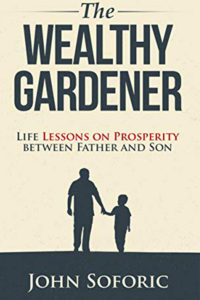
I am very excited about this next episode. In fact, this went so long, I’ve actually cut this into two episodes because it is full of great content stories and lessons that it made it worthwhile to turn it into two episodes. I received a book in the mail and opened up a package. I pulled out a book called The Wealthy Gardener, and I was taken aback by the title. The subtitle is Life Lessons on Prosperity Between Father and Son. As I looked at the image in the book, it was a silhouette of a father holding his son’s hand, walking off into the distance. You don’t see anything more than that other than a very warm colored beige book with a silhouette of father and son.
I was taken aback by that because it made me think of my daughter and the lessons on prosperity that I want to pass on to her and other life lessons. I didn’t read the book right away, but then I purchased the audiobook. I started going through that and I couldn’t stop listening to it. It is a book of heartwarming stories and practical wisdom on entrepreneurship and wealth. It’s pretty much everything that you would want to pass onto your kids regardless of their age. Even if you’re not passing it on, a lot of stuff that we all should know regardless of our age, whether we’re in our 20s, 30s, 40s or 50s. I highly recommend this book. It was written in the vein of Rich Dad Poor Dad, written by a financially independent father and he wrote it for his son.
I was taken aback and impressed by the book. I was touched by the story. It was very genuine. When I finally got to talk to John, the author, I realized how down to earth, straightforward and genuine he is. For him to take what I think was ultimately about four years of his life to compile and write this book is amazing. I’m going to go out on a limb and make a very bold prediction. I think that this book has the possibility and the potential to become another one of those perennial books you put on your bookshelf along with Think and Grow Rich and Rich Dad Poor Dad. I’m not saying that it’s better than any of those books. I’m just saying it’s on the same caliber because of the lessons that are in the book and the way it’s written and presented. They’re timeless.
This is going to be one of those timeless books. It will go on for generations. I’m very excited to share this interview with you, John Soforic, the author of the book, The Wealthy Gardener. It is a great read. I highly recommend you pick it up. You’re going to get a lot from this. We will do that over the course of two episodes. Enjoy and give me your feedback. If you learned anything from this and loved it, liked it, by all means, send me an email and let me know what you thought. I wouldn’t mind sharing that with John and also, I may quote it on some future episodes.
—
It is my pleasure to welcome John Soforic to the show. John is the author of the book, The Wealthy Gardener, a book of life lessons he wrote for his son. The book was eventually self-published. It became an Amazon bestseller. He sold 30,000 copies in the first year, and it’s been published in countries like China and South Korea and was purchased by Penguin Random House. John retired financially free at the age of 50 with a healthy six-figure passive income. After I read his amazing book, I wanted to invite him on the show to share a few of his life and wealth lessons with my audience. With that, John, welcome to the show.
Thank you, Marco. It is an honor to be here.
I’m honored to have you on the show because I finished reading your book and I’m going through it for the second time. I was first taken aback by the title when I got your book, The Wealthy Gardener. There’s something about that title that draws me in because you don’t think of a gardener as being wealthy. The metaphors, the analogies and the lessons that you have in this book are phenomenal. It was very touching. I want to first start off with you. Let’s talk about John. Tell us a little bit about your background and who are you.
I think my story starts with one book. At the age of twenty, I came across Think and Grow Rich and that book exposed me to a world that was nothing like I ever grew up in. I came from the middle class. I never knew anybody who was wealthy. I never knew anybody who aspired to wealth, let alone anybody who was financially free. I was captivated by that book at the age of twenty. There were a lot of books that came after that one throughout my life, but that was the seminal book and it expanded my mind. If you ask the start of my story, there’s no question that it was Napoleon Hill with Think and Grow Rich. The arc of my career spent three decades. I look at the twenties as a decade of pain and suffering. I think sometimes we learn the most during our hardships or our tough times.
The twenties were certainly my time to learn. Winston Churchill has a quote that I’ve always related to. He says, “Success is the ability to go from failure to failure without losing your enthusiasm.” I didn’t fail, but I struggled. Sometimes that feels a little bit like a failure when you expect a lot of success and I expect success. The long and short of it in my twenties was I graduated at the age of 24 as a chiropractor and I went directly into practice. On day one, I’m sitting in my own business. It’s empty and I’m down $200,000 in debt when you add it all up. That was my splash into the world. It took me about four years to get that business up and running and successful. At which point, I sold it.
I moved across the country 500 miles and I did it all over again from scratch. At the same time during the twenties, I got married. We have two children. You can imagine there’s chaos everywhere. I’m trying to adapt. I’m trying to adult and I was learning a lot. One of the things I learned most during that era is the value of $20. There were times I would comment, it was Friday night and I would avoid buying a pizza because that was a luxury that I didn’t want to give. I remember one night in my twenties where I sat there all night and I stayed up while my family slept because I wasn’t sure how I was going to pay for groceries to last a week. If you ever go through those lean times, it changes you. It gets in your DNA and you certainly know you gain clarity of what you don’t want in life. I knew by the time I get into my 30s, I never wanted that struggle for the rest of my life.
I wanted peace of mind. I didn’t want to worry nonstop. I wanted to protect and provide for my family. These are the big motivations for me. I set this big goal at the age of 30. I was committed, “No more of this,” and I said, “I want to be financially free by the age of 50.” Financial freedom for me, I set a very clear number, $220,000 passive income. It’s not active income, this is sitting on your butt income. It wasn’t about greed as it was about, I just wanted so far away from that financial line that I could then give my time, my consciousness and my attention to more important things in chasing a dollar because I had it with that. What that led to was me working 40 hours a week like everybody else. I ventured into rental real estate in my free hours.
Why rental real estate? That’s where passive income was in my backyard. I led the millionaire next door lifestyle. That was me. I was a classic mind my own business. I was frugal. I was not materialistic. People didn’t know what I was doing. In fact, they probably looked at me and thought, “He must be suffering. He must not be doing too well financially. Why else would he be working so much in his free hours?” I did feel that. You have to swallow your ego a little bit in order to get what you want. I was slowly acquiring my goals during that decade without anybody knowing it. I was under the radar and I was also learning how to leverage other people’s time.
The guy who couldn’t afford a pizza in his twenties by the end of his 30s is hiring maybe 12 to 15 people. That’s a lot of power in addition to yourself. That power goes into my 40s and my final decade. I always say that the 40s was a huge relief for me. When you do things consistently, you do things right, you delay gratifications long enough, you start to amass a little bit about money snowball. The 40s were about that. It was a relief. I had money and the power of it. That was a new experience. Somewhere in the 40s, you crossed the line and you become a millionaire on paper. The world doesn’t see that. You’re still working your 40-hour job, you’re still doing the rental thing. We started moving into flips, so you start to see more opportunities.
Instead of the duplexes and a small single-family, they see me walking up to an apartment complex. I have the power to choose. I have the power to say yes or no. I can walk up to an entire block in my hometown of duplexes. I said, “I’ll take those.” That’s the power of money. It sounds funny. You have different themes of your life. I looked back at the 40s and my fame song was a song from a Disney movie called Aladdin. If you remember the genie coming out of the bottle, Robin Williams going bananas, ballistics singing, “You ain’t never got a friend like me.” That song, that’s money. That is a trustworthy friend if you can protect it and you can treat it with respect. That friend is power and we walked right up arm in arm, me and that friend to the end of the 40s. At the age of 49, I reached my goals, $220,000 passive and I was able to turn my attention to other things than chasing a dollar.
My audience knows me talking about goals and goal setting quite often. It’s something that I firmly believe in and I started doing in my teens. I think I got it from Tony Robbins, but I was listening to personal development cassette tapes back then from all these personal development gurus. Goal setting, as we all know, is very important and everyone should write them and review them on a regular basis. It sounds like you had a big ‘why’ and a purpose, and you tied that all together with your goals. Talk about your goal of $220,000 per year in passive income. That’s a very specific number. Why that number?
I firmly believe that if you don’t have a big ‘why’ you won’t get there. We always look at this and we say that to achieve some worthy goal, we have to have persistence. We always talk about that. What is persistence? Is that willpower or is it ‘why’ power? I am committed that it’s a little bit of both. Yes, it takes discipline, but it takes why power. You’ve got to want more than what the money is. Why $220,000 for me? I was very clear. One, I wanted freedom without worry. Freedom with worry to me isn’t freedom. I saw my brother back out of work. He’s in his early 50s. He had to watch his heating bills. He couldn’t take vacations. Yes, he doesn’t have a job, but that doesn’t look like freedom to me, so I wanted more.

I start with, “What do I need for retirement income?” What I needed I felt in my area to have retirement income was $100,000. I set that as my baseline goal for retirement income. We had to earn more than that because we have to take tax out of what we earn. I say, “Since I want $100,000, I’ve got to earn $150,000.” I’m creating margins of safety, so I need $150,000. I also love the idea of Ray Kroc. If you go back and you study the gurus and also if you study the biographies. The people who aren’t gurus, but who led exceptional life’s like Ray Kroc, the founder of McDonald’s, he had a saying called evergreen.
Evergreen to him meant cashflow. He always wanted to add another McDonald’s to his already profitable cashflowing McDonald’s corporation. He’s always adding these new cashflowing businesses. I’m attracted to that because I read that biography just like you kept on learning through these audio cassettes. I did too. Ray Kroc influenced me there. I have $100,000 I want. That means I have to earn $150,000, but I want to grow my business from my business. That’s number two. In my area, the long and short story is that a duplex might cost $80,000 at a good price. I wanted to get a duplex every year. Once I was retired, I wanted to keep that business going. I wanted to grow it from it. I wanted to be evergreen. Ray Kroc influenced me right there.
The third is I’ve heard you talk about Jim Rohn. He influenced me. These people were all dead by the time I was born and they influenced me through their teachings. Jim Rohn always said that the value of a large goal is what you become, not what you get. We have to grow into it. At the age of 30, I was broke. I wasn’t able to earn what I was able to earn at 50. I had to grow. I’d expand myself. I had to develop myself and I was attracted to that idea. Jack Canfield, Chicken Soup for the Soul author. He was another person who influenced me. He always talked about big goals as well. His idea of a big goal, his reason, his why was that it’s important to set goals so large that we can’t do them on our own. In other words, what he would say is we need help from a higher power.
He’s not talking about sitting around on his knees praying for help, hoping things will get better. He’s talking about the power of goals. It’s focused faith. It’s the power of an insane faith. I love Tony Robbins as well. Tony Robbins once said, “Goals have a magnetism that attracts the things to you.” I said if that’s true, then I tell you what the magnetism is. It’s your faith. You’ve got to surround that goal with just an absurd faith. That’s the magnetism. I was attracted to it for all those reasons. I can say that sometimes big goals aren’t for everybody. Even in the story of The Wealthy Gardener, he expands his business bit by bit and grows into it piece by piece. Sometimes a big goal can demoralize you. I certainly felt a lot of distress and frustration because I did have a big goal. I got through that and I grew through that. That is the danger of a huge goal. Sometimes it’s okay to set a goal just a little bit beyond your capacity and move into it. It depends on your psych and who you are and what you can handle.
Let me ask you about the book. You called it The Wealthy Gardener. The first thing that drew me in the title is attractive. The other thing that drew me in was the cover. It’s very simple. It’s a nice calming, beige color with a silhouette of a father holding his son’s hand, walking off into the distance. That right away grabbed me because it made me think about me holding my daughter’s hand. It’s me passing on wealth lessons, my knowledge and wisdom onto her and hopefully to other future generations. Who is the wealthy gardener? Tell us what this book is about.
Let me first talk about what you said because that touched me as well. That image of a father and a son, when I first saw that image, that made my eyes mist up. That represented a picture of what I was after here. The author of the book chose that because it was blurred in my vision when I first saw that picture, that one specifically. It was all about that. The Wealthy Gardener is an old man who is nearing the end of his life. He started out with just a small vegetable garden and he grew that garden though over many decades by putting the hours of his days to use. It eventually grew into a large farm, vineyard winery and he started employing a lot of the town.
One of the reasons I named it The Wealthy Gardener is because the garden has been a timeless metaphor throughout history to describe a person’s time on earth. I didn’t invent this. I just used the first story. We reap what we sow. We get in life what we earn and nothing more. We can shape our environment by our own will if we’re willing to sacrifice. Hopefully, I created a character in The Wealthy Gardener that shows people how to do that. This book is about everything I’ve ever learned along the way to my own financial freedom. What’s unique about it, like you alluded to, is that before it was ever public, to Amazon and Penguin, it was translated into languages, it was a book between a father and a son for three years.
It was a sacred time. I was talking about life lessons between me and Mike, my son, and I needed him to know certain things that were pivotal in my own life. I divided the book into four sections. I needed him to understand the importance of using days and time management. It’s not letting the hours of his life pass by without aim and purpose. I needed him to understand the work of earning wealth and that it takes far more than average effort, but there’s a lot of average effort involved in mediocrity and you don’t get any rewards as well. It’s not that much more. I needed him to understand some perspectives about wealth. Before he gets on the journey, it’s best that he is an idea of what he’s going to be doing.
I need him to understand things like patience and enduring setbacks. Sometimes, choosing discomfort over ease, balancing ambition with relationships. Things like that we all face in life and we all know later on, but you might not know when you’re twenty years old. I needed him to know that he has the power to be wealthy. I think sometimes people look at it as such an enormous goal that is so far out of reach that they don’t take those first steps for it. I assembled all these timeless principles that worked for me over my life. I assembled into what I call 55 Powers for Wealth. I put those in the book to help him understand that if he develops himself, he has the power. You’ve got to develop yourself. The book is about life lessons between a father and a son. It’s me basically pouring out my heart to my son. It’s a story wrapped around a wealthy gardener in a stage of characters in that environment.

Your inspiration foremost your son and passing those lessons on.
My inspiration was only about my son. When we spoke, everything to me has been an unintended consequence of the book. I felt such a deep need for me to pass on. It felt like I was in a battle for so long and it was a battle I was unprepared for. I didn’t realize I was even signing up for this battle. Day after day you go out. It was a struggle in the middle-class to get where I wanted to live over those three decades that I talked about. I look back over my twenty-year-old self and I was unprepared. I didn’t have the skills. I didn’t have the understanding. I didn’t know what I was getting into. I don’t think we’re taught that in school. I wanted to say, “Don’t walk out into this battle. This is a pretty tough opponent, if you don’t know what you’re doing.” Here are my lessons. Start where I leave off. Maybe your battle will be 10 or 15 years. Maybe you’ll get to experience a lot more success in life than your old man did. I had such a learning curve. What kind of a father wouldn’t want that for his son? That’s where it started.
We talk often about cultivating a growth mindset to improve our ability to succeed in life and all areas of life. If you don’t have that growth mindset, it’s hard to become successful at anything. It’s not just financial, but whatever you’re pursuing in life. When did you learn that financial success is first and foremost about mindset?
That was a story from my early twenties. It was a story that I didn’t have the courage to tell throughout my entire life. What happened there was very private. I didn’t have the courage to tell this story until I wrote a book. Ironically, I didn’t tell it to anybody until I told it to everybody. You get to a point in your life where you say, “Whatever. Judge me for what it is, but I can only tell my story.” This is what happened. I spoke of being 25 years old and being a chiropractor in Chicago. I was scared. That was my first year in practice. I was fearful. I would drive to that practice every day in a state of worry. I would walk in there, say hello to my receptionist, go back to my clinic and sit down at my desk.
I would sit there worried. It was a fear mindset. I was so terrified. I didn’t even know if I would survive. If you think about that mindset and you imagine an Olympic athlete walking onto a stage ready to give their performance, they walk onto that stage with a feeling of doubt and fear, you don’t have a chance. It’s my belief that it’s the same thing in adult life. In the first year, thank God, a man walked into my clinic, it was about a 60-year-old gentleman and he was a former minister. He changed his career. He pivoted into a counseling profession. In 1990, he was what we would call a life coach or a success coach. He had low back pain and I was treating him and we got to be friends. He made me an offer to be my success coach.
I accepted the offer because I had a background in sports, mental conditioning and sports performance. You talk about a growth mindset. I was blessed by being in an average athlete. When you’re an average athlete, you have to learn to struggle. You have to learn to fight. You have to learn to strive and improve yourself. There’s nothing given to you and you don’t think that you’re going to win this game because you’re exceptional. You think that you can improve always. That’s the growth mindset. I had in my past some 30-point performances. I had some big-time games, mid-30s, but only when I was in a mental state of invincibility, absolute faith and power.
I knew this works for sports. I wasn’t completely closed mind that this might work for my business. I said, “Yes, I accept it.” A typical session at his office would go something like this. We would meet at his office and we would talk about what happened during that week. What was my attitude like? Was I worried? Did I feel confident? He would try to take a barometer of that. What were the statistics? The metrics that measure success or failure in my service profession. Most importantly he would ask me, “What does success look like for you next week?” I’d have to describe that. He’s not asking me to say, “Five years from now, what does it look like?”
I would describe it to him. We were going to whatever it looked like for me. He would leave the room. I would put on these headphones. I would hear soft music. He would start speaking softly into the headphones and we would go through what I would call a guided visualization. Maybe hypnosis, but these terms weren’t around back then. He was a starter of this stuff. At the end of the session, he would go through it all. He would paint some pictures with his words. I would try to imagine it was my job to get a clear image of what he’s saying and to believe, to have faith, to emotionalize it.

At the end of the session, I’d meet him at the front desk. He would give me a cassette and I would take that home. That could set was the guided visualization of what we just did. It was my job between sessions to go home, listen to that in the morning and at night. Anytime my mind would wander during the day, it was my job to get my mind off of worries over onto confidence in my vision and that picture that we described. Long story short, the first week, what happens? As God is my witness, the phone starts ringing. I was doing a lot of things right before I saw this guy. I was in the papers. I was advertising. I was sending out flyers. I was doing what people do to be successful in this business. Those things weren’t working when I was in a state of constant worry. All I can tell you is that when I shifted my mindset, those things were working. Being the man of faith that I am at the time, I doubted everything. There’s no possible way. This coincidence can be due to thinking and so forth.
Six months out, what happened? I have a new problem. I was so busy, Marco. I didn’t have any place to put patients. I was busy a month out. I had a full appointment book and the phone would ring. Keep it in mind that I just came off of a year of starvation. I couldn’t say no to anybody. I would stay up 24 hours if I had to see you because I was scared. This was all new to me. I’m treating people at [spp-timestamp time=”10:30″], [spp-timestamp time=”11:00″] at night, coming home in the morning. It’s just nuts. That was the lesson for me. When we talk about goals and faith, I believe there’s a power of faith that if you can get it right, it’s a focused, harnessed faith that it changes things. We’ve all seen it. It may not be that different. Your clinic explodes. Maybe you get ideas. Maybe you get new strategies. Maybe a person comes into your life. Maybe a book comes into your life. I’ve lived my life that way ever since. The take-home lesson from me is that you take massive action in life, but you also cultivate massive faith. For me, it was a faith mindset. Like walking onto that athletic performance, it’s no different. To me, that’s the wealth mindset. I try to invoke that every day of my life.
I don’t know if you told me this, but one of the books you would read early on was Think and Grow Rich by Napoleon Hill, which is one of those books that are very foundational to cornerstone book that I think everybody should read and maybe read once every year just on an ongoing basis. A lot of what he talks about is all about the mind and what you think about and how you think. It’s all in your head. I know you probably have a lot to say about this because a lot of people read that book and it’s just the turning point in their life.
It was the turning point of my life. When you ask about the start of my life, the start of my career. A question we all have is I’m sure that every guest that comes on in your show says, “Where do I start this story?” There’s no question. The start of my story is Think and Grow Rich. I shutter to wonder where I would be without that book. It was pivotal, and sometimes I’ll hear in my reviews, people don’t understand what a compliment it is to me when they say, “This book is like the modern-day Think and Grow Rich.” I think it’s a passing remark for them. They don’t understand how I’m ready to take a knee and cry when I hear that compliment because that book is why my kids got through college without debt. That book is why I’m where I am. That book is why I’m not in the middle class. Not even knowing it expanded my mind. It was the start of everything. It was pivotal. You nailed my book, no question. That led me to Earl Nightingale and a whole bunch of others.
What you can do is add The Wealthy Gardener to your list of reading books. The must-read mandatory books, put Think and Grow Rich, The Wealthy Gardener and Rich Dad Poor Dad on there. Interestingly enough, when I was going through your book, often I would think not the same but similarly, your book is to Rich Dad Poor Dad. It’s not so much in the lessons, but in the format that it’s a story and it’s engaging, entertaining. You get into it and you keep going through it. You’re entertained by the story, but you’re getting life lessons throughout every single chapter, every single part of it. I think it’s brilliant.
I started with an audacious goal. When I started this project, you get up to 49 years old, you’re financially free. You start looking for what’s next. It’s always a question, “What’s next?” Napoleon Hill always said, “It’s always your next move, no matter where you are in life.” It wasn’t my next move at the age of 50. Now what? I will admit that I wanted a timeless book. I believe that the principles of success are timeless. I believe the stories can be timeless. It was my idea to put all of the timeless lessons in one book. We don’t have a bookshelf of 50. We put them all in one place. If we make a story, is it possible to make a story so that people can read this book and experience the lessons? It’s not all good and happy in the book. I could tell my son this, “Mike, it’s important to live your life so that you don’t have regrets.” I can write a story and I can have a character called Fred.
I could show you some bad things that might happen in his life, some regrets because of his procrastination. My son’s going to experience that. When you experience something, it’s almost like reading a biography. Me and how I learned so much from biographies, it’s different. It gets into it. It ingrains in you differently. I can tell my son, “Mike, it’s important to live with focus and not be aimless.” I’m not sure that’s going to stick, but what if I create a character called Jared. He lets time pass. He talks about wanting goals, but he doesn’t take any action and things don’t work out too good for Jared in the book. What if I talk about, “Mike, you’ve got to use your ambition. That’s the key to an authentic life. You’re given ambition for a reason. Don’t try to harness that. Don’t try to suppress it.”
I could say, “Let me show you Jimmy from the book. Jimmy is a guy who has a lot of ambition. Let me show you how it works out for a guy with ambition.” It’s going to be a harder life, but it’s going to be a more authentic and more satisfying life quite frankly. I want to teach these lessons, not just shot them out to you every book in the world. I wanted to try to write a story around it and I felt like maybe that would be something different to add to the literature of the world. There are a million books out there, but maybe I could write my own book with my own flavor and put everything together like that. Let a person experience it and maybe that would impact them differently. That was the original idea for the fictional story.

I released an episode of an interview that I did with Nir Eyal, the author of the original book Hooked, which was a New York Times bestseller. He wrote a book called Indistractable, which is a word that he made up about distraction and staying focused. The timing was very interesting because I’ve been very focused on how and where I spend my time. In The Wealthy Gardener, you have a couple of chapters or lessons that talk about impact activities and impact hours, which resonated with me very much because I’ve been very meticulous about my time and my calendar. I’ve gotten to the point where I’ve become greedy with my time, which involves saying no to a lot of things and making sure that you’ve got your minutes, hours and your days blocked accordingly. He talks about this thing called time blocking, which is something that I was doing before I even knew the term. Why do you claim that our conditions reflect how we spend our time? I think this is an important question.
It’s sacred ground to me. If you ask how a person like myself gets the things in life I want, it’s about time. Ben Franklin once said, “If you love life, do not squander time because that’s the stuff our lives are made of.” In the book over and over, I say the time is also the stuff our conditions are made of. We can change what we do or keep what we’ve got. To speak to your point about getting greedy, we all face this one challenge. I’ve read once that you’re going to choose one or the other, resentment or guilt? Do you want resentment or guilt? If you’re going to give somebody your time, you’re going to feel a little bit of resentment if you have the ambition to go elsewhere with that time.
We have to balance those things, or are you going to choose guilt because you’re going to pull back on that greed? I fought that all my life, but I learned that at a very young age, that time is everything. Sometimes I share some of the most embarrassing stories of my life in this book. For example, as a nineteen-year-old, I was sitting outside of the Dean’s office after my freshman year of college. I was sitting there, not for some congratulatory meeting. I was thinking I was going to get kicked out of college quite frankly. My grades were atrocious and the door opened, the Dean let me in. He went on the other side of his big mahogany desk and I sat on the other on a chair on the other side. I was sweating bullets.
My parents didn’t even know I was there. The Dean says, “John, I looked over your grades. I want you to understand that there’s not dishonor and choosing a less challenging curriculum.” Whatever else he said, I can’t remember because my mind went into our whirl. I was thinking, “First of all, I’m not getting kicked out of college. Not yet, anyway. Secondly, I don’t have to tell my parents. Third, he thinks I’m stupid.” He didn’t understand that I had a girlfriend and I was googly-eyed over her. I had a host of fun friends. We played cards until [spp-timestamp time=”2:00″] every night. He couldn’t understand that I had a social agenda that left no time for academic study. The Dean thought that I was stupid. He thought that I was incapable of grades because I didn’t have the potential, but I was incapable of grades because I didn’t have the purpose.
I needed to restructure my time. When a change of life is wanted, you always look at the schedule. It’s what you do that counts. What I did was I came out of that meeting, go back to my room. I sigh a big relief. Thank God I don’t have to tell my parents and I’ve got a second chance. I set goals to get great, my straight-A’s. I set a plan down. I followed that plan. I got greedy with my time. I said goodbye to a lot of my friends and I got straight As. When a change is wanted you always alter the schedule. As adults we laugh. There are statistics. Americans watch five hours of TV a day is what I hear. I don’t see them. I can tell you that in my community nobody I know what watches that kind of TV, but I do see a million people in my area being consumed, busy, 40-hour weeks, all their free time is packed.
There’s no time to breathe. It seems like in my area, at least busy is the goal. It’s almost a stamp of, “Yes, my life is important.” “How are you doing?” “I’m busy.” That’s commonplace. People always brag about it when we shouldn’t be bragging. We should be pulling back. We’re victims of unrewarded hustle. We have to get back. It’s the Pareto Principle, the 80/20 stuff. We’re talking about timeless principles that have been here forever, the use of time. The impact of life equals the impact of our hours. Good activities are the devil of the best. Who doesn’t say this? We all get it. It is hard to figure it out sometimes. We had to dig deep. In real estate, it was a big process for me to get my hours more effective. It was a key strategy for me to win.
We all have the same 24 hours in the day, but we have a choice. We choose what we spend that time on. It’s all about focus. The saying is what we focus on grows. What we focus on expands. What we focus on determines and dictates our future. To butcher Tony Robbins’ saying, he says that our life is shaped in the moments of our decision and indecision. What you choose to focus on, sets the path and the course of your life. What’s going to happen? There’s a lot to be said about how you use your time, how you spend your time. Time is one thing. You can spend it but you can never get it back. You can get back the money, you can spend money and make more, but you can’t do that with time. It’s the one thing that is consumed and never recovered, so you have to spend it wisely.
How valuable it is to know that over and over exactly what you said. I don’t know if we can hear that too often. It’s something we have to remind ourselves about nonstop. There’s no question that not all lives are equal. Time is equal, but we sure do spend it differently. I think sometimes the problem is that we don’t choose. We choose how to spend 40 hours a week. We’re going to go to work, we’re going to give those hours. That’s our purpose, but I think those 70 hours a week, those free hours, they can sometimes get a little unchosen. When they get unchosen, it’s like a vacuum and vacuums get filled by other stuff. They never stay empty. You have to fight for them. You have to fight for your hours if you want any impact in this world.
—
This is the end of the first part of this two-part episode with John and the book, The Wealthy Gardener. We’re going to continue this in the next episode. This is fantastic. It just keeps getting better and better and we’re going to be talking about some amazing things on his journey to financial freedom and the lessons that he’s learned. Download the free report on our website, The Ultimate Guide to Passive Real Estate Investing. It is a fantastic primer when it comes to investing in real estate and what to look for and how to do it right. If you’re already there and you’re ready to build your portfolio or expand your portfolio, by all means, talk to one of our investment counselors. We offer these free strategy sessions. Take advantage of them because if you think you’re ready, maybe you’re more ready than you realize. That’s what our counselors are there for. That is where we’re going to end this episode. It’s been a long interview, but it’s full of great information. Thanks for reading. We’ll see you in our next episode.
– – – – – – – – – – – – – –
Download your FREE copy of: The Ultimate Guide to Passive Real Estate Investing.
Get your FREE coffee mug by leaving us a Rating and Review on iTunes. Here’s how.
See our available Turnkey Cash-Flow Rental Properties.
Please give us a RATING & REVIEW (Thank you!)