

Where’s the hotbed for real estate investing? Answer: the Quad Cities. Chris delves into buying and renovating luxury properties for the working-class folks. The Quad Cities, where Chris started, boasts very solid fundamentals. There’s very consistent, strong returns on these properties. Single family up to four unit properties and the tenant base are pretty stable. It’s not a more volatile market, like you’re looking at major markets, like New York or Los Angeles.
There’s just a really high demand for a good rental product in the Quad Cities right now, considering that a lot of smaller operators don’t take good care of the properties they handle. There’s not too big of a supply of the more, as Chris would call it, like a luxury product for these working-class folks – and Chris’s team provides just that. Want in on the game before it’s too late? Learn how to hold your properties to a high standard so you can lease them up in two weeks!
Download your FREE copy of: The Ultimate Guide to Passive Real Estate Investing.
—
On this episode we are doing a market spotlight on the Quad Cities. The Quad Cities is a new market that we are introducing. I’m pretty excited about it actually because it’s been tough getting inventory in many of the markets that we’re in so we’ve had to actually research and find new markets to bring on in order to provide the rates of returns that we’d like to get as real estate investors. I just finished doing an interview with our provider out there. It’s a great interview that I had with Chris. The thing with Quad Cities is a lot of people don’t know much about it or where it’s located, but it’s an interesting market because it crosses over two states.It’s made up of four cities, has an interesting foundation, and has a lot of leading edge innovation that comes out of that market.
It’s highly productive. The people are technically minded, it has an affordable workforce, so it’s great for businesses that want to expand or grow there. It’s an ideal place for a manufacturing. John Deere is one example of companies that are based out of the Quad Cities market. It is logistical hub. There’s a lot of food processing and packaging that goes on there. It is one of the top five defense communities in the country. There’s a lot of professional technical services. It actually is a growth region for high tech jobs, which was something that I’ve found to be interesting, not necessarily surprising. They have a 37 million people in a 300-mile radius, so it is definitely a large market. I refer to it as a tertiary market because that’s what it is but given the access to people, places, population and jobs in that area, it’s definitely not a small market. That’s what we’re going to be talking about. I think you might be interested in and excited about this new market. We’re going to be getting some inventory here, but we’re just in the process of onboarding them right now. Let’s get to that interview with Chris.
If you missed our last episode, be sure to listen to Investing in Real Estate from Over 6,000 Miles Away
Enjoy the show!
– – – – – – – – – – – – – –
Learn more about Your Roadmap to Real Wealth.
Download your FREE copy of: The Ultimate Guide to Passive Real Estate Investing.
Get your FREE coffee mug by leaving us a Rating and Review on iTunes. Here’s how.
See our available Turnkey Cash-Flow Rental Properties.
Please give us a RATING & REVIEW (Thank you!)
SUBSCRIBE on iTunes | Stitcher | Podcast Feed
Market Spotlight on the Quad Cities
I’d like to welcome Chris to the show. Chris is one of our newest providers in one of an interesting market that we have. It’s what we refer to as the Quad Cities and I’m not going to steal any of his thunder. I’m going to let Chris talk about the Quad Cities. Chris, welcome to the show.
Thanks a lot for having me on. I’m excited to be here.
It’s great to have you on. I’ve been looking forward to opening up this market. We’ve been talking for awhile. We’ve been going through the due diligence and logistics of how this is going to work to ramp up more inventory coming from you guys in that market for our clients. Let’s just begin here by talking a little bit about you. Why don’t you tell us a little bit about yourself and how you got started in real estate investing?
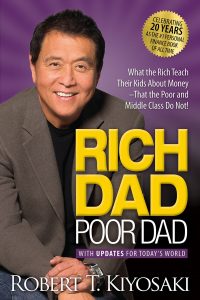
I got started actually pretty early and I was fortunate enough I picked up a book called Rich Dad Poor Dad. I know a lot of investors get hooked on this book initially and just get started in real estate investing, but what really stuck out for me was just the passive income and really building up a portfolio that can take care of me and my family for the rest of my life. I got fortunate enough to learn early in college and it’s been a journey ever since. I’m building a portfolio and really creating a passive income that’s eventually going to build up,obviously, compound and take care of me and my family. I’m just really excited to find out about it as early as I did and really get moving on it. I was going to school for accounting and finance and that’s my background. Luckily when I was a junior in college, I switched over to the real estate investment mindset and instead of working for a corporation. It was a complete 180 to my peers and just got started early into real estate investing.
I know from just talking to you and reading about you and what you’re doing there, you’re a pretty avid real estate investor, essentially full time real estate investor and building up a pretty sizable portfolio for yourself.
My partner and I, we’re one of the bigger operators in the market. We definitely have an edge there and now bringing in our property management arm, we’re able to capitalize a lot of opportunities where other smaller investors couldn’t and we’re able to provide those opportunities to other people as well.
You mentioned Rich Dad Poor Dad, which is just such a foundational book and it’s amazing how many people mentioned that book online and offline. I’ve had so many guests on the show that say that that was the turning point. They’ve read that book, couldn’t put it down and it “changed” their life. I highly recommend people to pick up that book and read it again, if they have read it before.If you’ve never read it, to me it’s mandatory reading. The whole Rich Dad series is fantastic. Don’t just stop with Rich Dad Poor Dad, read the other Rich Dad advisory books because they just all build on top of each other. The Cashflow Quadrant, The ABC Of Real Estate Investing, they’re all just great books to learn from. Let’s slide into what are the Quad Cities? A lot of people are listening to this and they haven’t an idea of where it is or maybe some people have heard of the Quad Cities and aren’t really sure where it is. Where are the Quad Cities?
The Quad Cities are in the heart of the Midwest. If you think of Chicago, it’s about three hours directly west of Chicago and it encompasses an area of about 400,000 people in the metro area there. The Quad Cities technically are in Davenport, Iowa,Rock Island, Illinois,Moline, Illinois and East Moline, Illinois. There’s also Bettendorf, Iowa and thesurrounding suburbs there. The metro area is around 400,000.
The aggregate total is 400,000 or is that just thecity’s proper?
The aggregate.
That borders on what I would call it a second-tier and third-tier market, you don’t quite have the population to be a larger, second tier market and there’s nothing wrong with that. That’s neither here nor there. It’s just what we’re seeing today. By the way, we’re finding that we’re having to spread out our exposure and the number of markets that we’re in to bring in more inventory because inventory across the country has been pretty tight as I’m sure you know. Because of that, we’re having to look at more of these tertiary markets to get the numbers and the inventory that’s needed for real estate investors as a whole to invest because you’re not going to do it in a first-tier market like Los Angeles or in New York, it’s just too expensive.
The second-tier markets have been compressed in terms of the rates of return. We’re still getting inventory but it’s become very, very tight. The Atlanta being a great market, we just can’t get inventory there right now. Bringing on the Quad Cities is very exciting for us because it is a very healthy market, strong economy, lots of job growth and I’ll let you get into this here. The key thing is that we can get the rates of return we look for as investors and have the inventory available to provide to our clients and invest ourselves there. On that note, let’s talk about the market here. Let me throw a very general question out at you. As a real estate investor, I always think, why should I invest in any particular market? I’m going to ask you, why should we invest in the Quad Cities metro area?
The Quad Cities, I started there, it’s just very solid fundamentals. There’s a very consistent, strong returns on these properties, the single-family up to four unit properties that we focus on. On the tenant base, I would say it’s pretty stable. It’s not a more volatile marketlike you’re looking at major markets. It’s very stable, there’s not too much appreciation but thenin a recession there’s not going to be a huge dip. It’s a great and safe investment there and that’s why we chose market as well aswe can consistently find product and keep capitalizing on opportunities. Whereas in the major markets, inventory is tight. That’s we’ve been focusing on the Quad Cities and building our entire business there because we believe in it so much.We’re not even looking to diversify into other markets right now.We’re sticking with the Quad Cities because we’re that committed to it.
Can you paint a picture of what the economy is like there? I’m not overly familiar with it. I’m still doing some research on it, but it sounds like it’s a pretty vibrant and healthy economy.
It’s definitely vibrant. It’s definitely growing. The downtown areas are being revitalized. Davenport being the biggest of the Quad Cities with over 100,000 people. It definitelyhad a ton of development in the past decade. The Iowa side in general has been being developed as well and it’s right on the Mississippi there. It’s a blue collar working class town. The majority of our tenants are going to be the young professionals or factory workers, some of the bigger employers there. John Deere is headquartered in Moline, Illinois. Genesis Health, there’s a lot of hospitality employers there, and then the Rock Island Arsenal is the biggest government-owned arsenal in the country, weapons manufacturing arsenal,and there are also huge employers there as well. You’ve got strong employers but it’svery blue-collar. I have a very low vacancy rate across the board. It’s very stable in terms of the grantsand so forth. That’s the attractiveness to the Quad Cities. It’s just to have those stable employersand a very working-class individual is our target tenant.
Some other notables that I came across when I was doing some research is that there are 37 million people that live within a 300-mile radius of the Quad Cities, which isa very, very large number of people.You look at that economically in terms of what that drives, for people spending and consuming in that area. The top core tile of regional economies, you were number 287 at one time and then swung to the 87 or 82nd place in a ten-year timeframe. That just tells me that there is growth and there are people obviously moving there because there are jobs. This is an interesting one. You have 40 colleges and universities within a 90-mile radius. That’s pretty amazing.
They’re smaller colleges but the two bigger ones at least in the immediate Quad Cities are Augustana College, which is where I went to school, then St. Ambrose University on the Iowa side of the Mississippi. Around those areas they’re also being revitalized, with a lot of new development and a lot ofcollege tenants as well, which is always has a strong demographic with having a lot of their rent guaranteed by the parents and just their reputation with paying on time has been phenomenal. It just adds to the stability of the investment.
Another thing I like to look at because we see this in markets like Jacksonville and Memphis where they are logistical hubs. The Quad Cities is what they refer to as a strong multi-modal logistics infrastructure. It connects firms to national and international markets. Why is that? I’m not clear on why that would be.
I’m not too sure. I know that with all the development there, there are a lot of logistics companies as well there that are bigger employers. I’m not too sure on the international side of it. With the Quad Cities,that’s interesting.
You must have a lot of railtransportation there because you are not on a waterway. I would imagine that there’s a lot of rail and maybe an air transportation that goes in and out.
I knowBoeing is a big employer as well in the Quad Cities. We do have the Mississippi thatsplits down the middle, which a lot of that can be involved there as well.

One thing I was impressed with is that the Quad Cities was ranked 16th nationally for high tech job growth, which was a little surprise to me. I never equated high tech job growth to the Quad Cities. It’s not just something you hear day in and day out.
In the downtown areas, especially in Davenport, there’s been a lot of the tech companies definitely growing along with the development.In the north side of Davenport as well,there are these consulting firms and accounting firmswith the tech population growing as well there. I would say that’s definitely more on the Iowa side in Davenport rather than more industrial side being the being the Illinois side.
What about defense? My understanding is that you guys have a top five defense community, which I wasn’t even aware of. The top 50 military community was another notable that I read. What’s the defense scene there?
There’s the National Guard and the Rock Island Arsenal is one of the major employers, I believe it’s a top three employer or a top five employer. They’re the largest weapons manufacturing arsenal in the country andI’m not sure exactly, there are thousands and thousands of employees and I know several of our tenants are Rock Island Arsenal employees as well. That defense community, that would probably encompass and due with that.
The Quad Cities, if you summarize it, is basically an ideal place for advanced manufacturing and for logistics because of manufacturers out there for food packaging and processing, obviously defense and professional and technical services. Is that a pretty good summary of that market?
Yes, that’s a great summary there.
Let’s talk about inventory. There seems to be a burning issue I have with a lot of markets right now where inventory comes and goes. It’s on the lower side historically speaking and it’s frustrating when we can’t get enough of it. In terms of investment properties or rental properties, what is the inventory level like there?Is there a good supply or is that something that is still tricky?
It’s tricky for a lot of the investors there for our company.We’re one of the larger operators and we get in a lot of those deals and are able to capitalize on a lot of that, having an in-house management company. We provide one of the best rental products in the area in terms of renovations and holding our company to a high standard and really providing a great product in the market which there’s a high demand within the working class. With those people that we provide one of the best products for them in terms of updated finishes, having a couple of bathrooms in the property rather than just one, or just even the basic cosmetic stuff that a lot of other small investors just don’t really do. We can provide one of the better products. Our properties for example, they go really quick whenever we have something finished with rehab. Definitely, from an inventory standpoint, we can capitalize. As one of the biggest operators and taking advantage of, we’re getting a lot of referrals, things like that, where there’s constant inventory that we’re finding that others can’t.
You mentioned bathrooms and a couple other things. Let’s just talk about that. Describe for us a typical rental property that you guys produce. What would our investors be looking at in terms of that property and describe its characteristics? We can even talk about markets, more specifically, the neighborhoods and not so much the markets.
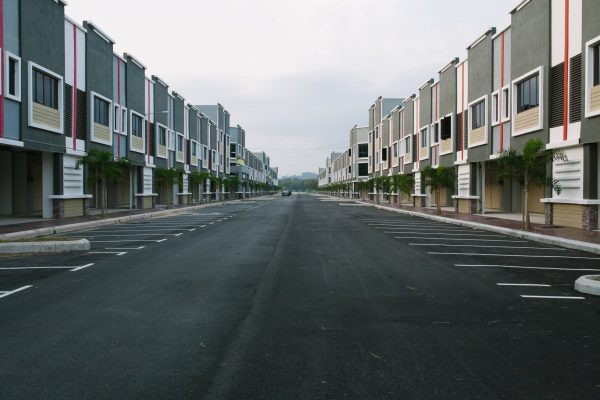
A typical rental, we find a lot of high demand for the two-bed, one-bath properties and those will rent anywhere from $700 to $950 a month. Those are typically close to between 800 and 1,200 square feet.On a three-bed, two-bath property, we’re looking at 1,200 to 1,500 square feet. Those properties are renting from $850, some of them up to $1,250, $1,300. Typically, in a good strong rental area, I would say between $80,000 and $100,000, probably $85,000 to $100,000 in value on those properties.
The rent to price ratio, the RV ratio is pretty high. It’s pretty attractive, which is becoming harder and harder to find. That gives you higher cap rates, higher cash on cash returns. That’s very attractive. It would definitely label the Quad Cities as a cashflow market, especially if you don’t haveabove average appreciation rates, at least not historically. It may be so going forward. If that’s the case, then you’re definitely what I would label as a cashflow market. Let’stalk about the neighborhoods.Talk about the neighborhood that most of these rentals are founded.
The majority of our rentals sit inEast Moline and Davenport. I would say they have the strongest rental areas for sure. We’re staying in nice neighborhoods and not getting into the more risky investment in the lower Cclass and D class properties. We tend to stay away from them 100%. The best rental areas I’d say are in certain areas of Rock Island. There are pockets definitely. Augustana College is located in Rock Island, Illinois and we own several properties that belong to the Augustana students, as well as St. Ambrose University on the Iowa side. There’s definitely strong returnsin Moline, Illinois, in east Moline, Illinois as well as Davenport. There are strong pockets really in any town.We tend to stay away from the Class D and lower C class properties and really stickwith the B and maybe C plus.Our product is strong and consistently have high returns in the better areas of the Quad Cities.

Let me just go back for a moment. You mentioned that two-bedroom, one bath is pretty typical of what you guys find. Does that have to do with the age that the properties were built in? Meaning that it was probably in the ‘50s, the ‘60s, around pre and post-World War II or is that just what is considered neighborhood normal for a lot of the neighborhoods in the Quad Cities.
It’s pretty standard. The two-beds are actually very, very common and actually they are our most demanded rentals. I’m not too sure why that is. I think mostly our tenant base consists of young professionals and maybe single construction workers or working-class people. There’s definitely the smaller families that would like the three bedrooms and we have a few four-bedroom properties as well. I’m not sure if it’s because of the age.A lot of our properties were built in the mid 1900 as well. That can be a factor, I’m not too sure. I just know for sure that the two-bedroom, bath is definitely the highest demanded properties.
I don’t find that to be uncommon, finding two-bedroom properties, especially properties that were built in the ‘50s, ‘60s and even in the ‘70s that tends to be often pretty common or what I refer to as neighborhood normal for many neighborhoods. As time went on we went to the three and four-bedroom type home and it’s not that one is better than the other, it really is market-specific, neighborhood-specific, and that’s what I refer to as being neighborhood normal. It doesn’t mean that it’s any less desirable if that’s what is expected by the rental pool there. Speaking of rental pool, let’s talk about the rental market. What is the rental market there like in terms of the size of that rental pool and the demand and how long does it take to lease up a property that’s in good clean condition?
We provide some of the best product. We generally go in and do a brand-new renovation in any kind of property that we get. We typically buy properties.We can go in and do a pretty extensive renovation. Basically, rehab the kitchens and baths, new flooring throughout, new paint, updated roof, makes sure all the mechanicals and everything, all the majors are taken care of, to a pretty high standard. Our properties, it’s very rare if they’re not lease up in two weeks. Our stuff does not sit on the market and there’s also really high demand. There’s just a really high demand for a good rental product in the Quad Cities right now. There are a lot of smaller operators that don’t really take good care of the properties that they have. There’s not too big of a supply of the more luxury product for these working-class folks and we provide just that. There’s always a strong demand for properties.
We really can’t conclude a conversation about investment properties or a market without talking about property management. Give us an overview of the property management side of things, the services provided there, what it may not be included in terms of the management services. That to me is a very, very important part and I’m always focused on that.
From a property management standpoint, we’re pretty advanced in how we operate. We have the AppFolio system. All of the investors would have access to their investor portal and see in real-time how the property’s performing and get updates. They can see any maintenance request if there’s any, which there’s not usually, just from how we do our rehabs, there’s very low maintenance requests. Our property management team is very well-versed on the neighborhoods. They’re very good at dealing with the tenants and keeping them happy and making sure they’re provided with some of the best product in the market. From a reporting standpoint, every day we use the AppFolio system. The tenants go in, pay their rents online, everything’s handled in real-time and it just works out for everybody the best that way in my opinion, in our opinion.
When we do our rehabs, we have a project manager manage that job and then they turn it over, walk through with the property management team and then from there, we lease it up and everything’s good to go. We don’t have tenants complaining about our properties and about conditions.We just really want to stress up the level of product we provide is pretty unparalleled in the Quad Cities. Management definitely does a great job in helping make that happen.
As far as the ratio of single-family homes to duplexes and fourplexes, I know that we’re finding that essentially 95% of everything we’re seeing in all our markets and I think it’s about eighteen are single-family homes. Is that the case there too? I know we’re just starting to onboard, you and your properties right now. What’s the ratio of single-family homes to duplexes or to fourplexes?
I would say about 80%single-family. We do and we are seeing the two to four-unit properties a lot. We like those,they’re just few and far in between, but the returns work out a lot better for those clearly. There’s less vacancy risk there as well. I would say probably 80%single-family, a two to four-unit, 20%.

Is there anything else that you’d like to share with our listeners about Quad Cities and the opportunities there?
It really is a growing area. I’m really excited about it being a long-term player in the market and it’s just the cashflow and the performance of our properties has been generally great. I’m really excited to keep growing business there and growing our management company and just becoming very, very strong operator in the market.Hopefully, I can share those with other people as well.
We will definitely be doing that together. On that note, if anybody is interested in more information about the Quad Cities and the opportunities there, keep an eye on our website.We have a lot of inventory there. The biggest thing is really just to contact your investment counselor. If you don’t have an investment counselor here at the moment, just reach out, fill out the contact form or give us a call and we’ll certainly put you in touch with someone to give you a hand and guide you through the market and what you need to do to build your portfolio. Chris, I appreciate the time. We look forward to working with you for many years to come and thank you so much for your time.
My pleasure. Thank you.
– – – – – – – – – – – – – –
Download your FREE copy of: The Ultimate Guide to Passive Real Estate Investing.
Get your FREE coffee mug by leaving us a Rating and Review on iTunes. Here’s how.
See our available Turnkey Cash-Flow Rental Properties.
Please give us a RATING & REVIEW (Thank you!)