

Cash flow can be generated in real estate with no tax, making it the best kind of investment. By looking at the potential of the property in ten years, improvements can be made to increase cash flow, cap rate, income and rate of return for investors. Ken McElroy, author of The ABCs Of Real Estate Investment, has always had a soft spot for home ownership. When people build homes, this equates to mortgage interest because the owners build equity on that home. Ken McElroy shares tips on getting your financial settings in real estate on track and staying on that course by simply starting small and in a neighborhood that you know.
—
This is Part 2 of my interview with Ken McElroy, Rich Dad Advisor. He’s a great guy, smart, full of wisdom, extremely successful. If you haven’t listened to the first episode with me and Ken, just listen to that episode. It’s number 95. We’re going to continue with Part 2 of my interview with Ken McElroy.
If you missed our last episode, be sure to listen to Ken McElroy on The Economy, Finding Deals, Real Estate Myths, Property Management, and Achieving Goals Part 1.
Enjoy the show!
– – – – – – – – – – – – – –
Download your FREE copy of: The Ultimate Guide to Passive Real Estate Investing.
Get your FREE coffee mug by leaving us a Rating and Review on iTunes. Here’s how.
See our available Turnkey Cash-Flow Rental Properties.
Please give us a RATING & REVIEW (Thank you!)
SUBSCRIBE on iTunes | Stitcher | Podcast Feed
Ken McElroy on The Economy, Finding Deals, Real Estate Myths, Property Management, and Achieving Goals Part 2
You and I both look at job growth and population growth at a macro level when it comes to analyzing markets. Obviously, you probably do the same thing I do. I look at neighborhoods after that. That’s my next step. Regarding neighborhoods, do you have a neighborhood preference? Did you have to modify the types of neighborhoods that you’re looking at in order to find deals because of the cap rate compression and lowered inventories?
I take a little bit of a different view on this. What happens a lot of times with real estate investors is that they tend to go look for really good deals with low down payments. That’s not a bad thing. Usually, that’s on the outside of town. They’re trying to minimize their down payment. I completely understand that, but I do the opposite. I’m trying to find rental demand in affluent areas, so I’m going to be paying more.
For the most part, we like to stick to B, B+ type neighborhoods, maybe A- at least the way we categorize them. I see so many investors making the mistake, in my opinion, of investing in C and D type neighborhoods where we’re looking at $40,000, $50,000, maybe $60,000 properties. Call it per door, per unit, however you want to look at it. If it’s an apartment building, you’d still say it’s a $40,000 apartment. The challenge there, in my opinion, is you’re dealing with a tenant class and a demographic that is far more challenging. By putting less down in order to “save money” on your down payment is actually a huge mistake because you’re buying yourself headaches down the road. Is that how you feel about this?

What I found is that while you might pay less, you’re going to have a lot more management problems. Honestly, not always. I’m a big fan of low-income housing. I think it’s needed and it’s necessary and it could be managed really, really well. I always try to say to people, “You can never manage your way out of a bad neighborhood. It just is never going to happen.” I met with the mayor of Phoenix and they had ten properties that they had targeted as bad landlords. I went and looked at them because I said, “Let me go take a look at them. Maybe we can buy them all and turn them all around and do some cash.” They have what’s called a private-public partnership opportunity. We went and looked at them and I got to tell you, Marco, I wouldn’t touch them. Some of them didn’t even want to get out of the car. I wasn’t afraid of the deferred maintenance or anything like that, but you can tell if there are gangs and there’s crime. What happens is a family is not going to move in to a neighborhood like that unless they absolutely, positively have to. In some cases, they do have to. The point is that I want to deal with the tenants that are living where they want to live and it’s a lot safer because those are the people that pay their rent on time and they take care of their place and stuff like that. That’s what I mean. A lot of people don’t do that. They go into markets and they buy cheap and then their occupancies are down and the delinquencies are high and they have lots of maintenance issues. They complain and they say, “Real estate is not a good deal,” but really it ends up being a poor decision on where they invested.
I guess a follow-up question to that is about demographics. How closely do you look at the demographics of the people in the neighborhoods you’re analyzing?
Very close. Before I buy any building, I actually pull every single lease and every single application to see where they work.
To me, I think the neighborhood quality and the demographics of the tenant base in a particular neighborhood weighs heavily on how well that asset will perform and how much headache you’re going to have in the years to come in owning that property. Looking at the market, the jobs and the population growth and all that stuff is important, but I can be in the best market in the country and if I’m looking at a terrible neighborhood or a questionable or sketchy neighborhood, I’m not even going to consider it any further. I have to be in a good neighborhood where I know that there’s stability going forward. I don’t want the tenant headaches. I don’t want management headaches. Even though I don’t manage my own properties, I just don’t want to hear them. I find so many people that are shortsighted when evaluating a deal. They get too caught up in the financials on paper or at the looks of the property, which boggles my mind. Briefly, what are the metrics you look for when you’re evaluating a real estate deal? What’s most important to you in that analysis?
Once it passes the, “Do I even want to be in this market?” that actually eliminates a lot. Once it passes that, some of the things that I like to look for are, “Are they in a school system?” I like to know a lot about that. We have a property in Plano, Texas that we bought. Plano has the number one rated school district in the State of Texas and it’s an affluent area. The homes are $500,000 to $1 million. There are not a lot of apartments, so people move to our apartments that can’t afford a home, that want their kids to have a good education. They specifically move into the apartments into the Plano School District. That’s an interesting one. It’s not one that a lot of people think of, which is why I brought it up. Aside from that, obviously we look at unit mixes in our apartments. I don’t want too heavy one-bedrooms. In other words, I don’t want half the property as one-bedrooms or two-bedroom, one bath. There are certain unit types inside of apartment buildings that you want to stay away from because they’re harder to lease. You want a good mix of one, two and three-bedrooms. We look at the actual physical asset from that standpoint. When we’re evaluating it, we take a look at the capital issues. I try to avoid boilers and anything that are central heat or central water because those boilers can be very, very expensive to run and also very expensive to maintenance and very expensive to replace. We try to not buy anything like that that has flat roofs. If the apartments are too small or even if they’re too big, those can be problems. There are just a number of things that we look at as we’re evaluating each one.
How important is the cap rate and the potential cash-on-cash return in your evaluation?
I don’t think the cap rate is too important personally. A lot of people throw that term around. It is important but it’s not anything that I hang my hat on at all because I think the cash-on-cash is the most important thing. We just raised $15 million to break ground on a new property that we’re building on here in Scottsdale, Arizona. You have to take a look at what kind of investment that you’re making and how much you’re going to return to your investors. That’s what cashflow is. Let’s say you’re making a $1 million investment into something and it produces $100,000 a year in cashflow, then you’ve got a 10% cash-on-cash for your investor. I’m a long-term hold guy which is why I don’t really concern myself with cap rates too much. Also, I’m usually a value-add too which means that when I’m looking at a deal, I’m looking for opportunities to grow the rent over a period of time. I’ll buy a 4% cap rate property that’s in trouble all day long and turn it into a very profitable asset. The reason it’s at 4% is because it’s not running very well.
So many investors are focused on what is the year one cap rate and what is the year one cashflow. Positive cashflow is very important. You’re saying you’re looking at what the property’s potential is in the years to come, years three, five, seven, ten because you can make improvements to that property, increase its net operating income, increase its cap rate, increase its cashflow and rate of return to investors. Even if you really didn’t have to do too much of that, rents probably highly likely will increase over the years, so you’re going to get higher cap rates and better performing assets as time goes on. Is that basically what you’re saying?

Cap rates only matter when you’re buying and you’re selling and you’re probably raising money. Everybody talks about the exit cap rate or whatever. I’m a long-term hardcore investor for cashflow. I’ve got numerous examples. I bought a building in San Antonio that was 680 units and there were 300 vacant. It was owned by Bank of America. What do you think the cap rate was on that?
It didn’t even register, but I smell a lot of opportunity in a deal like that.
That’s my point. I bought it. It was a $25 million note. We got them to write off $5 million of it, so I think we’ve come to write down the note to $20 million. I put $7.5 million into that property and we had to evict another 100 people, so we had 400 vacants in 90 days after we bought it. Who wants a 680-unit with 400 vacants? Nobody. There’s no cap rate. It doesn’t even have cashflow. A year and a half later, it appraised for $42 million. We created $15 million of value on something in less than two years and we still own it today. It kicks off at $800,000 or $900,000 a year in cashflow and the investors have all gotten their money back because when I got to $42 million, I put new debt on it. I put $35 million back on debt which the property could cover. I paid back the $20 million to Bank of America. I paid the $7.5 million back that I had raised, plus another $6 million or $7 million. Now the investors are getting $800,000 or $900,000 a year of cashflow and they don’t even have any money invested. They got that money back tax-free because it was a refinance. What’s the cap rate on that? Does it really matter?
No, it doesn’t. I love your thinking. That deal there is a true nothing down deal. Ultimately, you cashed out and pulled everything out after a year and a half, which is amazing. I wish we could find those all day long. It sounds like the two most important things that you look at are positive cashflow and the location/neighborhood of a property because that plays into its future potential and the lack of hassles going forward. Is that a fair assessment?
Yeah, that’s exactly right. I’m looking for opportunities to grow value for everyone.
Robert Kiyosaki likes to say that real estate is a team sport. I wholeheartedly believe that because I built my business model here for the last fourteen years around that whole concept of having the right people on the right seats on the bus. I like to say when it comes to property management, that you live and die by your property manager. That’s probably a strong statement but I like to just say it. 99% of our investor clients live remotely and they use professional managers to manage their assets. My question to you is, having been in the property management space for as long as you have, what tips or suggestions could you share to help our audience who are remote investors and do not manage the properties themselves?
The number one issue that all properties have is putting the wrong tenant in a unit. We run criminal credit and actually sex offender checks too on every single tenant. We do 500 to 600 a month or actually probably more than that now, but we run the credit on everybody. This sounds so simple but it’s true. It’s no different than what you just saw with the housing crisis. They were extending credit to people that couldn’t afford the mortgage. When you extend credit to people that can’t afford rent, you’re going to have a problem. That’s by far the number one issue is when property management folks get into a rush. I have about twenty condos that I own. I’ve got ten of them in Vegas from my condo conversion days. I use a residential realtor guy that’s a property manager. He has to call me up and we just have to talk about the tenant that we’re putting in that particular unit. He knows that he’s going to have to talk to me about where they’re working, what they’re doing, are they moving out of a house, what’s their credit history. That’s the only time I speak to him. The rest is easy because those people pay rent and everything works from there. That’s probably the very biggest issue.
The other one is just responsiveness because there are things that happen inside of units, whether it’s a clogged toilet or a stove is broken or a refrigerator that goes down or flood. Generally, I like to have a property manager that has their team of people that can be responsive immediately because those are the kinds of things that people move out for. They’re your customer. People don’t realize this but if somebody is paying $1,000 a month, it’s a $12,000 a year commitment. That’s a lot of money annually that somebody is paying you. They deserve the attention and the respect to maintain the property and to pour money back into it and to communicate with them on every way. Usually, the breakdown on turnover has to do with eviction or late payments or not enforcing the rules or poor maintenance. Those are usually the case.
As landlords, you have to look at your tenants as customers because they are. They’re your customers and it’s your responsibility as a landlord to provide safe, clean and functional housing. That’s your end of the bargain. Their end of the bargain is to pay that $1,000 a month, $12,000 a year in exchange for that safe, clean, functional housing that you provide. Would you say you’re managing your managers or are you just providing some guidelines in terms of tenant screening and qualification?
I’m not managing them at all. We have very specific guidelines. The credit screening business is pretty automated these days just like it is for credit score around buying a home. There are certain things that you can be flexible on. One of ours is, for example, they have to make three times their rent. Then you get into their credit and things like that. There are certain things that we’re flexible on and certain things that we’re not flexible on. From there, I’m not too particular.
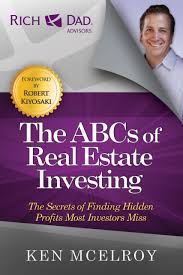
Just a quick question about one of the myths you have in your book, The ABCs of Real Estate Investing. One of the myths you have is you have to know a lot about real estate. This comes up with us from time to time but more often than I’d like. Some investors we speak with and others that I’m sure we don’t ever hear from think that they don’t know enough, when in reality, they know enough. If they just surround themselves with the right team, they would certainly know enough and be on a fast learning curve. What advice can you give people that feel this way or are maybe just sitting on the fence right now?
I think it’s a pretty normal response. I see it all the time. People want to know everything before they do anything. I call it analysis paralysis. I just actually mentored somebody here recently on this exact issue. They were completely freaked out because they’d never had a tenant before and all that stuff. I walked him through it. The guy was a US Marshall and his wife was a teacher. They have one small kid. I go, “It’s not that big of a deal if you find the right people. There are very good people out there that need good, clean housing.” He’s apparently here on an assignment, so he’s only going to be in Arizona for about ten months. She knows she’s going to have a vacancy in ten months. That’s how good tenants communicate. I think everybody has that fear always. What do you see on TV and what do you read? You read all the horror stories and that’s such a small percentage. You deserve it if you rent to those people. If you don’t, it can be an incredible experience. I have 10,000 tenants and this is probably three or four years where I’ve never even talked to my managers about evictions. We don’t even discuss it. It’s not even a topic. It’s because if you put the right person in, they’re going to give you notice and they’re going to be communicating with you. They’re going to pay their rent on time. It’s just not even a topic.
I think a big part of that has to do with being in the right neighborhood because you will attract the right demographic and tenant class. Second, you live and die by your property manager. Having the right management company that can properly screen and qualify tenants will save you a lot of grief. It becomes virtually hassle-free.
It can be. There are a lot of variables. I think generally, it’s like anything honestly. If you’re going to learn how to play golf, you don’t know anything about it. It’s the same. You just don’t know anything about it but if you find a great golf instructor, you’re going to learn. If you find a great property manager, you’re going to learn. You just got to find good people that are going to work with you, then you become educated through them. There are really incredible people out there doing incredible work all over the place. You just got to find them. It doesn’t matter, honestly, if you’re writing a book or playing golf or buying a piece of real estate. If you put yourself around the right folks that are helping you, it will be a positive experience.
Ken, we just started a new year. I’m a big believer in setting and writing out my goals. I do it all the time. I mentioned it quite a bit on this podcast to help drill the point home for people. I really want people to just take and stop for a moment, think about what it is they want to achieve, write it on a piece of paper and stick it in your wallet or put it on your iPhone, read it every day because there’s a tremendous amount of power in your subconscious mind. Just a quick tip from you. What comment or advice would you like to share to help people get on track and stay the course with their financial goal setting?
You hear this all the time. You hear, “Start small.” I’m a big believer of that. I think you should start small in your neighborhood that you live in or the neighborhood that you understand the most. Maybe it’s somewhere you grew up. Even Kim Kiyosaki, she said her very first goal was to buy one rental house in the first year. That was all. They bought a two-bedroom, one-bath house in Portland, Oregon. I think that if you set your goal something like that, even if you don’t have the money, you will do it because as I like to say, good investors show up for good deals. Most of the time, you don’t even have to put a full business plan together for good deals, whether that’s for buying a company or starting a company or buying real estate or whatever. Most of the time, the money flows to those kinds of things. It’s the bad deals that get a lot of resistance on the raising of the capital.
You shouldn’t be scared around the money, which is I think what holds back most people. If you start with just, “I want to buy one rental house that cashflows $100 a month or $200 a month,” and you just start looking, even if you don’t find one, you’re going to learn so much by meeting with realtors and going and looking at properties and running the numbers and finding your team and all that stuff. You’re going to be incredibly educated. It really, really is just time.
Kim, they ended up buying several that year because after she did the first one, she was like, “That wasn’t so bad.” They ran out of money after the first one, then they ended up buying two more because their friends said, “If you find another one, let me know.” There’s reciprocity that happens and there’s momentum. That’s an incredible word, momentum. Unless you create momentum, there will be nothing that will happen. If you meet with a realtor, you’re looking at deals, you’re going and looking at properties or you meet with property managers, it’s all just time. It creates momentum and things open up for you.
That momentum is exactly what it is. Another way to look at it is that success breeds success. If you have that one property success in that first year, you’re going to quickly find that you’re looking for number two, buying number two, buying number three and that success breeds more success. It’s absolute momentum. Ken, thanks so much for sharing your time and your wisdom. Please tell our listeners how they can find you or get more information about you and your programs.
Our company is McCompanies.com. My website for me personally is KenMcElroy.com.
Ken, once again, thank you for your time.
Thank you. Always great chatting with you.
– – – – – – – – – – – – – –
Download your FREE copy of: The Ultimate Guide to Passive Real Estate Investing.
Get your FREE coffee mug by leaving us a Rating and Review on iTunes. Here’s how.
See our available Turnkey Cash-Flow Rental Properties.
Please give us a RATING & REVIEW (Thank you!)