
 Born with an entrepreneurial spirit Damion started his first business at age 11, has started 30 since then, and is the published author of 5 books.
Damian paid for his first rental house with a VISA, then over next 5 years bought 150 houses across 7 states, and went through a $20,000,000 meltdown in 2008.
Damian’s personal philosophy combined with a love of financial markets and money psychology drove him to start the Austin-based financial-tech company, Total Control Financial in 2016. His aim was to disrupt wall street and empower main street.
On today’s episode we discuss some of the messes and misfortunes Damion made as a real estate investor. What can we learn from his experience? Let’s find out, and enjoy our other interesting tangents of discussion.
If you missed our last episode, be sure to listen to the Ask Marco: Asset Protection, Holding Title, Closing Dates.
Maverick Mistakes in Real Estate Investing – Damion Lupo
Welcome to Passive Real Estate Investing. I’m your host, Marco Santarelli. As you know, this is the show where busy people like you learn how to build substantial passive income and create wealth for the long term.
On today’s show, I wanted to bring on a guest who I find rather interesting because he has been very, very successful in real estate in years past. But then, has also learned from a lot of messes and misfortunes. I’m hoping that he can share some of those lessons in maverick mistakes in real estate investing with us today.
I guess, us, as investors, if we can learn from other people’s successes and other people’s mistakes, it will just spring board our success and it will shorten or compress the length of time that it takes for us to get to where we want to achieve those investment goals.
My guest today is Damion Lupo. He is born with an entrepreneurial spirit. Damion started his first business at the age of eleven. He’s started 30 since then. He is the published author of five books. Damion paid for his first rental house on a Visa, of all things. Then, over the next five years, bought 150 houses across seven states.
Then he went through a $20 million meltdown in 2008. Damion’s personal philosophy combined with a love of the financial markets and money psychology drove him to start his Austin based financial tech company, Total Control Financial in 2016. His aim was to disrupt Wall Street and empower the Main Street, which I just love.
Damion, welcome to the show.
Hey, Marco. It’s awesome to be here. Thanks for having me.
It’s my pleasure. Before we get into meat and potatoes here, I have a curiosity thing. I took martial arts for many, many years. In my earlier years, I spent many years studying Judo and then I spent years in Aikido and Hapkido, which is a Korean version of the martial art. Apparently, you have three black belts and you created your own martial art, called Yokido. I was wondering if you could maybe tell me a little bit about that, because I’m very curious.
Definitely. I started Aikido about the same time I started my real estate investing. Actually, it was the same year. Over the next decade and a half, I ended up with three different black belts in Aikido or versions of Aikido.
At some point, about five or six years ago, I started studying yoga and realized there was such powerful component of yoga, with breath work and core, strength that could really be brought into the Dojo, the martial arts space. And empower people to use their breath, which is so important that gets left out often times, and infusing things like the meditative aspects of yoga and bring that in so that people could be more powerful simply by breathing correctly.
This was a good bridge for women that loved yoga and really wanted to feel comfortable walking around. Especially with Aikido, if they saw there was a gentle way to take yoga and bridge into self defense, they could have a different experience showing up in the world and living without fear of being a victim from predators and things. That was really the intention, fusing those together to give that gift of personal flow where people can move effortlessly with confidence. That’s really why it was born and what I’m doing with it.
Are you still practicing and involved actively with martial arts?
I am, absolutely. I love the training and the teaching. I actually teach right after our talk today. I’m going out meeting with my students. Every week I’m doing this at least two or three times.

Nice. That’s a very unique twist on martial arts. I’ve never seen or heard of that before. Now, I might have to look into it. You should open up a studio out where I live.
You never know. Part of the fun with martial arts is being able to travel around and share it with different people. I imagine I’ll be in your area at some point, doing some type of workshop or something. Maybe we’ll have that chance.
Sure, let’s do it.
Cool.
Let’s start talking about stuff I love. That’s about money, finances and success and business and all that good stuff. You seem to have a challenge or an issue with the term retirement. I have to agree with you. I don’t believe in retirement. I think you should always be doing the things you love to do and start enjoying life at an early age. Let’s talk about the idea of retirement. Why do you hate that term?
Marco, I think the reason that I hate retirement, it’s probably based on growing up and hearing about retirement. I heard my father talking about retirement five years into his career with the military where he would say, “In fifteen more years, I’m done finally.” He hated his job, he hated his work day.
I heard, for years, the struggle with hating the experience of your day and looking forward to this moment in time where everything would be good. It was really him trading his life, the best chunk of time in his life, for this moment in time when he’s 60 years old and then he can start living.
I started really challenging that idea and thinking there’s got to be a better way. What I’ve come up with is that if you love what you do, you’re really retired into that thing. People that don’t love what they do, that aren’t excited about it, are looking to exit the thing.
The entrepreneurs like you and I and the people that are listening, I think if we’re really smart, we find that thing that we really would never want to leave. We find a way to do it and we spend our time doing it, so we’re not thinking about retiring.
The other thing about retirement that’s so destructive and terrible is that when somebody says, “I’m done contributing whatever it is that we’re doing.” There’s a reason that three years after the average male in the United States retires, he’s dead. Because the universe looks at someone, I feel, and says, “You’re done contributing? Then the universe is done with you.”
I think statistics back that idea up. I have a lot of decades in me. I don’t want to show up one day and have my entire plan in life around that moment where I retire just so I can die three years later. I’m going to do what I do and contribute and love every minute of it for as long as I have breath. Not just to a point in time or start that whole excitement at some point in time. It’s a lifestyle.
We don’t want to work to retire. We want to work to live. If you do what you love, work doesn’t feel like work. If you do something you dislike or hate, I believe you should find something else. You should move on. Because there’s so much more you can do in your earlier years. You’re more capable to do things that you can’t do in your later years. I don’t like that concept or the idea of retirement. You don’t work to retire. You work to live and enjoy life.
Absolutely. The other thing too, a lot times people put off their actual life, even travelling and things until down the road. They don’t actually do the math on what it would take, the time and the money to live these experiences, have them and have a richer life. They just put it off. I think they’re really missing out because they’re afraid or maybe they just have that idea that’s been programmed into them by parents or society, that you don’t do those things, those big events until you are done working. I think it’s a mistake.
I think the case is this, that a lot of people fall into a career or fall into a long term job and they don’t know what else to do. They just stick with it year after year after year. After a decade or more, they realize, “This is the career track that I know. It’s too late to start something new.” Then they just live with it. Especially today with so much mobility and turnover and change in the job environment, it probably makes sense to actually find something you love and that you can contribute. This is actually why I love doing what I do. I talk to positive investors and help them build their real estate portfolios and their financial future. That’s fulfilling, that’s inspiring every morning.
I love it.
Here’s another concept. Talk to us about this green and red arrow concept. I don’t know how it ties into wealth or poverty but I know you explained it before. Maybe you can break it down for our listeners.

Absolutely. Typically, the person that’s sitting at home at night, this could be anybody, whether they’re investing in real estate or whatever. I know this was my experience as a kid. A lot of my clients and such had shared this experience, where the news comes on and there’s the market report. CNN says, “Today in the markets, we had the DAO doing this.”
There’s a green arrow that shows up. People all over the country are saying, “Yay. My 401K or my mutual fund has gone up in value, which means I feel wealthier today.” The other thing that happens is that they go, “Gosh, is it going to go up again tomorrow or is it going to crash tomorrow?” There’s this anxiety. They feel good and they also are scared about the future.
The red arrow that they might see is when the market goes down. That’s the poverty, where they go, “I feel poorer.” They start constricting, they’re not breathing. There’s this fear around the future. It almost seems like, and the experience is whether it’s a green arrow up or a red arrow down, because so many people have their assets tied to that one space, that one asset class, just the equities and the mutual funds, they’re perpetually in this anxious roller coaster around the Wall Street experience.
They don’t have any control to get off of that roller coaster usually. I feel like the moment you say, “This isn’t going to work for me,” and you start looking for something else, you start bumping into things, like your podcast, where you go, “There’s another way. I don’t have to be subject to those green arrows and red arrows and all the emotional fallout and all the anxiety of that. I can control my life and make choices to design it the way I want to.”
I think ever since the early 1970s, when ERISA was enacted, I think the general population has been shepherd and pushed into this direction where investing equals the stock market and it all is push button, or you call your broker and you get into a mutual fund or an index and that’s how you build your financial future.
Real estate has been around a lot longer than equities have and Wall Street. It’s upsetting to me and very disappointing to me to see so many people, I say trapped at multiple levels, but trapped into a paper market, a stock market where they have no control, limited knowledge, very little experience and understanding. Yet they’re basing their entire retirement on the outcome of the stock market. It’s just crazy.
Totally crazy. It doesn’t make any sense. Yet we believe, because we’re sold by a monstrous industry and a powerful interest, that this is what you’re supposed to do. We, by default, end up in 401Ks. We end up in these retirement vehicles that are totally stuck in paper assets. What is that? To me, that’s speculation. That’s not investing.
Investing is what your listeners are doing. It’s what we’ve done. It’s building passive income. You don’t care what your account balance is when you’re 60 or 50 or anything. You just know that you’re making $5,000 a month every month for the rest of your life that’s coming in from your investments. That feels solid because it is solid, because cash flow is the name of the game. Just like Robert Kiyosaki talks about, it’s not about the capital gains.
Those moments in time are like lottery tickets, lottery events. What good is that? Are you going to recreate it the next day? Are you going to have another 30 years of maybe the market is moving up? That’s psychotic to me. I hate that system. I love the real estate system. I love things you can control that pay you every month. It’s why I love what you’re doing so much.
Thank you. I agree with you. It is speculative. It is gambling. Capital gains are chunks of cash. I like to think that we should be investing for streams of cash. If you have streams of cash, you have monthly income and that’s the check in the mail. Real estate is one of the best, if not the best way of doing that. On that theme of real estate, tell us how you initially got involved in real estate, and then lead up to you incredible success. We’ll take a departure and we’ll start to look at where the messes and misfortunes happened.
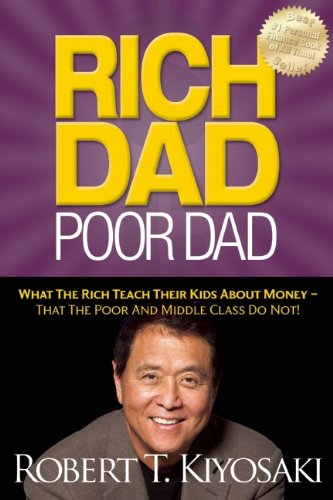
All right, Marco. This is where you want to probably have a seat belt and a get sick bag next to you because that story is hot and heavy and fast and then it explodes. Back in 1999, I was selling insurance. I read a book called, Rich Dad, Poor Dad which comes up all the time. It’s the trigger for a lot of people in real estate.
I read this book and I got excited and I saw an infomercial about a real estate seminar in January of 2000. I went out there and had a buddy of mine that was looking at deals. He found a deal and he said, “Do you want to be my partner?” I said, “Sure.” At the time, I didn’t really have any money.
I was in my early 20s. I took a house over, which means I took over the mortgage and paid all these back payments that this lady had. I did this on my Visa card. I did it on New Year’s Eve 1999. I thought, “Awesome. I’m a real estate investor.” I had no idea what I was doing. Didn’t know how to fix a house. I learned over the next few months that I really shouldn’t be fixing houses.
Four months into it, realized I was going to go bankrupt at that moment in time because I had purchased a couple other houses and I had no income, no capital gains, no cash flow, nothing. I had three dead houses and I was 30 days away from breaking already. That triggered me to go out and do a lot of guerrilla marketing. Bought eight houses the next month that I put people in.
The problem wasn’t so much that I had a bad system, the problem was me. I wasn’t returning phone calls at the time. I had ads out. People were calling saying, “I want to rent your house or I want to lease option your house.” I wasn’t even calling them back. I was just so excited about buying things. I wasn’t completing the cycle.
Once I started completing the cycle, I had this machine that was bringing houses in. I was closing on them and then I was lease optioning or renting them out. I just hit the gas and was going to seminars like crazy, learning new strategies and techniques. Investing pretty much all the money I was making for the first couple years into education. I wasn’t just eating what I was making. I was reinvesting in myself. That’s how it started in the beginning.
That went on for a couple of years, for probably the first 80 to 100 houses, where I was just churning and burning, mostly in Phoenix. After that, after those first couple years, I expanded. This is probably where the mayhem started. I thought I was really, really smart because I had all these houses and I must know what I’m doing. I was just going so fast, I couldn’t see anything.
That was actually one of the big mistakes. I was going so fast, I wasn’t paying attention to the numbers. What I mean by that is I wasn’t really doing accounting. At one point, I missed a tenant that hadn’t paid for ten months. I realized, “Wait, I know this house is full but this guy hasn’t paid me for ten months.” When I asked to be paid, they laughed and then left.
That was a big mistake when I was expanding so fast. It didn’t matter because I was putting nitrous in my system and kept growing. Ended up doing deals all over the country, ended up in seven different states doing these things, buying these houses, had partners, started developing, doing remodels and things. My timing was awesome. The problem is I thought my skillset and my business acumen was actually the most important thing.
What I caught was really, really great timing. I developed an incredibly powerful ego versus a business. It just happened that my business looked really successful and ended up being a $20 million portfolio. A lot of that was the timing and I caught it. That was the basic framework for how this thing went from Rich Dad, Poor Dad to a $20 million portfolio with 150 houses and apartment complexes and building condos in Alabama and all sorts of stuff.
That’s crazy. That’s crazy portfolio. $20 million. Where were you finding these? Were you just finding them on the MLS or were you advertising for distressed sellers?
I was doing everything under the sun. Most of it was not on the MLS. I ended up selling a lot on the MLS. I was looking for people that wanted a quick solution, that didn’t want to go the typical route with listing a house. This was the seminars, the boot camps. I learned about guerrilla marketing. I was a little crazy about it.
I remember one of the crazy things I did, I bought this giant black pickup truck, a Dodge 2500 with a camper. It was black so I put yellow letters on it that said, “Cash. We buy houses,” and my phone number across the entire thing and then had my website CashTruck.com. I had several people I paid to drive these type of things around. People would run me off the road wanting to get rid of their house in Phoenix.
I was willing to do anything. That was one of my strategies. Of course, the bandit signs everywhere. Cities are calling me and telling me they’re going to find me and flyering everything. As soon as Craigslist was available, I was doing that. Yellow page ads. If you can think of a marketing technique, I was probably doing it. I was doing everything under the sun. Ultimately, if you do a lot of stuff and you keep doing it, things start trickling in.

Wow. Were most of these lease options? Were you taking over the financing as opposed to getting your own mortgage on it? It sounds like that’s most of what you did.
Yeah, Marco. I didn’t really have any way of financing a toaster oven at the time because I had no real job and I was fairly young. I didn’t have much credit. I had enough credit to buy a house on my Visa. It was like $7,000. I was taking over mortgages for it was probably the first 20 to 30 houses I took over and I continued to take over.
Although once I’ve done enough of them, I was able to invite investors to come in and participate with the deals. Often times, we’d be able to buy deals and get new mortgages using their credit and their money. Eventually, a lot of the deals did get new financing. I took over a lot of stuff and used a creative mind to figure out how to make these deals work.
I don’t mean to offend or anything with this next question, but were you not looking at the numbers to make sure that you would be cash flow positive if you acquired and rented these properties?
I definitely was. That was actually the primary. Believe it or not, that got me into trouble. Because when I was looking at the cash flow, I would see a deal and I’d go, “I’m going to take over this house. It’s got $800 or $900 a month going out. It’s going to rent or lease option for $1,200 and that would be fine.” That would have been fine if that had worked out perfectly where there was $300 a month or something.
The problem I ran into, there were two things. One, I was willing to pay 100% of the value on a house. A few times, I bought houses or took them over and I ended up with a house that didn’t want to move. It would just sit there and I couldn’t sell it. I couldn’t get rid of it. If I was leasing it, I was wrong with my numbers. I couldn’t get what I was outflowing. I ended up either negative monthly cash flow on the deal or I’d have to write a check to actually get rid of it.
In theory, I was doing cash flow on every one of these and that’s how I bought them. The dumb move that I made, and this is part of me feeling like I was pretty important and being an impatient greedy butt, I decided to sell off a lot of the cash flow. I would have a deal making $300 a month and I would say, “I’m going to sell off $200 of that to an investor.”

I wanted a check. I wanted to get $10,000 into my account. I would do that. They would get the cash flow. I was responsible for managing this thing going forward without really making much money off of it. I would blow through that $10,000 living my lifestyle and destroying all of my garden. I was just harvesting it because of the short term focus. Massive mistake because I was impatient.
Wow. Most of these were in Arizona by the sounds of it?
They were. That was the first big crop. The second big crop was in the southeast, in Alabama and North Carolina and Memphis and some in Oregon and then Alaska and Maine. All over the freaking country.
Would you say you were more of a speculator back then? Or were you truly focused on generating positive cash flow from these properties?
I started off as a positive cash flow, as a passive income guy. That was my investing philosophy. That it’s all about cash flow. In fact, I used to teach at a seminar in Phoenix. It was all about that. It was cash flow, cash flow, cash flow. That was my intention going in. Once that was working, I was harvesting quickly and building a lifestyle. At one point, I realized I was spending $75,000 a month on my lifestyle. You can imagine how many houses I had to harvest and kill the cash flow to get cash.
Then I started doing things where I thought, “Shoot, I can make an extra $50,000 or $100,000 by flipping a house.” I got into a speculator game. That’s where I got hammered because again, a patience thing. I wasn’t willing to let the thing naturally grow.
You had mentioned in a previous podcast about one of your deals where over time, it kept going up in value and the cash flow just keeps increasing. I wasn’t letting anything grow and naturally bloom. I was just too impatient about getting giant chunks of cash so I could have the big lifestyle with the Ferrari and all that other stuff.
Wow. Let’s boil this down. You’re, in a way, an accidental millionaire. You became an accidental millionaire because your timing, whether you knew it or not, was good. You were in those early years of a massive market upswing, particularly in Arizona, in the Phoenix market, where that was one of the ground zero markets for the foreclosure fiasco in 2008, the housing implosion.
You were at the right place at the right time. You had property, you had assets that were appreciating rapidly. Your networth was increasing. Fortunately, you started off with cash flow as your priority but then you started getting into more of a speculative flipping type game. Let’s break down these messes and misfortunes, see what we can take away from this as far as a lesson learned. Here’s what I heard, but feel free to add yours.

Number one, you want to follow up. Regardless of who your customer is, if you have leads, regardless of the business, you always want to follow up and not let them dry on the vine. You want to have proper accounting. I remember you mentioned not keeping track of your numbers. That’s crazy because you can’t manage what you don’t measure.
If you’re not measuring your income and your expenses, you don’t know if your cash flow positive or negative. Proper accounting and tracking is very important. That’s certainly another lesson. The timing, again, you probably didn’t set out to pick a market based on where it was in its real estate cycle, but that timing just happened to work out for you. Maybe accidentally.
I think a big thing to pull away from all this is that cash flow is absolutely king. You definitely want to have regular, consistent and somewhat predictable cash flow. The last thing I remember is just money management. Managing your income and expenses properly. If you have positive income, you save some and then you redeploy it into more assets that generate income.
Those are huge. The beginning, with the follow up, that probably had more to do with me not having a deep why on why I was really doing what I was doing. I was more interested in figuring out how and thinking about things and being analytical and not realizing that the why would force me to call people back.
If I had a why, if I was taking care of my family or if I was doing something to contribute, I would have naturally followed up because that was part of the system to develop it. I think that was the lesson there in not following up, is find the why. It tends to fill in a lot of the missing pieces that we will avoid.

The numbers, you’re right. If you can’t measure it, you can’t manage it. Clarity on numbers is power. You have an understanding of what’s real. Instead of running something out of a cash register, which is basically what I was. I was looking at my checking account and going, “There’s money in there. I must be doing okay.”
You really have no sense of what’s working. It’s like having a bunch of Google ads and not understanding your conversion ratio when people click through and ask for information. It’s insane and it’s crazy. I wasn’t doing that. Got to have that done.
One of the things that I missed big time was, and I did it in the beginning with all the training, I had people that were mentoring me and coaches. When I got into the most trouble, it’s when I thought I was so smart that I didn’t need anybody that was going to hold me accountable.
I got rid of the coaches and the mentors. I was the smartest guy in the room. As one person once called it, I was SMOP, smartest man on the planet. That got me into so much trouble because nobody was saying, “Dude, your shit stinks.” I thought I smelled like a rose all the time and I was making great decisions.
Missing out on that feedback from somebody. I love coaches. I love, love, love coaches and will never have a business again or invest without somebody constantly challenging me, asking me questions and poking holes in my assumptions. Because a lot of what I did was based on assumptions. They truly did make an ass out of me. That was a huge lesson.
One of the ones too was spreading out. This is the idea of multiple streams of income where somebody says, “I’m going to develop five different things because I read Robert Allen’s book.” They’re going to suck at all of them. They’re not going to focus on one and then move to the next. They’re just going to do all five at once. It would be like starting off in real estate and saying, “I’m going to invest in five different states simultaneously.”
It’s hard enough to deal with one. You get good at that one, maybe it’s good to look at other ones. You’ve got to have some type of focus or you’re going to be splintered and there’s no real drilling down and getting really, really good and becoming an expert. You gout to have the focus. I blew that one. I was in seven different states.
Having goals is important. Breaking that down into a criteria is important. Having laser-like focus is important. You mentioned mentors and other members on your team, the whole concept of having a professional credible team helping you, working with you, moving you along, is very important. You let go of that and I think that’s maybe when you really started going off the rails by the sounds of it.
Without a doubt.
Then, the whole thing of the mindset, the mental game, letting your ego get in the way. Thinking that you know more than you actually know and letting that get you into trouble. I think that’s where a lot of people actually fall on their face, is running before they can walk and then just thinking that they know what they’re doing. In actuality, they’re just floating along with the rising tide, not realizing that when that tide goes down, they’re there in their shorts. Interesting.
Totally agree.

Interesting. Wow, that is a rapid success. Five years, 150 plus houses, seven states, $20 million in real estate, and then just having it all implode on you.
The hardest part about that was when it did implode, it was … I had a lot of people that had invested with me and everybody was doing really, really well for those first five, six years. Even into 2006, it was working. In 2007, when things started to go a little funky, and then 2008 when it melted down.
At one point, I had five different projects that each one of them was expected, the pro forma, the spreadsheet, said each one of these things is going to kick out a million dollars in profit to me, and then there was money to the investors as well. Every one of those projects went to zero. Never underestimate how wrong you can be is one of the lessons there. You really truly can be wrong.
The hardest part was going back to people and saying, “I lost your money.” I think a lot of times, it’s easy to get excited about deals, I know it was for me, and not really be clear about the risks and the possibility that things may not go well.
It sometimes has nothing to do with the person putting the deal together. I didn’t cause 2008. I did make the choice on what house to buy or what development to create. To have people that were friends for 30 years come back and tell me that they hated me, that they wish that they never met me, that they hoped I rotted in hell and I’ve lost all their money, it probably was the most brutal experience I’ve ever had.
It wasn’t so much the lost money, it was the lost self-worth and it was the lost confidence. It was a dark place. I felt like I wasn’t worth anything and that I ruined people’s lives. That’s the danger in taking on money without the respect of what you’re doing. I will never make that mistake again and I hope nobody has to go through that process because it tears your heart apart.
You take on a responsibility regardless of who it is, family or otherwise. It’s just so much harder when it’s friends and family than when it’s someone you barely know. Looking back, knowing what happened and how it all unfolded in the end, what would you advise people to watch out for, do or not do, to avoid having a similar situation?
Marco, I think one of the most important things is to have somebody that you’re talking with, that you respect enough, that would give you feedback, that has been there. The thing I liked about mentors compared to a coach, often times, coaches haven’t been there and done that.
Having a mentor that has been through whatever it is that we’re doing and being able to ask the questions and see beyond what you can see from their own decades in the trenches, I would say that’s the single most important thing to have. Because we don’t have time or energy or enough blood to drain from all the experiences and all the mistakes. There will be plenty of mistakes. You’re going to make them when you take action, which is so important.
At the same time, you don’t have to make the exact same ones as everybody else. That’s one of the funniest parts, funny, sad, scary, that people tend to make the same mistakes as other people all the time. We really should be using OPE, other people’s experiences, real experiences. Then saying, “I’m going to learn. I’m going to make my own mistakes that are different than everybody else’s.” Why do we want to write the same check? It really doesn’t make any sense.
Not to pat ourselves on the back, but tied in to what you just said, we have four investment counselors on our staff and then there’s myself and we’ve got other support staff here. The one common denominator with the people that work here is that we’re all real estate investors, we’ve all bought and sold properties, we’ve all lived through the 2008 financial meltdown. We’ve had our fair share of rehabs and flipses and syndications. We’ve been around the block. We’ve done it.
This is why we like to call ourselves counselors. Because we’re not coaches. We don’t sell coaching. We like to advice and mentor and inspire investors to get to the next level and get to where they want to be. When we can speak to them from a position of having been there and done that and we have that experience, and this is what we did to make it work and this is the mistake we made, that information is so much more valuable and powerful. It really is a guiding light for many, many people. You’ve had that experience. Now, you can advice people and tell them what’s working and what’s not working.
I love what you just said about the counselor, because it is different than a coach. It is really mentoring and advising. There’s an emotional intelligence that happens when you’ve been through things. You and your counselors have been through things. When you’re advising your customer, your client, when people are sharing what they’re doing, you can feel where they’re going. It’s like this intuition because you’ve been through it. It’s so much different than just the academic, “I understand that you did this so you should do this because I’ve read this in a book.”
You know based on the experience. It’s one of the craziest things about working with people, the people that I’ve consulted with over the years, where I can see exactly what’s coming and it’s so obvious. It takes having gone through it. It’s very cool, what you’re doing. I’m sure your clients are getting a ton out of those relationships.
I think so. We get a lot of great feedback and testimonials. It’s been a lot of fun. It’s a great ride. Let’s summarize this before I go into this last phase with you. Just throw out there what advice you’d give any investor. Whether they’re a newbie just getting started on their first property or someone who is more seasoned. What kind of lessons can be learned from your maverick mistakes in real estate investing?
I think the three things, starting off, that I’d put in front of me, the big mistakes that I made and things that I would focus on if I was starting over. It would be on the coach or the accountability. It would be on clarity with the numbers. You know exactly what’s going on. It would be to focus on cash flow and build that as your foundational base so that you have true financial security and freedom and power. Those three things, as the core pieces of an investor’s business and their focus, will drive them towards success and fulfillment probably more than anything else. That’s what I would focus on if I was starting over again.
Good stuff. Let’s just take five minutes or so and talk about something that’s also of interest to our clientele. What’s interesting is a lot of people have different types of retirement plans. They don’t know what they can and can’t do with it, how they could utilize that, tap into it and leverage it to actually start building a real estate portfolio for their retirement, start generating cash flow. This is what your business, Total Control Financial, is all about. Let’s begin by explaining what a QRP is and in your case, an EQRP. What is it? How does it work? I think this really applies to a lot of people listening today that want to avoid maverick mistakes in real estate investing for their retirement.
It definitely does. I appreciate that. The QRP stands for qualified retirement plan. If you think of a 401K, you’re really talking about a form of a qualified retirement plan. Here’s why this is really, really valuable for people to know about.
There’s $5 plus trillion floating around. It might be $5,000 or $500,000 in, the person that’s listening to this, that might be in their account. Most of that money tends to be trapped in Wall Street jail. It’s never really touched. It’s just sitting there, waiting to maybe blow up or maybe some of it will be there down the road to use.
There is a way now, with legislation that was put in to place about fifteen years ago, where someone can take their money that’s sitting in those accounts and take control of it so they actually have a checkbook. I think a lot of times, people have heard of a checkbook IRA, which I absolutely hate. I’ll tell you why I hate it.
Because when you use an IRA and you’re wanting to do real estate, if you start using debt, there’s a taxable event even on a tax advantaged account. You could buy a property, have some debt and you’re using your IRA for it. Then you end up selling that property a couple years later. Instead of that money continuing to roll and grow inside of a retirement account, you’re actually going to have a taxable event. It’s going to be a major event. I don’t like IRAs for that one reason alone.
With an EQRP, which stands for empowered qualified retirement plan, when you have that, you can buy, rent, sell real estate and use as much debt as you want and there is no tax. That right there gives so much people so much power. You just think about what would happen if you had $100,000 in your retirement account, which is in a checking account now once you get this in place, and you go out and you use leverage with real estate.
You could buy a million, maybe, $2 million worth of property. At that point, you think about what happens when that property goes up from a million to a million and a half. You have $500,000 in gains and you had $100,000 invested. All that $500,000 in profit stays in your plan, no tax. Most people haven’t heard of this primarily because once you have it, this is also one of the awesome, amazing pieces, you’re not paying fees to anybody.

People, the custodians out there that are setting up self-directed IRAs, love the fees. They get paid every time you write a check, every time you do anything. When you’ve got your EQRP, you take all those fees for your transactions out of the equation. Nobody would want you to do this because they can’t make money off of it.
This is the ultimate place for a real estate investor that wants to generate passive income and build up a portfolio. It’s a great, amazing place to keep their money. If you start using the roth piece, it’s mind blowing because you can build your portfolio so that you have no taxes forever, even when you take your money out. Tens of millions of dollars sitting in your account and you’re able to pull it out tax free. I don’t know how it gets any better than that.
It’s a great option for many people. One thing you threw me for a loop on, explain the taxable impact. Is that because you’re using non recourse financing, which I thought was the way you get around having a taxable event?
I think there’s some confusion around it. You can use non recourse because you can never sign on debt inside of an IRA if you’re using that for real estate or an EQRP. But there’s something called unrelated debt financed income, UDFI. When you have a retirement vehicle, you trigger that. It’s, at the moment, if I remember correctly, it’s the trust rate. It could be 35% of the profit you made based on the leverage. If you made $1 million in profit and your deal was 90% leveraged, then 90% of that million in profit, $900,000 is taxed at 35%, which means you made a million and you just wrote a check for $320,000. That’s a huge profit.
That’s a big deal.
It’s a huge deal.
The key to avoiding that is what?
Is to have the EQRP. It’s exempt from that. The UDFI is not part of the EQRP. It only applies to the IRAs.
Let’s break that down for a second here, because I know some people are probably listening right now saying, “There are different types of retirement plans.” Just break that down real quick. What type of retirement plans are we talking about here and which retirement plans does that apply or not apply to?
Definitely. If you’ve got an IRA, you are subject to UDFI, which means if you use debt, there is going to be a taxable event. Based on the current rules, that’s what’s going to happen. If you have your money inside of a self-directed type of 401K plan that allows you to invest in real estate … I’m talking about the EQRP or some of the plans that are out there that you can set up where you roll your money in. You can roll all sorts of money, by the way. You can put IRA money and 401K and 457. You can take all this money, put it in that plan.
At that point, you’re not subject to that tax for debt leveraged property. It’s really any money that ends up inside of one of these EQRP plans or like a self-directed 401K plan that gives you the ability to buy real estate, and the EQRP does. At that point, you’re able to avoid the debt tax, which to me is just, you’re giving away your money to the government for no good reason.
I have a next door neighbor who has a 401K. He’s got a job. He’s a W2 employee so he gets a regular paycheck. He has a 401K through his employer and they contribute something to it. There’s some sort of match going on there. I’ve had multiple conversations with him. I just can’t seem to get through to him that you’re probably parking your cash in the worst possible place.
My guess is that he probably has both of his arms tied behind his back with his employer as far as what he can and can’t do. Although I don’t know that for sure because I don’t know if he’s actually talked to them about porting some of that money over.

What I’ve learned recently is that you can actually take some of the 401K funds that are actually trapped in the 401K and trapped in Wall Street and put it into a qualified plan, like a solo 401K, and then use that to invest in real estate. Can you explain that to me so the listeners can understand what you can actually do? Because I think most people think that the 401K is an absolute dead end.
Marco, it’s a perfect question because that is exactly what people think. Once you’ve left an employer, you’ve got all sorts of options. You can move the money around. You can put it into an EQRP and have control of it. The thing that people get gummed up on is typically when they’re still working for an employer, they say, “I’m stuck. I’m putting my money here. I have no options.”
There’s two things they can do. One, they can do something called an in service rollover. What that means is that their money is in their 401K and they work for Amazon or GE or something. Some plans, and this is up to the plan, will let them roll their money from that plan over into their own EQRP. Even while they’re still working there. This works great for people that have their own business, they’re a doctor or something. They can actually access some of that money. That’s one option for people that have a big chunk of cash that might be trapped in their current employer’s 401K.
The other option is instead of contributing to their plan at work, they can set up their own plan, their own EQRP. Once they set that up, they can start contributing to their own plan. If somebody is making money, say it’s in real estate or they’ve got a side job, all of that self-employment income or real estate income that they’re making from their active pursuits, they’re able to start putting into their own plan and then using that to invest in more real estate. There’s a couple of different options for people, even when they feel like they’re stuck inside their Wall Street jail, their current employer’s deal, their current employer’s 401K.
I guess we need to educate people and share the message because I think a lot of people don’t realize that they can actually do what you just described – that could lead to many maverick mistakes in real estate investing.
This is definitely not shared. It’s not really well known. In fact, hardly anybody knows it. It’s funny to me that the roller coaster of emotions that happens with pretty much every single person, from the person that is starting out to the person that has $1 million in their 401K. Because I’ve seen this across the board with all of our customers pretty much consistently.
They go, “How is that possible?” Because they’ve never heard of it before. Once they go, “I get it. I see the rules. I see your book,” then they go, “Now, I’m pissed off I didn’t know about this ten years ago.” Then when they get control of their money, they’re super excited. They go from disbelief to anger to excitement. It’s the same process every time.
What’s crazy, you think about the contribution limits with an IRA. It’s $5,500 a year. I know it’s a little more if you’re over 50. You do the math, you take 20 years, you multiply it by $5,500 a year. You’ve only contributed $110,000 to your IRA. Even if that’s growing and compounding at a reasonable rate of interest, that’s not going to get you where you need to be. You need at least $1.5 million in retirement income just to be able to have some sort of lifestyle from that. I don’t even know if I want to call that a lifestyle, but a livable income.
I don’t know why you’re saying that you can’t retire off $100,000, Marco. I think you’re just thinking too big. What is somebody supposed to do with $100,000? It’s embarrassing. The cool part about these alternatives is that when you say I want to do an EQRP, you’re going into Grant Cardone land, you’re going into the 10x world because you can contribute 10 times that amount.
You can contribute up to $59,000 a year into one of these. That’s literally ten times as much as an IRA. You’re talking about half a million dollars or $1 million over those same 20 years instead of $100,000. That gives you some firepower. Then you’re talking about a life that is abundant, not some squeaky little IRA that doesn’t do you any good.
We talked about that briefly in another episode of this podcast. I think we can’t glaze over that. When you can go from $5,500 a year in a contribution to, what was it, $59,000?
$59,000.
Per year.
Per person. If there’s a couple, it could be $118,000 a year.
Assuming you have the investible, disposable or spendable cash, from your business or your job or whatever you do for work, to actually contribute that, the point is that you can contribute much more than the $5,500 per year limit. You can get to where you want to get to much faster. More importantly, you can take those funds that you’re putting in your retirement account and put them to work, redeploy them into real estate notes or hard assets or rental real estate or whatever it may be. That’s a huge thing.
Exactly. This is the part where people go, “Wait a second. I don’t understand. How can that be real?” Then they go, “No freaking way,” and they get all excited because it’s the coolest thing ever. You realize the system is set up, once you know about it, to make you rich, to create this abundance and prosperity, if you know about it. Then you have to take action, but it is waiting for you. It’s available to everybody out there. If you can write a check, if you can take responsibility for your investing life or financial life, it’s an option. It’s just sitting there waiting for everybody to use.
The fact is, it’s in the IRS code. It’s there. It’s not that it’s being hidden or made up. It’s just that people don’t talk about it or educate you on these vehicles.
The typical Wall Street firm is all about AUM. For those that haven’t heard of AUM, it’s assets under management. There’s a fee of 1 or 2% every year that these managers make off of the money that’s in there. There’s no reason in the world for Wall Street or any of these firms to say, “We think you should go invest in real estate. We think you should be in charge.” Because they lose that fee that’s sitting there every month, every year while you watch your account go up and down. There is a reason. It is available. It’s not hidden and there’s no reason for anybody to tell the population about it, except that’s what we’re doing right now.
Just a quick question. Outside of real estate and your typical assets, I would assume that you can use these solo 401Ks, these QRPs and whatnot, to invest in other people’s businesses essentially. It’s either a private placement or an existing business and you’re investing into it as a shareholder.
Marco, that’s right. You can invest in all sorts of things. A whole world of investments, private placement. You can invest, you can loan it out with hard money lending, you can invest in precious metals. Here’s another really, really big difference between the IRA and the EQRP. With an IRA, you are not legally allowed to hold gold and silver personally. You have to have some type of institution or bank holding it, which is not really great for a lot of people that want to have precious metals. They want to control it and take it off the grid so to speak.

With an EQRP, because you’re the trustee and the administrator, you have the ability to have your plan, buy and invest in precious metals and have those things delivered. You hold them yourself at home. That is control. It’s in your hand.
I like these different angles. One of my partners and I are launching a new business. It’s a startup. We’re raising up to $3 million in capital. The ability to invest using a self-directed account just helps us as entrepreneurs launching a new business. It also gives other people who have these retirement accounts another opportunity, a different option to invest in other vehicles and assets. It gives them more options. I like that.
That’s exactly what we ended up doing this year when we started the company. It was creating this opportunity for investment, filing with the SEC. A lot of the people that invested were using their EQRPs to invest in the private shares. The people that had IRAs, even self-directed IRAs, were running into all sorts of problems with custodians because they’re not setup to be able to do this. What you just said is exactly what we did. We raised that $1 million in 85 days because people had checkbook control and they were ready to rock.
That’s great. Damion, is there anything that I didn’t ask you today on maverick mistakes in real estate investing that maybe I should have regarding your messes and misfortunes or your QRP program and the different types of retirement accounts?
The only thing that I would add is if somebody is interested in more and they want to understand it. Because this is a pretty complex thing. There’s 40,000 pages of IRS code and things. To help people oil that down and to really give them more meat on the mistakes and how to learn from those, I’ve got a number of these books. I’d love to give those to folks that have listened, they’ve invested their time with us. I would love to give those to people if I can, if that’s okay with you.
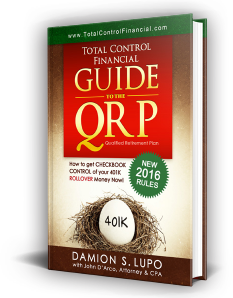
That would be great. Actually, you’re one step ahead of me because I was going to mention your book, Total Control Financial; The Guide to the QRP. Great little book, quick read. You probably sit down and read this within a couple of hours I would imagine. Plug it away.
It’s available, all these are available on Amazon. I also want to let people know, if you go to TotalControlFinancial.com/Marco, there will be an opportunity for you to grab that and any of the books that I have. I’m happy to give those to you guys just as a gift for investing your time. I know you’ll get a ton out of them. Please go there and pick which one or all of them that you want. That’s my gift to you guys.
I appreciate that. Is your website the best place for people to find out more or to get in touch with you?
Definitely, yeah. TotalControlFinancial.com is the best place to reach out to us, to me personally. I’m everywhere. If you just look me up on LinkedIn or Facebook, I’m there. I always respond to people and love the engagement, especially with people that are eager and taking action. You’ll get me, if you want to reach out, I’m happy to support people with their ventures.
Great. Damion, this has been wonderful to hear your maverick mistakes in real estate. I feel bad about your short term success and then your messes and misfortunes. Thanks for sharing your lessons and your experience. Hopefully, people will walk away with a little more knowledge on how to do it right and avoid their own maverick mistakes in real estate. That’s it. We may have you back on the show another day to talk about this other stuff with your company a little more. I appreciate your time.
I appreciate the opportunity to share my maverick mistakes in real estate. Just one last thing, to everybody listening, remember that a mistake is not really a mistake unless it’s not learned from. That’s the only time there’s really a failure. The universe gives us these opportunities to learn and to grow. I hope you will find places to grow and learn from your stuff. I would applaud anybody that keeps moving after that, because that’s how we really expand as human beings.
Well said. Damion, thank you so much.
Thank you, Marco. Appreciate it.
That about wraps it up here for today. If you have any questions related to real estate investing, go ahead and send those to me where I can address it, either on the show or via an email. Just go to PassiveRealEstateInvesting.com. There’s a button at the top that says, “Ask Marco.” Also, if you have questions or want a free strategy session about real estate investing and building a portfolio, then go ahead and just contact any one of our investment counselors either on the phone or through the NoradaRealEstate.com website. We’ll be more than happy to help you with that.
If you haven’t subscribed, please remember to do so. If you want a free coffee mug, the Keep Calm and Invest On, go ahead and leave a rating and review on iTunes and then just shoot an email to me at reviews@NoradaRealEstate.com. I’ll be more than happy to mail that out to you. Just make sure you leave me an address. I hope you enjoyed the show. I think there was a lot of great information here today. Thanks for listening. We’ll see you next week on our next episode.
– – – – – – – – – – – – – –
Download your FREE copy of: The Ultimate Guide to Passive Real Estate Investing.
Get your FREE coffee mug by leaving us a Rating and Review on iTunes. Here’s how.
See our available Turnkey Cash-Flow Rental Properties.
Please give us a RATING & REVIEW (Thank you!)
SUBSCRIBE on iTunes | Stitcher | Podcast Feed
Important Links
About Damion Lupo
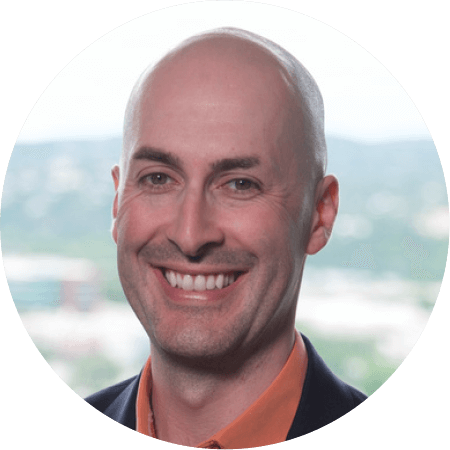
Born with an entrepreneurial spirit Damion started his first business at age 11, (even hiring his parents for logistics support). Over the last quarter century he’s started and owned more than 30 different companies including an insurance agency, a precious metals firm, a venture capital company, a financial consulting firm, and more than a dozen real estate investment and development companies. He’s also the founder of Yokido ™, his own martial art and holds 3 other black belts.
Damion is a sought after financial consultant for accredited investors and business owners. Using a vast knowledge of financial markets, money psychology and pattern recognition he’s an expert at quickly diagnosing hidden financial cancers with clients and their organizations and rewiring both for success.
Damion’s personal philosophy centers on Self Responsibility and a conviction that the only path to freedom is through candor, growth and a big vision. That big vision ideal is what drove him to found Total Control Financial in 2016 and design everything around 10X growth and 10X impact for the client, the team and the shareholders. Today Damion resides in Austin, Texas leading a passionate team of change agents on a mission to Disrupt Wall Street and Empower Main Street ™.