
Welcome to another episode of Passive Real Estate Investing. I’m your host Marco Santarelli. Well, today we’re going to talk about something, a little different something you probably have noticed over the last maybe three, four years is there have been more and more investment properties that have been coming to us and through our network that are new construction, they are not your typical turnkey real estate investments. And what I mean by that is properties that are newly refurbished or renovated into like-new condition. And that’s really what a hundred percent of our inventory was for the longest time, especially since the great recession because there was all this new inventory that was coming out of the market and our property providers in the different markets would take that inventory. They would acquire it, renovate it, make it into like-new condition and then provide it to us.
So you, as our client could build a portfolio of these great properties in great locations that have cash flow well, as inventory continued to get tighter and tighter over the years, especially over the last three, four years, maybe longer. What we’ve been seeing is more of this trend that new home builders have been picking up on and capitalizing on, which is what we’ve referred to as the B2R space or the build to rent. And it’s essentially new home builders, building a property, specifically designed for investors on the acquisition side. But the business model is they take these properties and they rent them. They’re not living in them as homeowners. And so one of the states, ie Florida is one of those states where you see a lot of this bill to rent product. And it’s a great profitable, lucrative model where we see a lot of price appreciation. There’s never a guarantee with appreciation. Just keep that in mind, but we’ve been seeing a lot of price appreciation over the last few years. You still see good cashflow and you see warranties and other things.
Download your FREE copy of The Ultimate Guide to Passive Real Estate Investing.
If you missed our last episode, be sure to listen to Ask Marco – Rapid Fire Listener Questions
Please give us a RATING & REVIEW (Thank you!)
SUBSCRIBE on iTunes | Stitcher | Podcast Feed
So what I wanted to do today is bring one of our trusted providers from the Florida market. And I say Florida in general, not a specific market. Why? Because Wagner who I’m bringing on here in a second is one of those people who we work with closely to bring us product in different cities within the state of Florida on that new construction side. And so with me today, I have Wagner. Wagner, welcome to the show,
Marco, thank you very much for having me. It’s always a pleasure and an honor to work with you and to be here once again with you and your listeners.
Well, it’s great having you on, I know we’ve had this conversation a number of times about bringing you on and talking about new construction. You know, it’s interesting. Cause what we were talking about is actually spotlighting one or more markets in Florida and having a market spotlight. And I think what we just decided to do is table that as a new episode separately, and we’ll probably cover the Ocala market in Florida, which has been on fire for a long time. It’s just been a solid market. But for today, I think what we want to cover are 10 good reasons to invest in build to rent or new construction homes essentially. Is that right?
That is correct. And build to rent is one of the hottest topics. It’s one of the hottest markets right now in the country. The wall street journal has featured in May, build to rent communities, popping up and how it should control those friends and how to make the product very unique. And that’s really what we specialize Marco in the best 20 years, we have done over 400 turnkey properties or flips. And then we really, I started acquiring a lot of land about six years ago. So today we have close to 3000 doors. There’s different stages of development, exclusively for investors. And that’s a big plus because usually, homeowners won’t get access to those properties. Those are exclusively focused for investment cashflow appreciation. Of course nobody can guarantee appreciation, but the state of Florida has been very, very, very good to us in that aspect, right? We’re not better than anybody else. Just follow the leaders, lucky to be here in the beautiful state of Florida.
Yeah. I love it. Well, we do a lot of work in Florida. I have my own rental properties in Florida. I love Florida. You got zero state income tax. It’s a great business climate, beautiful weather. I mean, you have a lot going for you there. So, you know, congratulations. So let’s kind of start breaking this down. People are listening to this and saying, you know, why would I want new construction or maybe they’re biased. And they want new construction because they think, okay, well everything’s new. There, aren’t no problems. I’ve seen new construction in the past. And I’ve been involved in some new construction in the past where there were some problems. So nothing is completely foolproof, but you have things in place to take care of issues that come up, not just the warranty, but you know, you’ve got the builder behind you, especially when you first take possession of that property, but let’s just go through these 10 things. And I’m not going to go into this in any specific order, but I want you to just, you know, deep dive into some of these things, the first thing that you pointed out to me is there’s a cost savings when you’re buying directly from a developer builder. Can you explain what the benefit is from a cost savings perspective?

So cost savings, Marco, it’s really important. And the reason why you have a lot of cost savings because builders and developers, they buy in what we call the economy of scale. They buy multiple products at a very large quantity and we can actually save the client money, but everybody keep asking. Doesn’t every new home that actually we purchase as an investor because I’m an investor myself come through regularly from the builders and developers. And the answer is no. The majority of those homes, they come directly from homeowners and realtors, not directly from the source. So cost saving is huge. What are you talking about? A new construction direct from the developers and the builders. You will save a lot more money and have a lot more building equity if you buy it directly from developers and builders.
So the fact that one of our clients is purchasing it through our network through Narada, which is connected to you and the builder you’re kind of hand in glove with the builder. You’re not suggesting that there’s any extra layer of cost there it’s still a purchase directly from the builder or the developer, right?
This is as direct as you can get. And this is the lowest you can purchase. For example, properties. I’ll give you a quick example. So you understand the cost savings right now. So properties in the same complex are actually just appraised for the construction law that the builders are obtaining for $249,900. Just appraised this month, October 2021, we’re selling to investors for 225.
Okay, well that’s great. That’s 25,000 in equity right off the bat. So let me put my skeptics hat on for a moment. And I don’t know what you’re going to say to this question, but I’m just thinking back to the days back in 2004, 2005, 2006, the years leading up to, you know, the kind of the housing market crash and then the great recession thereafter. I remember that there was also a time back then when investors were investing in places all over the country from the inland empire in California to Las Vegas, Phoenix, and even places in Florida and appraisals were coming back higher than the purchase prices. So, you know, when you look at that, there’s a similarity to what was going on back then to now I think back then, there were just a lot of flipping going on and I don’t think there was really a buyer’s market at the end of that train.
In other words, someone was passing the bag, you know, from one person to another and property values were going up because of speculation, not because of true demand. I think the dynamics today are different. There really is a lot of demand and shortage of supply and builders are struggling to keep up with the amount of demand that is there today. My question to you is, is there a different dynamic going on today than there was back then? Are these appraisals solid meaning they’re based on actual retail sales to a homeowner, like a home buyer,
Correct. And they are, and there’s seven reasons why we can really dive deep into that question. The first one is the down payments in 2008 and nine, we’re going to have big down payments like we have today 20% out, right? So only real well-qualified buyers is not easy to get along today, guys, not because we have one of the lowest interest rates in the best 50 years right now that it’s easy to get a mortgage. I just thought it’s to the contrary. So actually we have very high standards to qualify for mortgages right now with very high downpayment amounts. Second is yes, they actually do physical comparison with the radius from the property and those properties are actually pending active, or so then the majority within less than a mile of trauma, when I have for where new construction is located, also Marco one big, big topic that we need to cover here is actually the replacement costs of the property right today.
The replacement cost is very, very close to the sales price of the property. There’s not a lot of margins from the builders. Like there was in 2008, 2009, or 2000. That’s when it exploded 2005, all the way up to 2007 big margins, no qualified buyers, a lot of speculative buyers to these, exactly the opposite. We have a lot of very serious investors looking for rental properties for cashflow in areas where jobs are coming in. There’s a lot of jobs, a lot of demand. People are migrating from New York, California, Connecticut, New Jersey to fix her permanent residence here in Florida, as we well know, not everybody has a down payment of money nor the credit, just to qualify, to purchase a property. We are becoming a renters nation. So my personal opinion, I’m not an economist. I’m a local guy. Real estate is very local. So I can only talk to about the state of Florida.
We’re not in a bubble, definitely not in a, in a, in a very high appraised out of context era. And I think the prices are going to continue to go up just because we have been undervalued for so long. And now Florida, hasn’t had much of a demand like we’re having right now because of the migration numbers and companies moving in. So this appreciation is real and I invest where we sell. So it’s really important to eat from your own cookie. I’m a real estate investor as well. Not only a builder developer, I buy the properties that your investors buy.

Got it. Okay, cool. Okay. So the second benefit of these 10 good reasons to invest in build to rent or what I call new construction is, what you call higher cashflow yields. So I want you to explain this to me because we might have a slight difference in our opinion on this, but I am in agreement with you. So explain the high cashflow yields when it comes to a bill to rent property.
So there’s several advantages. And one of them is really the low cost of me, right? Because we actually patent and we create a, what we call it, thinner, resilient home, which is the next topic that we’re going to talk about it. All of our houses come with all the upgrades included. For example, we have no carpet should be replaced. We have waterproof vinyl, flooring or tile we don’t have for Mica. We have granite countertops. We don’t have regular balls. We have led lights. So your low cost of maintenance will always, always you the better cash flow because it’s not what you know, that’s going to hurt you, Marco, it’s whatever, that maintenance ticket item that’s going to do it, your capital expenditure costs. And that’s a big one. If you guys have done turnkey properties in the past, and we always have Halloween night, you know nightmares to share with you as far as old properties, but new properties, you have a very reliable and well-known expense report. As far as the capital expenditure is concerned. So very high cash flow yields because your cost is pretty much fixed, right? You already know what to expect. And that actually is always great that a new built-in an, a tenant for rent tenant property.
Okay. So it really you’re breaking it down to maintenance expenses and being lower because of the materials you guys are using. But are you also suggesting that you have higher cashflow yields because your expectation is that you’re not going to have maintenance and repair in the first year, first few years, because everything is new. Are you implying that?
I am actually stating that? Yes. That’s one of the reasons why we have several more. So that’s the only one of the, the upside is really not to have a lot of maintenance or, you know, unknown maintenance, also warranty. So this is part of our 10, but we can cover a lot of them right now. So number two, I would say is really the yield between the low cost of maintenance and no maintenance for the first years compared to the rent. So you’re not going to have a capital expenditure. It is going to be projected on that spreadsheet. At least at the beginning, if anything needs to be fixed, the builder will fix it for free because it’s under warranty. If there’s anything that’s caused by the tenant, then it will pay for it. So that’s kind of prevent that buyer, that investor from having to have a big capital expenditure on a property that is unpredictable.
Do you have an opinion, this is kind of a side question. Do you have an opinion about having your cashflow projections with new construction, having zero for vacancy, but more so zero for maintenance and repairs? The reason I asked you this is because I being, I guess, a little more conservative, I like to actually still budget for maintenance and repairs, even though I know I may not have any issues for the first X number of years when it comes to these new construction homes, I still take kind of a more conservative approach, but that’s just me, you know, everyone’s got a different philosophy or opinion on that. What are your thoughts on it?
I used to have a lot of existing inventory that I purchased in very high cash flow markets, such as Memphis, Tennessee, the best I had a lot of properties there. And I had a lot of fun PR you know, really then account the, for expenses that actually wasn’t projected on new construction I have on them for about four or five years. Five years is pretty much where you need to start allocating more of a capital expenditure fund on your rents. I don’t calculate neither of vacancy or actually maintenance on my forecast just because for one property that we built, Marco, we have 30 to 40 tenant applications. We can really select whomever. We want to move into our homes. That’s really how desperate the market is for new residents, right? And as we are married, we know once our partner walks into the house, they see the beautiful kitchen stainless steel appliances. They walk into the master with a walk-in closet, granite countertops, double sink, you know, walk-in shower with tile, they’re sold, there’ll be an additional hundred, 150, $200. She’ll have a brand new house. That sense of ownership that, that kind of builds on that new residents. Did they cook their first meal? They took their first shower in, they have the sense of ownership again, to take care of, but how it’s better than an existing property that doesn’t have all the upgrades. It’s quite funny, but this is my personal experience. I have seen the tenants are better and well-qualified a lot better than actually on existing property. And they tend to maintain the property a lot better. So for the first five years, I haven’t had any major issues that wasn’t covered under warranty myself.

Got it. Okay. Thanks for that. Okay. So this next one kind of had me chuckling a little bit, you know, these tenant resilient homes that are really something that you’re labeling, but you know, new construction homes are, especially the build to rent model are designed to be tenant, resilient homes, and the way you described it to me, it was that you’re building houses with abusive tenants in mind. What do you mean by that?
Well, I think we always have had tenants that are not perfect or, you know, far away from me. Perfect. So actually my personal experience and by being a builder and having several rental properties, I found the items that actually cost more for replacement. And we try to address those right upfront. I’ll give you a perfect example. The biggest ticket item in a house. It’s the AC it’s the roofing is the water heater. So the water heater, let’s start by the water heater. We buy commercial professional water heater for our houses. What is that? Those are usually water heaters utilizing a restaurant’s very high traffic areas. And that’s what we put in our houses. Why? Because it’s going to last you longer. It’s going to give you a better product overall. So not every home builder thinks like that, right? He’s going to buy it the less expensive, the whatever. It’s the standard in the market. We buy professional and commercial. We don’t use for Mica, right? We use granite countertops or choirs. Why? Because they’re durable. You can put a hot band and it’s not going to burn. You don’t have to replace ever. And you know, same thing as the flooring, we don’t use carpet. We use either water-resistant, waterproof vinyl for your tile. So that actually gives you more durability in the house, keeps looking new for a longer period of time, led lighting, same thing. We only use led lighting in our houses. Why? Because that’s going to minimize the amount of consumption on electricity. Not only help the environment, but at the end, it’s actually don’t have to replace any bulbs or our mapping maintenance scene. Doesn’t have to replace any bulbs. And other thing we do Marco, well, we actually deliver it bed house, not only tenant resilient, but tenant ready. We put stainless steel appliances on those homes. I would put blinds with ceiling fans on that house. So the investor does not have to spend another dollar from his pocket before his tenants actually move in.
Nice. Okay. Makes sense. So these are tenant resilient homes, I guess another feature of new construction homes that is pretty attractive to investors is the fact that they have home warranties. And you’ll need to explain this because they talk about, you know, these one in 10, two in 10 type warranties and whatever that means. But you know, it’s a new house. There’s nothing that’s been worn or consumed. So there shouldn’t be any issues, but you’ve still got this coverage for the warranty. I think that’s a big benefit. So once you explain how the warranty works and why, you know, investors can sleep easy with it.
Warranty is one of the biggest qualities we have on new construction, right? So we have a one-year I know houses doesn’t have bumpers, but we have a bumper to bumper warranty on the first year we have on the second year, a lot of the manufacturer’s warranty that is going to probably lead into a lot of the 10, 15 year marks with shingles on roofs and air conditioning. So, and we also have mandated by the state of Florida while we call it a structural warranty. So if your house then it’s just settled or has any major cracks on the slab, that it actually is demanded for a builder to fix. Those are very high ticket items. There actually are already included. Antra sweetened that as well. Marco, we buy what we call a [inaudible] warranty, which is a third-party company that actually will give you a policy at closing with a number to call a point of contact for them and a mailing address.
And we utilize this company just because it is a national company. Any helps us keep those houses a little bit better, well-taken care because they’re actually monitoring us. So for us to keep our rates low with them, we have to provide a product that is superior and what the market is actually offering. And because, you know, sometimes they’ll rent warranty can cost the builder. Thousands of dollars, my cost on a warranty right now, just to give you a precise idea. It’s $1 that I pay for every thousand dollars for a $200,000 home. They only cost me $200 because our houses are so solid and a well approved. And hopefully other builders are listening to this. They’re like, oh my God, I be so much more. But the reason why our rates are low is because the product that we deliver usually are problem free. And they usually outperform what the minimum requires some of those warranty companies actually request.
Ok, so they come in what kind of warranty? A two, a one…
It’s a two-tenant warranty. It’s a private company, it’s a public, it’s a national company. I apologize. And they also are backed by the builder’s warranty, but now you might have a national warranty that comes with your houses provided by an independent orientee company that is actually a national company. And of course, we have to support the company and provide all the services. But yes, it’s a two [inaudible] which is a national company.
Just be specific the two and the 10 covers what?
So one year covers everything on the house. And if an interior to exterior a flooring countertops, the two years is originally a manufacturer’s warranty. So for example, some of the parts for your AC, a lot of the flooring countertops, faucets showers, the lamination on cabinets are included on year two, and then all the way up to year 10, you also have remaining manufacturer’s warranty and a lot of the items, shingles AC parts not labor on the air conditioning unit, for example. But he has, he comes a replacement of the thermostat from all function. So you have a lot of additional manufacturers warranty, as well as the appliance warranties from the manufacturer. And then at the 10 year mark, you only have what we call the warranty for the structural, the company that it stays lab it’s, the driveway is anything that settles on the house. And if you cracks the exterior walls and that’s already included another big item, Marco that I have to say, which makes our properties a lot better. As far as warranties, we only built concrete block. So concrete block is the best product available in the market right now, every single family homes, we it’s usually concrete block because we only build the best cause we buy it.
Yeah. So just one last thing. One last question on that, just for the listeners benefit, why do they break it into two and 10? What is not covered after the first two years? That is in the 10 year window?
Usually, it’s only parks from a lot of the big ticket items. So for example, air conditioning, a lot of the compressors are covered on the ear tubes, but not labor. So it’s a lot of parts are included, but not labor. A lot of the manufacturers will cover a lot of the parts, but not labor on the ear tubes.
(Insert easy Lending)
Okay, cool. So one of the other benefits you point out is say, easy financing. Maybe I say that in air quotes, but what do you mean by easy financing? Why would new construction be easier to finance?
Well, lenders right now are requesting at least in the state of Florida, what we call a four-point inspection or a wind mitigation for a boost, some of the loans, because you have already a new house that actually complies with 2021 and 2022 codes building codes, we have the best and the most durable product available in the market. And for debt, you don’t have to hire wind mitigation. You don’t have to hire for a point inspection from, from unlicensed suspected instead of afford, it gets your loan approved much quicker because now they know they’re actually approving a brand new house, a lot of insurance companies and actually lenders are now requesting a lot of additional inspections on existing properties in Florida. And some of those properties can actually not even get you insurances or premiums that are so high that you wouldn’t be able to afford or make sense on a cashflow basis.
Do you find a lot of, I guess, as a market specific, do you find a lot of new construction homes require wind insurance coverage?
No. They’re, already included. So every insurance company that does business in Florida, they already have a hurricane insurance already included into their policy. It’s mandated by the state.

Okay. All right. Next bullet point, if you will, is a higher tenant retention. Why would new construction have on average higher tenant retention? What is it about the new construction that makes tenants want to stay longer?
You have the best looking house in the neighborhood.
All right. Well, that’s, that’s a matter of opinion, but I do agree with you in a lot of cases.
Let’s just say you have the newest house on the neighborhood then if it’s not the best looking, but the highest panel retention is this. Once they move into a new house with all the upgrades are included on the fender is in home. You don’t have much more to ask for or where to go. You already have stainless steel appliances, great flooring system-led lighting in a wifi-ready garage door opener. So usually our tenants, the pincher release their leases on a seven new single-family home, for example, between three and four years. So they usually try not to leave that house as much as they can, because they do know that they have the best property available in that area. We follow the new features, energy efficient. I mean, you call it, they have a better insulated, better AC unit brand new. So usually the tenant retention, at least by my personal portfolio and a lot of our investors and your investors as well.
The higher tenant retention is huge. And as you know, when a property management site as well, that’s kind of cost-free investor last year over a year, for example, property management here that we have in house, it’s only $150, truly new a tenant from one year to the next year’s contract. You don’t have to actually pay to find a tenant to replace the tenants. So it’s a low, much lower cost on a fan or retention having a great tenant just by the way. It’s really important to mention that for every brand new house that we have listed for rent, we usually receive 30 to 40 applications as I had mentioned before. So should they have zero houses available for rent? I have a house that we closed not too long ago, and I can give the address, I guess can go into Zillow. It’s 735 Marion Oaks manner. That house sold for $198,000 closed two weeks ago. And I actually got a tenant in one day for $1,700 a month and the tenant has over a 720 credit score.
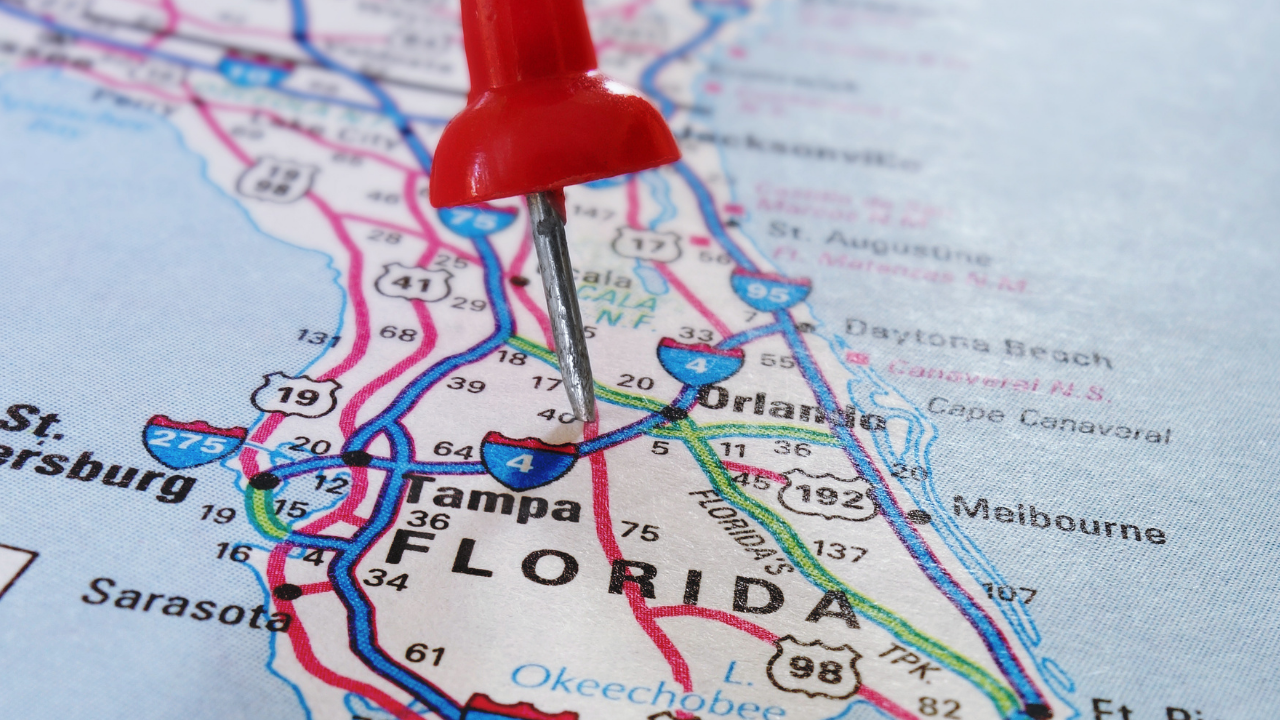
Wow, that’s great. I mean, that was quick and that’s a good rent on that property. That’s a perfect segue to the next topic and that’s location and location is critically important. I, you know, I think location is a major factor in determining where you should invest as, as well as how you mitigate or lower your risk. So I look at it as a metropolitan area and then by the city and then the suburbs and then neighborhoods and communities. So talk to me about location. Why is that important? Why is that a major benefit of, of built rent? And the other thing you might want to add to that is the different locales or, or markets within Florida that you’re operating in right now.
So that’s a great, great topic. So usually we go for suburbs for it, as we had said in Marco, very well pointed Orlando, for example, it’s not a very good cash flowing area right now. It’s really, really high prices. So cash flow is very low. So we go for areas are actually in the suburbs, for example, Ocala, the villages, which is near Ocala, which is a 55 and over community is the fastest growing MSA in the country for 2021. So we looked for jobs. The first thing we look for location is jobs. We actually meet with economical development and the city manager and the mayor. So we find what companies are coming here. How many employees, how many houses are available on the market for rent what’s their rent prices. So by building new, we’re able to select closer locations to where the companies are establishing themselves.
If you buy an existing property. Well, that probably was a great neighborhood 10 years ago, 15 years ago, but what jobs are going to that area, what’s the proximity. So we can geographically strategize where to place our properties. And that is key to success. You want it to be near medical facilities, jobs, retail, and also both. suburbs right now are becoming independent centers from the major cities and it’s where all the jobs are going. So the location is so important to the point. You know, it’s one of the oldest thing in real estate location, location, location, right? And by building new, we can really be precise where we choose to build. We don’t have to settle for an old address from an old neighborhood where I used to be hot 50 years ago, but it’s not hot anymore. So location is key for the success of your investment.
What are the other Metro areas that you’re focused on? Ocala is one of them. Are you in a few other markets right now, or are those all sold out?
We are. So from east to west, we’re in Palm Bay, Florida. Palm Bay if you’re aware it’s a neighboring city from Coco Beach where Space X, Ellon Musk, Jeff Bezos is there with blue origin. We have the bright-line train that is now connecting Orlando international airport to Port Canaveral all the way down to Miami. And Richard Branson is actually the owner of that, the owner of Virgin. So there’s so much money, so much capital going to that space close where it all Bombay is that it’s absolutely amazing what’s happening there. We have over 400 technology companies in Bombay in the neighboring city of Melbourne, right? We have four international airports within an hour’s drive from Palm Bay. You have, they told me international Sanford, international Melbourne, international Orlando international airport. We’re actually in Deltona. Deltona, it’s about 25 minutes on the I four corridor, east of downtown Orlando.
We have a brand new hospital there called Halifax medical center, and we have a project coming live across the street from that hospital. Next door to us is 1.2 million square feet, Amazon distribution center. So Deltona is absolutely an amazing place to invest. We actually have Sephora Hills, which is more than worth the Tampa or what we call Orlando Tampa area. We’re building several projects in Zephyrhills, Florida. We are, I know Kyle, as I had just mentioned, and we are in Leesburg, Leesburg, Florida is where the villages it’s in lake county for it. It’s where the village is, is actually expanding to just acquire 8,000 acres. And they’re building 42,000 new homes for 55 and over.
So it sounds like a lot of these locations you’re talking about are the path of progress where metropolitan areas and cities are growing out to and growing past. And we’ve seen this happen in many areas like Houston, where it just kept growing further and further north into Sugarland and Woodland Hills and all kinds of stuff. And now these are well-established cities part of, you know, suburb to suburb of Houston. So it sounds like what you’re describing is exactly the same thing. These metropolitan areas in smaller cities are just growing and morphing into larger metropolitan areas, right?
Absolutely correct. That’s exactly what’s happening here and in forward, it’s very, very good for your listeners to hear we drive. I live 25 minutes from my office. It was truly a three minutes from my office, but now I live in an area that it’s a much it’s a beautiful, has beautiful greenery. It’s in the suburbs. And I drive 25 minutes to come to work. My wife is a physician. She drives 25 minutes to come to work. So it’s very normal for each. You have very long distances that are probably 25 to 30 minutes. People are used to driving, but that’s definitely Marco. The bath of growth is on the suburbs on the major highways, the major interstates, the I-4, I-95, which connects Miami to New York. I-4 that connects the east all the way to west, so from Daytona beach all the way up to Tampa. You have the four to turnpike. That’s a huge bath of growth. So we usually look for major highways and we follow the path of growth from the suburbs.

Nice. So this eight benefit, if you will, or bullet point that I’m calling it is, you know, builders buying in bulk. And the benefit that comes out of that. So explain this as a benefit with new construction housing in the build to rent model.
So the secret of amulet will tell you this it’s called the economy of scale, right? So when we buy in bulk, when we use the same product over and over again, not only we speed up the process of installation because the same crews are going to perform the same tasks all over the desk, over and over again. But also we save a lot of money. Those minds get actually transferred in, built-in equity to the buyers. So when you buy from builders direct, that actually are buying in bulk in economy of scale, it’s the same product you would buy at a Home Depot or a Lowe’s a store. But because we buy a container loads of it for our properties, actually we can save a lot more money. And in that way, we best along the savings to the investors.
So the point there is that you have lower acquisition costs as an investor because the price is lower.
That’s correct.
Okay. So that segues to your ninth point here, and that is built in equity, which sounds like we’ve kind of gone full circle on, you know, you’ve got lower acquisition costs, but they’re appraising at whatever fair market value is, which is higher than your purchase price. So you have this built-in equity. You’ve kind of touched upon this. I don’t know if you have anything more to say about that.
I do. Building equity is very important and I’ll tell you why, because actually, because we have a lot lower entry-level costs into the final construction costs, we can pass it along. But building equity is not only important for us from the savings perspective, but also we rather sell a property for a little bit less money, 20 investors that we know it’s going to close. You know, if we had to wait the same property on the market, that property will probably take 30 to 45 days after the CEO, which is a certificate of occupancy for us to get the property closed. We actually, we would have to offer upgrades investors. They know what they’re getting day one, it’s easy process for us on building construction. That’s saves time, speed up time for us, but also investors close on their properties are well-qualified. So the builders don’t have to worry about, you know, that investor or that homeowner not coming to the closing table and getting that done. Investors close on the properties quick. That’s why it’s more favorable to a builder to work with an investor than what it is a homeowner.
Right? How often do you see issues with appraisals, regardless of whether it’s an investor purchasing it or a homeowner, do you ever see appraisal issues where they could fall short or maybe below what your expectation is?
We have never experienced that.
And how far back are you going when you’re doing a look back on that?
So I, the problem probably saying the best four or five years, we haven’t had any appraisal issues.
Wow. That’s actually impressive.
Yep. Okay. Our prices are very conservative and that actually builds up our reputation as well. So because we work with the same weathers over and over again, the same appraisers come to our properties over and over again. They know they’re very conservative. They know what the market is and we have never, not never, but in the best five years had any issues with appraisal. Thank God.
So let me press a little bit further down on that. I’m not going to hold you to these numbers and I don’t think anybody would, but just for my own knowledge and the people listening in terms of how much equity are in these new construction homes. And I know it varies by location as well as price point, but generally, what are you seeing in terms of built-in equity when you come into these new construction homes, you can do this by percentage or in dollar terms. It doesn’t matter to me, but just to give listeners an idea.
I would say the minimum, we can probably find this 3%. And the maximum as you can find is probably going to be 6 to 7%. That’s probably a good range for us. We start with the minimum minimum, what you’re going to find in our properties of all 3%.
Okay. And you’re talking about like equity difference between appraise value, like the real market value and the purchase price.
Correct. Well, so let, let’s just phrase it this very, very well. If you buy a property today for $225,000, right? At closing, usually appraisals, we will not appraise this property 20, 30, 40,000 over. Usually they come very cool as for praise price, because they don’t want to show the bank that your property is now worth $250,000. And they’re only landing towards 225. So, but if you would get an independent appraisal, you’ll get it going to have a big gap. Make appraisals are ultra-conservative. We never had an appraisal issue in the best five years, but usually they’re going to come very close to your contract price. But if I put a house two or three lots down and I sell it for 249, it’s going to appraise us all for 249. I had that happen to us in the same street in Palm Bay, where we built, we had one house sold in different times and $205,000. And the other one sold for 225, both of them appraised at contract amount. So if you get a dependent appraise, you’re going to have a much more real value on the property because bank appraisers are ultra-conservative.
Okay. So you threw me off for a second there, when you said the equities between three and 8%, but you’re talking about the appraisal at the time of purchase based on your purchase price. Is that correct? Because it sounds like if you, if you get another appraisal done after you’ve purchased the property from a third-party appraisal, unrelated to your financing, that’s going to be a much different number. You’re looking at 20, 25,000, $30,000 difference in the purchase price compared whatever comps they’re looking at in the market is that correct?
I have two answers for you. Your equity, your building equity is actually day one. It’s when you actually sign the contract on the property, not at delivery. Delivery, you’re going to have a much more of a built in equity than what you would have today. So that’s also very important for you to say, you got to put the pause on that property. We’re going to do it with that property. It takes us about eight months. The equity that you’re actually realizing right now is what it is in today. On as soon as you sign your contract, by the time that you close on this property, it’s going to be what much, much more. So the 3 to 6, 7% is on today’s building equity, not future building.
Okay. All right. So just to be clear, if that property was constructed today or 30 days after you signed a contract, you may have that 3 to 8% from signing, but is the market value today different than the purchase price that you contract for today? Does that make sense?
That is absolutely correct.
Okay. Do you have a gauge on that differential? I know this is a moving target…
But we follow the news and a lot of the trends and Goldman Sachs actually just came out with the news this week and they’re projecting for 2022 for national house prices from all up 16%, you know? So we have seen Ocala in the past 18 to 20 months go up 62% in the valley. But you know, as we know, nobody guarantees appreciation. It’s really what the market can provide to us. And the market has been great choice in appreciation and guess forward Florida.

Okay. All right. So let’s wind this down. Let’s talk about insurance real quick, lower insurance costs on new construction. I don’t know if that’s always true. I can’t think of an example to be honest with you, but why would a insurance costs be lower on new construction homes? Maybe more specifically these particular new construction homes that you’re talking about?
So, actually we have proven that we can share with you guys. Actually we work with a very good insurance company. You’re not the chance to utilize them, but why is insurance cheaper on new homes? Because we’re actually build up to a cold as you well know, a while how’s that it’s being built in 2021. If you’re in the course in Palm Bay, for example, we use high-impact class. So you don’t have to put shutters in kids. If you have a storm that gets into consideration, and I’m talking a big gap, I’m talking about a huge gap. I’m talking about 60 to 70% savings. If you’re actually buying insurance for a new property, that’s humongous. That’s huge. The reason why is simple. If you have an old roof on a 25 year old house, the first one that comes in, that’s going to damage their roof.
Their roof is a 25 to 30, maybe $40,000 fixed for an insurance company. That’s why now they’re requiring when mitigation inspections and for point inspections on the existing homes, new homes, they know you’re optical. They know that, you know, you’re a trust. The system is actually timed out to the concrete block. Your shingles are much better and much more well-established because right now code is requiring us to put one nail every two inches of the roofing system. Before you just to get, I went with 10 to 12 inches on a roofing system with nailing. No, right now we have double Ben glass on our windows. So it means much more durability, less energy consumption. So same thing with the garage doors, right? The concrete blocks. So they show us companies realized if there’s anything that happens, the all homes are going to be the high ticket items for them, not the new construction. And that’s why they’re passing along those savings because it’s a very competitive insurance market for new properties in Florida.

Right. Got it. Okay. Cool. All right. Well, let’s call this the bonus number 11 of the 10 benefits of new construction homes, higher quality tenants. Why would a tenant in general be a higher quality tenant with new construction homes compared to let’s say something else out there on the market?
So it’s very simple, Marco, the reason why several, but let’s just talk about location. We built near good jobs. So medical facilities, hospital assisted living facilities. So we attract nurses. We love nurses. They’re great tenants, right? Distribution centers. When Amazon sets up, hundreds of companies come to support the distribution center. A lot of technologists, companies, distribution companies, trucking companies, and they usually have very high credit scores and a very, a steady income stream. So those are dependents. We look for last but not least technology companies, right? You guys are from California, from Texas right now, Austin day now has been coded as the new Silicon valley in the US so a lot of technology companies are coming here. So we focus on a very high quality and it’s because we established our residences for investors near those centers. So our tenants usually have an above 700 credit score, and usually they have very solid stream of incomes and we verify employment as well.
So that’s why I’m saying on an older home, on a not as nice home, probably going to track the same Kenneth as you would on a new home, if he didn’t have an option. But if you, when you have an option and when you have a partner, your partner is going to help you pick the best house. And that best house is usually for more qualified investors. Why? If I have 30 to 40 applications on a new home, I can pick and choose all my tenants, right? When a new home, I’m not going to have as many applications because people are not as desired to live in a preexisting that people have lived. Probably you have a lot of wear and tear when a new home you’re going to be the first one living there, multiple applications are reigning in and we usually place it then and within a week. So it’s fantastic. We can pick and choose what we want. So better quality well-qualified tenants every time.
Awesome, cool, Wagner, I appreciate all the insight on the 10 plus benefits of new construction homes or what in the industry we refer to as B2 are built to rent type home. So thank you very much. I appreciate you coming on the show today.
Marco, thank you very much. And if I may lift something for you guys really is, you know, your investors take action. If you are sitting in your couch right now, getting all this great education. If you don’t take any action, you’re going to still be sitting there a year from now having the same Corona or a diet Coke and have not made any cashflow. So, you know, sometimes what you need to do is prepare yourself. Study, get educated, listen to, to Marco his podcast, talk to the investment counselors. They are investors as well. They know the areas, they know the products. Just go out there, take action, because that’s, what’s going to make you guys financial free, give you financial freedom. Like I semi-retired in 2016 Marco, because of real estate. So this is not something only that I built. I develop, I buy, but I am living proof that cashflow appreciation tax benefits from real estate is really what can set someone’s free and get them out of the rat race.
Yeah absolutely. There’s a lot of truth in that Wagner. Thank you. I mean, you’re stealing my thunder, but that’s great hearing it from someone else. You’re right. Execution is everything. I mean, you could educate yourself and you can have a plan, but unless you actually take action, nothing will happen. They won’t materialize. You have to manifest this stuff and execution is where it happens. So I appreciate it. You know, those closing comments. So that’s it for today, guys. Appreciate you listening here. Remember to subscribe if you haven’t, if you have questions, just remember I do an Ask Marco episode roughly every other week right now. I love the questions that are coming in. So submit those on the website. There’s an ask mark link at the top of the website. Just click on that at passive real estate, investing.com, share the word with your friends. Do them a favor, help them learn about investing in real estate in general, because the more they know the more they’ll probably likely take action and work on their financial freedom and financial future. That is it for today. Thank you for listening. And we will see you guys all on our next episode.
Download your FREE copy of: The Ultimate Guide to Passive Real Estate Investing.
Get your FREE coffee mug by leaving us a Rating and Review on iTunes. Here’s how.
See our available Turnkey Cash-Flow Rental Properties.
Please give us a RATING & REVIEW (Thank you!)